


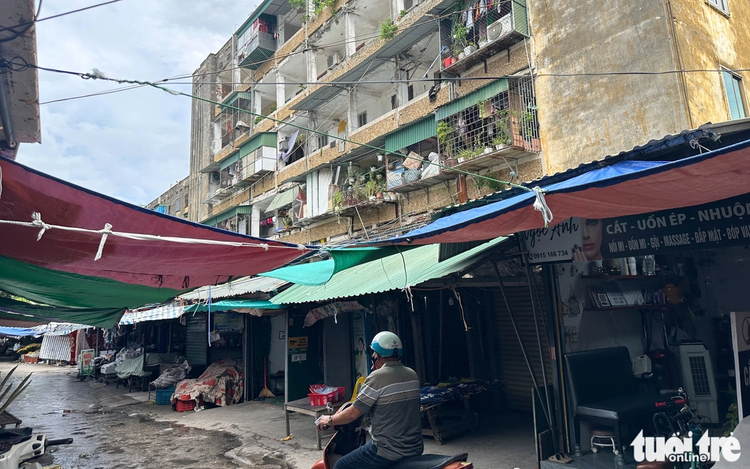
Several apartment buildings belonging to the Quang Trung apartment complex in Nghe An Province, north-central Vietnam have severely deteriorated after 50 years of use. Photo: Doan Hoa / Tuoi Tre
The Quang Trung apartment complex in Thanh Vinh Ward was constructed on May 1, 1974, with financial and technical assistance from the German government.
The apartment blocks were completed and put into service in phases between 1976 and the end of 1980.
Half a century later, the once-modern housing estate has fallen into serious disrepair.
Structural deterioration, damaged ceilings, cracked walls, and leaking roofs have become part of daily life for many residents, raising growing concerns over safety.
Six degraded apartment buildings remain standing after other sections of the complex were demolished.
These include buildings C2, C3, C4, C5 and C6 in Zone C, along with building D2 in Zone D.
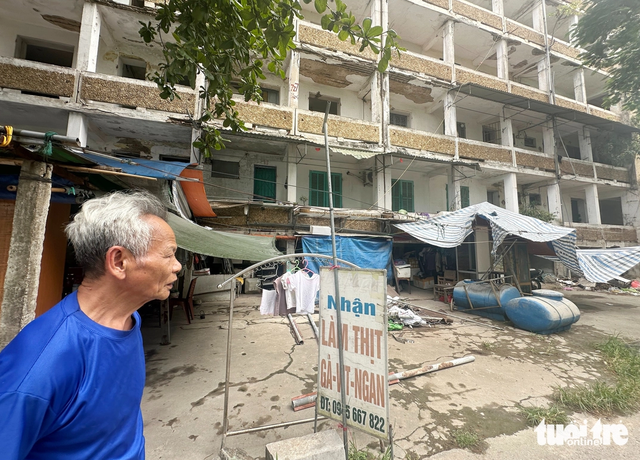
Cao Van Tai, 76, owner of a ramshackle apartment at the Quang Trung apartment complex in Nghe An Province, north-central Vietnam. Photo: Doan Hoa / Tuoi Tre
The People’s Committee of Thanh Vinh Ward has recently ordered the relocation of 140 households legally occupying apartments in buildings C5 and C6 after both structures were officially classified as Grade D, the highest danger level for apartment buildings in accordance with Vietnamese regulations.
To support affected dwellers, local authorities are providing each household with VND5 million (US$190) in relocation assistance, along with VND5 million per month in temporary housing rental for up to six months.
Families are free to choose rental accommodation that best suits their work, education, and daily living needs.
Many said that they had little choice but to stay in deteriorating apartments while waiting for replacement housing that has yet to be completed.
Safety concerns have urged around 30 percent of households to move elsewhere.
Some owners have chosen to rent out their apartments or use them as storage space rather than continue living in the tumbledown buildings themselves.
Among those remaining is Tran Xuan Binh, whose family of eight spans three generations and shares an apartment measuring less than 40 square meters.
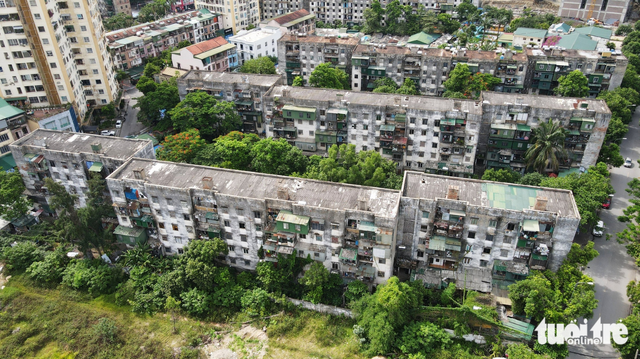
The Quang Trung apartment complex in Thanh Vinh Ward, Nghe An Province was constructed on May 1, 1974. Photo: Doan Hoa / Tuoi Tre
During the rainy season, water leaks directly into the kitchen, forcing the family to cover parts of the room with makeshift tarps.
“Almost every month, pieces of plaster fall from the ceiling in large chunks. It’s extremely dangerous,” Binh said.
“Whenever there are heavy rains or strong winds, we are afraid to sleep because we’re constantly worried about what might happen."
Although deep cracks have appeared throughout the apartment, Binh’s family cannot relocate because the resettlement project remains unfinished.
According to the Nghe An Department of Construction, the redevelopment of Zone C, led by Hanoi Housing Development and Investment Joint Stock Company No. 30, has failed to meet construction deadlines previously committed to the provincial administration.
The delays have disrupted plans to relocate the remaining households, slowing site clearance, demolition of unsafe buildings, and the implementation of subsequent phases of the redevelopment project.
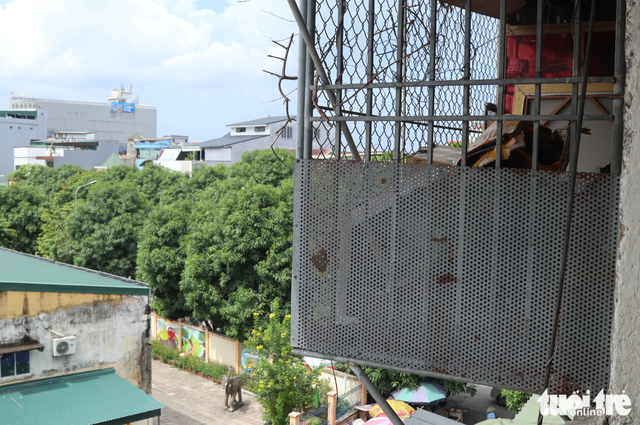
As many as six degraded apartment blocks have yet to be demolished. Photo: Doan Hoa / Tuoi Tre
During a recent inspection of apartment renovation and reconstruction projects across the province, vice-chairman of the provincial People’s Committee Hoang Phu Hien instructed developers to mobilize additional financial resources, workers, machinery, and equipment to accelerate construction and complete the resettlement buildings as quickly as possible.
He stressed that the redevelopment is essential to protecting residents’ lives and property, improving living conditions, upgrading the urban landscape, and making more effective use of valuable land in the city center.
Most of the remaining apartment buildings were constructed more than four decades ago and have deteriorated significantly over time.
Authorities warn that without faster redevelopment, the dilapidated structures will continue to pose serious safety risks while undermining both the cityscape and the quality of residents’ life.
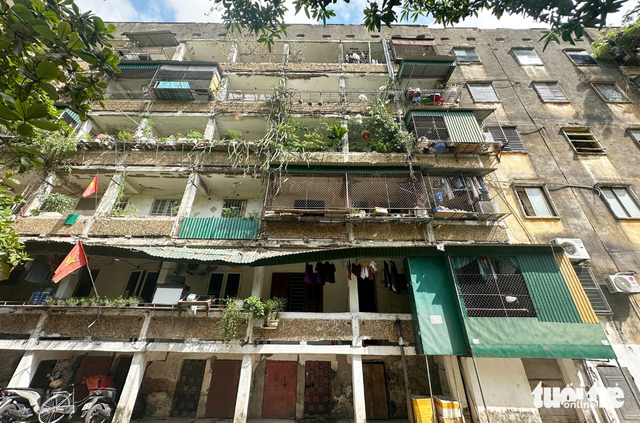
The People’s Committee of Thanh Vinh Ward has issued a decision relocating 140 households at blocks C5 and C6 belonging to the Quang Trung apartment complex as the buildings have severely deteriorated. Photo: Doan Hoa / Tuoi Tre
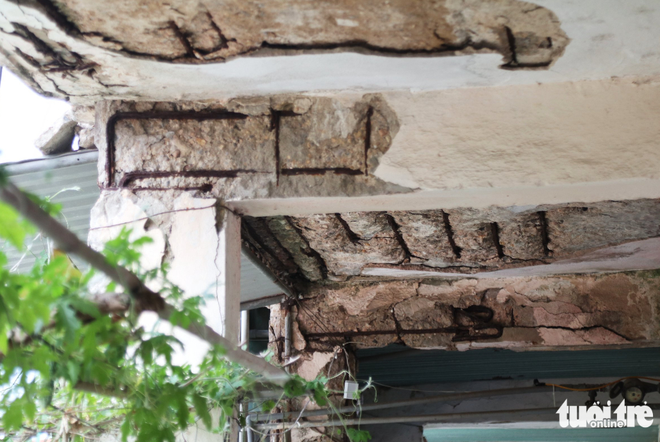
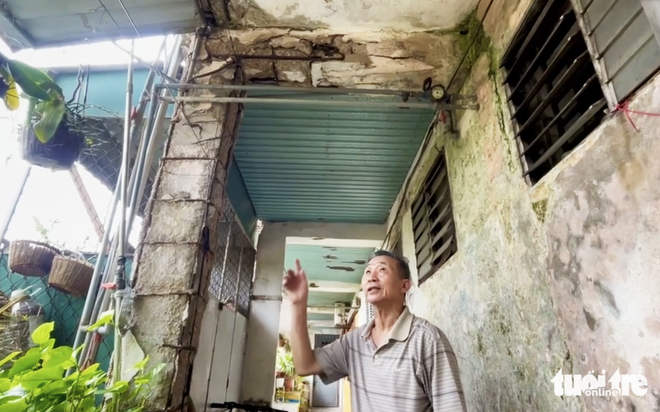
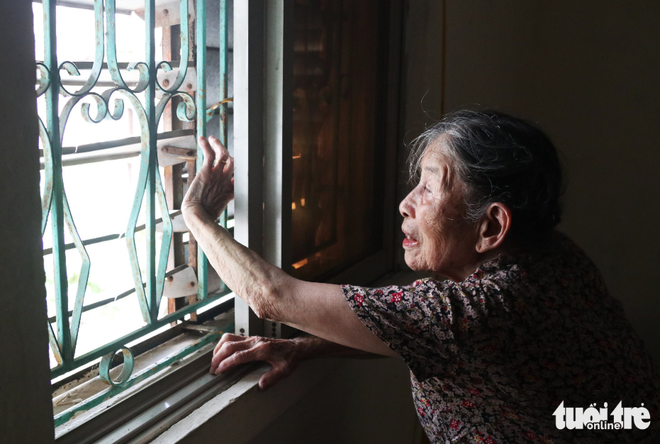
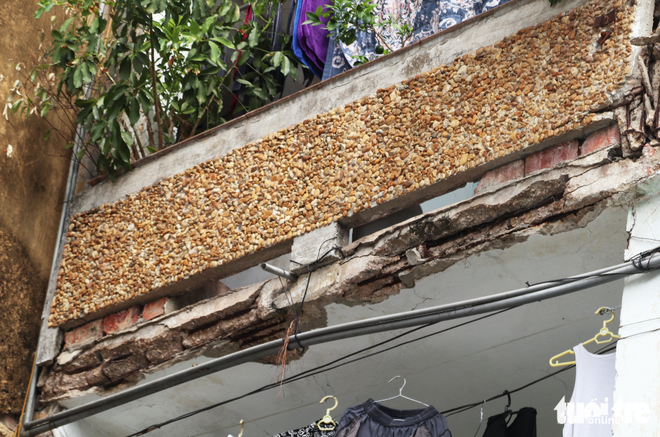
Residents living in ramshackle apartments are afraid to sleep on rainy days. Photo: Doan Hoa / Tuoi Tre
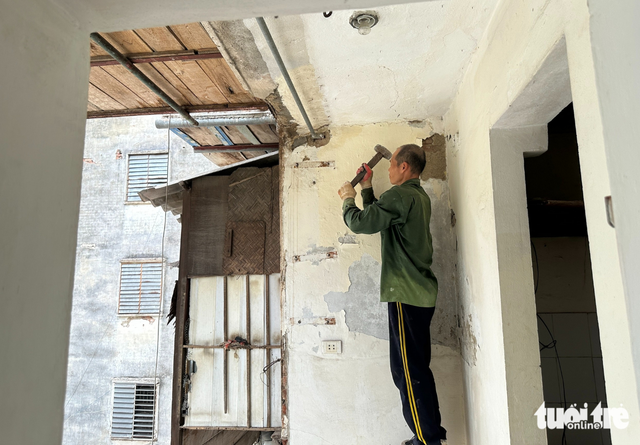
Many sections of the aging apartments’ walls have peeled off. Photo: Doan Hoa / Tuoi Tre
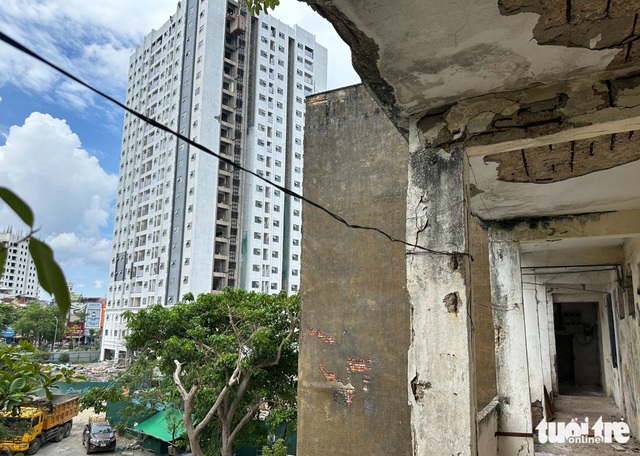
Local authorities have asked the developer to mobilize resources to speed up the construction of resettlement buildings. Photo: Doan Hoa / Tuoi Tre








Max: 1500 characters
There are no comments yet. Be the first to comment.