


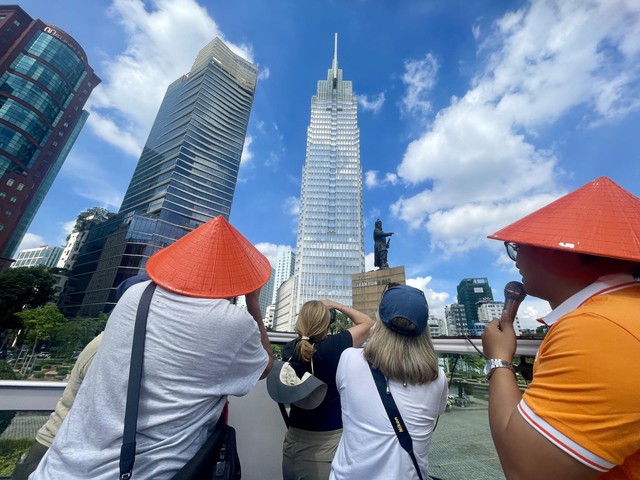
Visitors take photos of Ho Chi Minh City’s scenery during a tour bus ride. Photo: Dong Nguyen / Tuoi Tre News
This is not a visa story. The visa situation is a key factor but most social media rhetoric only extends to visa options, the cost and the perfect weather in Da Nang, central Vietnam.
This is a story about lifestyle, tolerance and being at one in a community. These things are never spoken about when looking at retirement in a non-English-speaking country.
Everyone agrees that the cost of living can be much less than living in Western countries. Generally, food, rent and general daily expenses will give a retiree more value for money living in Vietnam. And for me, this is where the pros generally end for most Westerners.
Some situations that are not thought of by most, until it's too late, need to be considered.
Legal and bureaucracy
Are you comfortable living under a different system of government?
From experience, it appears that many Westerners are unable to make this change.
Housing and property
The reality is that many who move to Vietnam to retire have had successful careers over 40 or more years. With that they have also lived in their own homes with a garden, workshop and comfortable living.
When you come to Vietnam, the vast majority of expats are unable to own any property, especially land. This means you need to adopt a different lifestyle and accept the idea of living in a rental property.
Younger, career-focused Westerners use this as a tool to improve their careers by being able to move easily around the country and rent short term, but as a retiree, most are looking for some security.
Climate and lifestyle adjustment
Having hot and cold seasons can be a strain living in your home country. Those freezing winters of North America and the year-round chills of the North of England seem like agony when you lie under an umbrella on a beach in Vung Tau, Ho Chi Minh City, but the heat is more than a sunny day at the beach.
Overnight temperatures in the south of the country rarely drop below 20 degrees Celsius, and most of the year Western expats find it essential to use cooling just to be able to sleep. In addition, having breakfast in 30-degree heat and having to be out of action for four hours in the middle of the day are realities in Vietnam.
It feels great when you arrive on a holiday, but as a senior living in these conditions, it can bring on health challenges and extreme discomfort.
Hobbies and daily life
Those of you considering the move to Vietnam, take a look at yourself now. What do you do to pass the time of day? What do you enjoy doing to keep yourself active and interested? Now ask yourself if these activities can continue living in a one-bedroom apartment in Southeast Asia.
This is a bigger issue than you think. Remaining active and focused on life is important to survival. All too many people arrive in Vietnam and lose focus on achieving, then spend their last days drinking themselves to an early death because alcohol is all they have to get through the day.
Living in Vietnam, you need to have a purpose. You need to have things to do because the lack of communication with locals intensifies feelings of isolation, and that promotes boredom.
Food and diet
The Vietnamese cuisine landscape does not have much tolerance for special needs and diets. You are in a foreign country and in order to best survive, adapting to local diets can sometimes be the only option.
If you are a fussy eater or have food allergies, then Vietnam and Asia may not be the place for you.
Health and medical
It's never considered until it's needed. Hospitals, medical services and ambulances are an important part of living as a retiree anywhere. In Vietnam they come with additional challenges and complexity.
Whilst there are exceptional medical services at clinics and hospitals in the major cities, these services come at a cost. In addition, the language and cultural issues make these services different to what we expect to be acceptable standards. Being different doesn't mean bad, just different.
Family and relationships
Living close to family is a common aspect of life for most people all over the world. And this is broken when you decide to retire in a different country.
As a senior person of retirement age, it is very reasonable to expect that you may not be around to experience the birth of a grandchild or the death of a long-time friend.
Of course, planned events may have you returning home on occasions. Weddings are a good example where you can plan ahead many months and still share in family events, but others such as birthdays and the like become a phone call at best.
About seven years ago, my son had a car accident. He was not seriously injured but he called me in tears only 30 minutes after the accident. At that point I have never felt so hopeless and isolated. All I wanted to do was get to him and hold him in his time of need, but I was 8,000 kilometres away on the other side of the world. It is something you need to consider.
Retiring in Vietnam is cheaper, but it's not Utopia. There are many challenges attached to living in a foreign, non-English-speaking country.
Essentially, you need to have connection, desire and purpose to find peace and happiness in such a foreign environment.
- REFERENCE MORE








Max: 1500 characters
There are no comments yet. Be the first to comment.