



Overseas Vietnamese delegates attend a discussion in Ho Chi Minh City in February 2026. Photo: Thanh Hiep / Tuoi Tre
In a recent interview with Tuoi Tre (Youth) newspaper, Professor Andreas Stoffers of the FOM University of Applied Sciences in Essen, Germany, said Vietnam’s key challenge is not a shortage of talent, but more effective mobilization of existing resources, including domestic professionals and overseas Vietnamese returning with international experience.
Drawing on his long experience in banking and observation of Vietnam’s development, Prof. Stoffers said the country already has a strong foundation of local talent in banking and finance.
He recalled working at Deutsche Bank Vietnam in 2009, when he met many Vietnamese bankers with strong academic backgrounds and professional skills, highlighting the country’s advantage in its domestic workforce.
At the time, however, he noted that “international exposure, strategic thinking, and experience with complex cross-border transactions were often limited.”
Over the past decade, the sector has developed significantly, with a growing pool of professionals demonstrating international thinking and stronger technical capacity, supported by improvements in higher education, particularly at leading universities.
Today, many Vietnamese graduates are able to compete at a regional level.
“In addition, a growing number of overseas Vietnamese have returned home, bringing international experience, professional standards, and global networks," Prof. Stoffers said.
"From my perspective, this group represents one of Vietnam’s most underutilized strategic assets."
He stressed that this globally trained workforce should be more systematically integrated into Vietnam’s education and training system.
Beyond returning as investors or corporate leaders, overseas Vietnamese experts and international graduates could also serve as lecturers, advisors, visiting professors or curriculum designers, particularly in practice-oriented and dual training programs.
This, he said, would help bridge the gap between academic theory and real-world business practice.
Alongside domestic talent, Vietnam will still need foreign experts, especially in the early and mid-stages of IFC development, the professor said.
“A deliberate mix of local and international expertise accelerates institutional learning, strengthens credibility, and reduces costly trial-and-error processes,” he said.
Prof. Stoffers noted that achievement orientation and ambition are deeply rooted in Vietnam’s workforce culture, helping students and professionals perform in demanding global environments such as financial centers.
He added that financial hubs typically generate strong spillover effects, particularly in higher education, research and professional training, as advanced financial services naturally drive demand for higher-quality education.
“The idea of developing Ho Chi Minh City not only into an international financial center but also into a regional education hub is, in my view, both ambitious and strategically sound,” he said.
He also observed that Vietnam is becoming increasingly attractive to foreign experts, not only in Ho Chi Minh City and Hanoi but also in other regions.
As a result, visa procedures, work permits and, in some cases, pathways to citizenship for highly skilled professionals and overseas Vietnamese should be further simplified.
He said challenges remain in higher education, including quality assurance, transparency, governance, and compliance.
If Ho Chi Minh City is to become a genuine regional education hub, universities will need systematic upgrading.
Faculty salaries must also become more competitive to attract experienced professionals from industry into teaching and research, while administrative barriers for academic experts should be reduced.
Prof. Stoffers added that Vietnamese students today are more confident, dynamic, and internationally oriented than in the past, with many actively pursuing global standards, joint programs, and applied research opportunities.
This, he said, is essential because an education hub cannot be built solely on infrastructure or rankings, but requires students and faculty who are ready to engage globally.
Regarding a development model for an IFC, the professor stressed that Ho Chi Minh City does not need to replicate Singapore, London or Frankfurt.
“Vietnam’s strength lies in developing its own model, combining internationally oriented education with local advantages such as demographic dynamics, a performance-oriented culture, and regional integration,” he said.
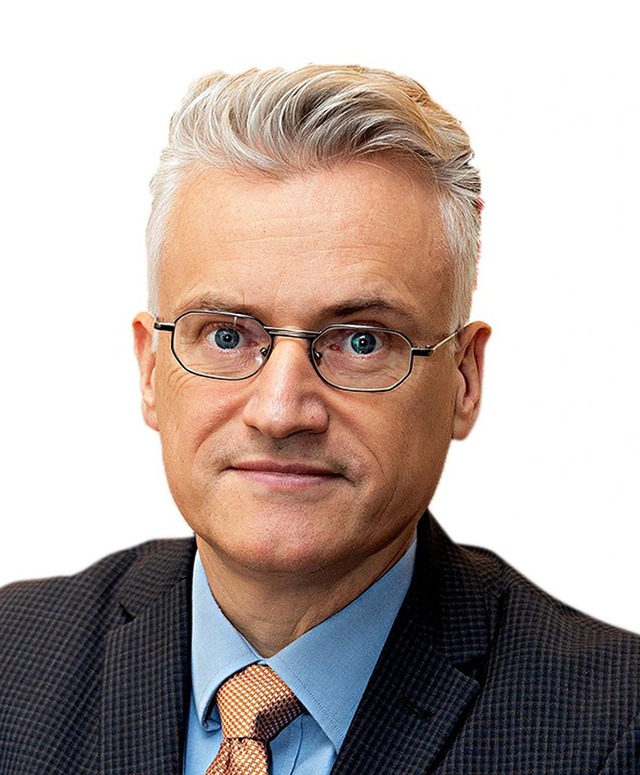
Professor Andreas Stoffers of the FOM University of Applied Sciences in Essen, Germany. Photo: Supplied
With sustained reform, Ho Chi Minh City could become a regional beacon in education, finance, and innovation, comparable to hubs such as Dubai, Hong Kong, and Singapore.
“If this momentum is supported by consistent reforms, competitive academic careers, and closer links between universities and industry, Ho Chi Minh City has a realistic chance to position itself as a regional center for education alongside its roles in finance and innovation,” Prof. Stoffers said.
A key component of developing local talent, he added, is vocational education, not only in terms of quality but also in improving its social perception.
In Vietnam, vocational training is still often seen as less prestigious than university education, particularly among parents.
In Germany, however, a university degree is not the only path to becoming an effective manager or leader.
Well-designed vocational training systems can produce highly capable professionals who combine practical skills with strong responsibility, he said, adding that “promoting this understanding should be an essential part of Vietnam’s roadmap for preparing young people for careers in an IFC environment.”
He cited Germany’s long-established dual training system as evidence that practical excellence and leadership often develop outside traditional academic pathways.
“Vietnam would benefit greatly from adapting such models to its own economic and cultural context,” Prof. Stoffers said.








Max: 1500 characters
There are no comments yet. Be the first to comment.