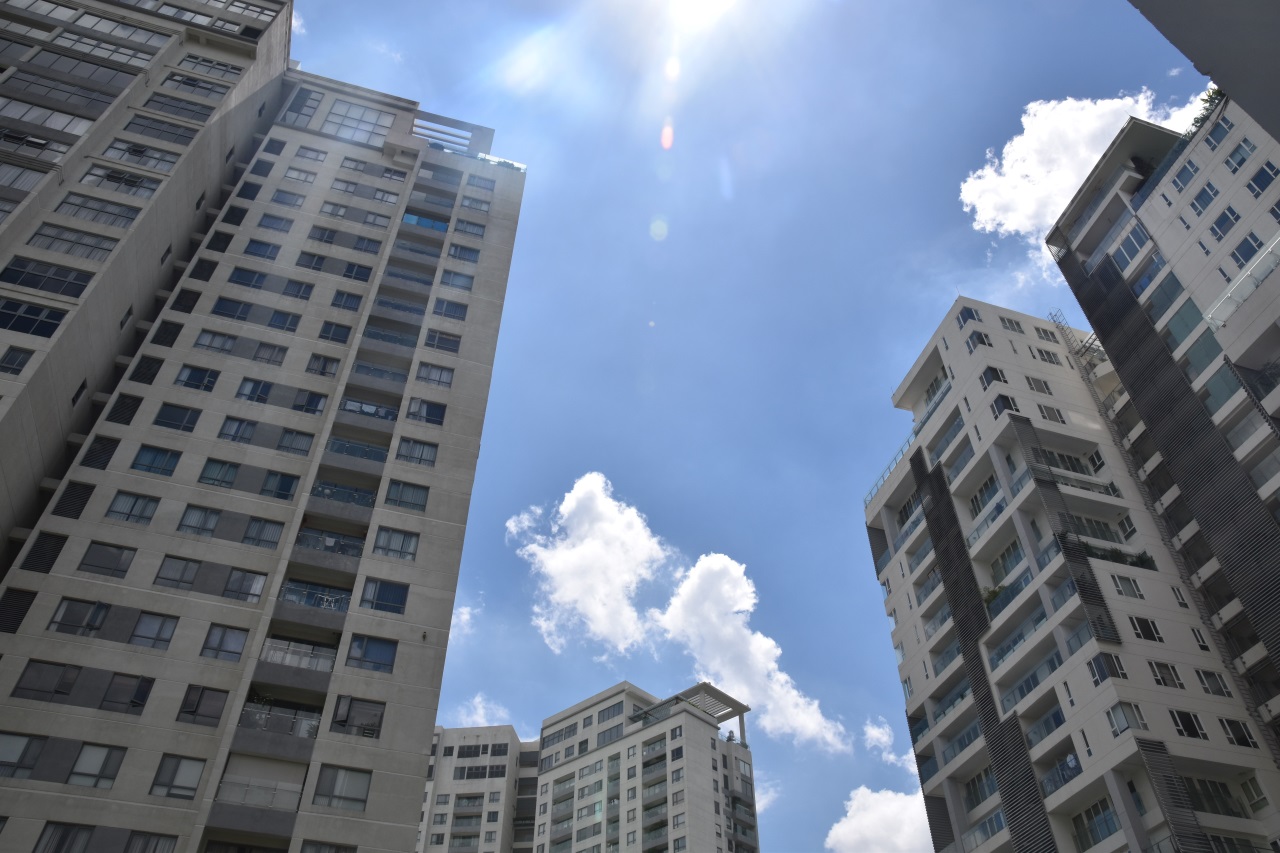
The revised Housing Law provides conductive mechanisms and policies for social housing development, potentially improving supply and demand. But its real-world implications remain uncertain.
Favorable conditions for developers, simplified requirements for buyers
The amended Housing Law, which the National Assembly passed on November 27, 2023, will take effect on January 1, 2025, coinciding with the revisions to the Real Estate Trading Law and the Land Law.
According to Le Hoang Chau, chairman of the HCMC Real Estate Association (HoREA), Chapter VI of the revised Housing Law synchronously regulates mechanisms and policies for social housing development, with a primary focus on achieving the target of constructing at least one million social homes between 2021 and 2030.
Key policies include provisions mandating provincial-level people’s committees to allocate sufficient land for social housing development in accordance with approved housing development programs and plans. Clause 5 of Article 77 enables designated state credit organizations to extend preferential credit offerings to eligible individuals for social housing purchase and lease-purchase, addressing the shortcomings of Clause 4 of Article 50 in the 2014 Housing Law, which did not permit such credit organizations to provide low-interest loans for social housing acquisition.
Regarding eligibility criteria for accessing support policies for social housing, the amended Housing Law eliminates the requirement for local residency and delegates the Government to regulate income thresholds, stipulating that social housing lessees are not obligated to meet housing and income conditions. “This regulation is highly reasonable and aligns with the reality of labor mobility and the attraction of educated, skilled workers across regions and localities,” Chau emphasized.
Under the old law, beneficiaries of social housing policies faced significant procedural hurdles. They were required to meet three conditions: not owning any other properties, residing in the province where social housing was available, and having income above the threshold for personal income tax payment, all subject to review by competent authorities. These stringent regulations necessitated extensive procedures, leading to challenges in obtaining eligibility certification.
Conversely, while preferential policies existed for social housing developers, they lacked substance, failing to effectively incentivize the involvement of businesses. However, Clause 2 of Article 85 in the amended law introduces enhanced benefits for developers of social housing without state capital. These benefits include exemptions from land use fees and rent, preferential treatment regarding value-added tax and corporate income tax, and access to borrowing at favorable interest rates. Such supportive policies are poised to stimulate investor interest and bolster engagement in social housing development initiatives.
Furthermore, Items 3 and 4 of Chapter VI, focused on housing development for workers and the armed forces, introduce significant and practical mechanisms and policies to address the social housing needs of various groups, including workers, laborers, cadres, public employees, officers, non-commissioned officers, and employees of the armed forces. These policies are expected to have a positive impact on social housing supply, aligning with the objectives of policymakers, administrators, and numerous experts.
During a recent conference organized by the Ministry of Construction to launch the plan “Building at least one million social homes for low-income earners and workers in industrial zones in the period 2021-2030,” Minister of Construction Nguyen Thanh Nghi emphasized the importance of the amended Housing Law and Land Law, alongside other relevant regulations. He highlighted that these legislative updates address various challenges, particularly those hindering social housing development for workers.
“These new policies, together with the national housing development strategy and programs to support the construction and renovation of houses for policy beneficiaries, will establish a more complete legal corridor to support and encourage businesses to participate in social housing and houses for workers,” Nghi said.
While Minister Nghi remains optimistic about the potential success of these measures, the realization of his vision ultimately depends on the effective implementation of the plan. Only by examining the actual deployment of the plan will we ascertain whether his aspirations are fulfilled.
Relying on implementation
A Ministry of Construction report indicates that across the country, 1,249 land lots with a total area of 8,390 hectares have been designated for social housing. This represents a notable increase of 5,031 hectares compared to the 2020 report. Over the period spanning 2021 to 2023, 499 social housing projects comprising more than 411,000 units were initiated. Among these, 71 projects with over 37,800 units reached completion, while construction began on 127 projects with nearly 108,000 units. Additionally, 301 projects with 265,400 units received investment approval. Leading the charge in driving social housing development are Bac Ninh, Bac Giang, Dong Nai, and Binh Duong provinces, along with Haiphong City.
The overarching plan aims to finalize construction of a little more than 1.06 million social housing units by 2030, with approximately 428,000 units targeted for completion between 2021 and 2025. Minister Nghi expressed confidence in meeting these objectives, stating, “If projects that have already been licensed and approved for investment proceed as scheduled, we will essentially attain the plan’s target by 2025.”
Minister Nghi also highlighted the numerous challenges encountered in implementing the plan. Many localities are experiencing sluggish progress compared to the registered plan. Notably, key areas with substantial social housing demand such as Hanoi and HCMC have seen limited completion rates. Hanoi has achieved only 9% completion for three projects totaling 1,700 units, while HCMC has reached 19% completion for seven projects with nearly 5,000 units. Certain provinces like Vinh Phuc, Ninh Binh, Nam Dinh, Long An, and Quang Ngai have yet to initiate construction on any social housing projects since 2021.
Moreover, despite the approval of numerous social housing development projects in some localities, authorities have not prioritized the selection of investors for development. A lack of determination to address difficulties and obstacles further hampers progress. Administrative reforms and the issuance of mechanisms to incentivize social housing development remain limited.
Investors involved in social housing development face their own set of challenges, including hurdles in land access, investment, and construction procedures, as well as issues related to credit and incentive policies. Of particular concern is the slow disbursement of the VND120-trillion credit package intended for investors and buyers of houses for low-income earners and workers, as well as for condominium renovation and reconstruction. While 28 provinces have identified 68 projects eligible for taking out loans from the VND30 trillion credit package, from which a fractional VND415 billion has been disbursed for six social housing projects in five provinces.
At the conference, businesses emphasized that securing capital for social housing projects remains a tall order. Despite the existence of the VND120-trillion credit package, it has yet to materialize. Banks are hesitant to approve loan requests from investors because offering loans would mean they would struggle to obtain the preferential interest rates of 1.5-2% from the State Bank of Vietnam. Moreover, prolonged procedures for price approval and determining eligibility for social housing purchase and lease exacerbate the issue, as they involve convoluted processes between ministries and local authorities.
The reality suggests that the improvement of social housing supply hinges on the detailed guidelines and practical implementation of the amended Housing Law. For instance, the effectiveness of support and incentive policies for social housing developers, as outlined in the amended Housing Law, depends on the smooth disbursement and implementation of initiatives like the VND120-trillion credit package. Even with eased eligibility conditions, the desired impact may not be realized if procedural burdens remain cumbersome and if ministries and local authorities fail to take proactive measures.