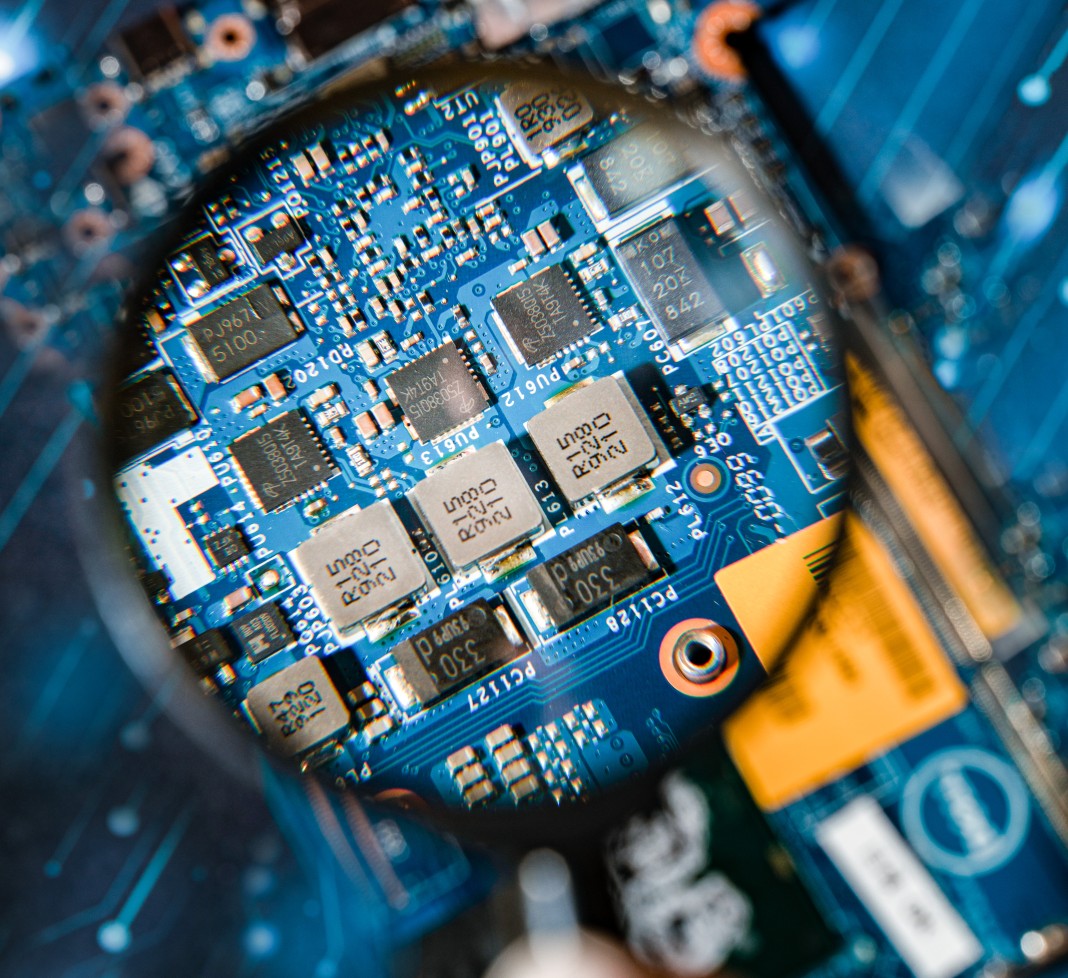
The elevation of the Vietnam-U.S. relationship to a comprehensive strategic partnership is expected to open up new cooperation opportunities, especially in science-technology and innovation, with the semiconductor industry playing a key role. Why is Vietnam viewed as holding high potential for this industry, and what should we do to realize such potential?
Vietnam and India are considered promising destinations for the global semiconductor industry. These are two markets with a strong domestic demand and favorable conditions to develop a full-fledged ecosystem for the industry. The semiconductor industry in Vietnam is still in its infancy, but has gained initial but encouraging results in attracting foreign investors, helping diversify the industry’s supply chain. There remains, however, a big challenge regarding manpower that needs to be quickly addressed.
Momentum for domestic market growth
In terms of semiconductor segments in Vietnam, power management integrated circuits (PMIC) hold a market share of nearly 68%, followed by microchips with 29% and radio frequency identification (RFID) systems the remainder. The combined revenue of PMIC and microchips is predicted to jump by 40% in 2020-2025.
In terms of applications, consumer electronics takes the lead with a market share of some 62%, information and communication technology (ICT) some 21%, and the automobile industry around 10%. However, the market size for ICT products is expected to expand by 45% in 2020-2025, while the consumer electronics and automobile industry market will grow by some 32%.
Given such predictions, the growth momentum for semiconductor products in Vietnam will be fueled by the demands of the corresponding technology segments.
The semiconductor ecosystem in Vietnam
A typical chip production process comprises three phases, namely (1) design, (2) manufacturing, and (3) assembly, packaging and testing.
In Vietnam, most semiconductor enterprises currently focus on design, especially the backend, as this phase largely relies on manpower and does not require huge investment capital. Further, it is easier to develop manpower for backend than for frontend design.
Still, the semiconductor design segment in Vietnam has largely been outsourced to meet foreign orders, with the outsourcing value accounting for more than 80% of the total value of semiconductor design. As such, despite the convergence of many enterprises, their contribution to the total value is minimal. Much of the value has come from other segments like assembly, testing and packaging, with front-runners including Samsung, Intel and Foxconn.
Given the current industry landscape, the strategic orientation for Vietnam must be to diversify the semiconductor value chain via (1) strengthening domestic capacity to create higher added value in assembly, testing and packaging; and (2) having favorable policies to attract investors into manufacturing. The former approach looks more viable, and should be the priority for Vietnam to create a wide avenue to attract semiconductor giants into the country.
Diversifying the supply chain is crucial for improving the semiconductor ecosystem in Vietnam. The convergence of international semiconductor giants will have a clustering effect that paves the way for the development of supporting industries. Only then can Vietnam develop a full-grown semiconductor industry to assume all important phases in manufacturing complete semiconductor chips.
Recent years have seen a positive signal when many global semiconductor leaders have set up their R&D facilities in Vietnam, including Samsung, LG, and Qualcomm, with more giants like Synopsys and Marvell in the offing. Besides Intel and Foxconn as chip assembling and testing leaders that have landed in Vietnam, Amkor last year already started work on a factory in Bac Ninh Province. The presence of such giants will gradually enable Vietnam to develop a diverse semiconductor ecosystem and expand the supply chain.
Manpower challenge
Seeing the great opportunity for the country, the Government has assumed its mandates by promoting economic diplomacy and issuing policies to attract investors. However, one of the biggest concerns for would-be investors is the country’s low preparedness in terms of manpower for the semiconductor industry in both quantitative and qualitative metrics.
Minister of Information and Communications Nguyen Manh Hung during a working session with two national universities on September 6 stressed that Vietnam needs 10,000 engineers each year for the semiconductor industry, but universities can now meet less than 20% of that demand. In reality, the semiconductor industry also has to compete for manpower against other high-tech sectors like electronics, automation, and artificial intelligence that are also developing rapidly.
A survey conducted by the Institute for Business and Economics Policy (IBEP) shows that around 60% of higher education institutions in Vietnam provide training in areas that can support the semiconductor industry. These include information technology, control and automation, data science and artificial intelligence, electric-electronic engineering, and telecommunications, supplying manpower mainly for the southern market. Therefore, the southern region has more manpower advantages to develop the semiconductor industry, and reality shows that more semiconductor design companies are present in HCMC, including Marvell, Renesas, Applied Micro, and Ampere.
Regarding the manpower quality, most local universities have not developed an intensive training curriculum for microchip/semiconductor design due to the lack of design experts working as lecturers and the high cost of acquiring related software and labs for training.
Recommendations
Given such challenges, developing the semiconductor manpower must now be made a “national strategic mandate”. IBEP as such has given recommendations on promoting the tripartite cooperation between the Government, the industry and universities.
- The Government assumes its role of attracting foreign investors, employing policies to build up the semiconductor ecosystem, and at the same time encouraging universities to reorient their training by offering incentives and financial support.
- Universities reorient their training and research as suggested by the State and required by industries, and tighten cooperation with industries to supply job-ready manpower.
- Industries closely work with universities, put forth their requirements, conduct joint research, assist universities in the provision of equipment and software for training, and provide financial support.

The tripartite cooperation model is now being deployed successfully in the microchip design training program at the National University Hanoi and the National University HCMC, which are the two top-notch institutions in this sphere. Most recently, a microchip design faculty has been established at FPT University as the fruit of cooperation with FPT Semiconductor.
With the increasing number of R&D centers being established by semiconductor corporations in the coming time, it is expected Vietnam will have a core workforce of skillful microchip/semiconductor designers that will be further strengthened owing to an increasing number of engineers graduating from universities annually. The challenge of manpower shortage, therefore, can be addressed in the next five years owing to the determination of relevant stakeholders in implementing this national strategic mandate.
Apart from global strategic consulting firms like McKinsey, BCG, and Bain & Company, we can count on IBEP as a high-reputation consultant in this sphere. Gathering top-notch experts on economics, business strategy, and technology, IBEP has served as a strategic consulting partner for some well-known foreign investors in the areas of ICT and semiconductor.