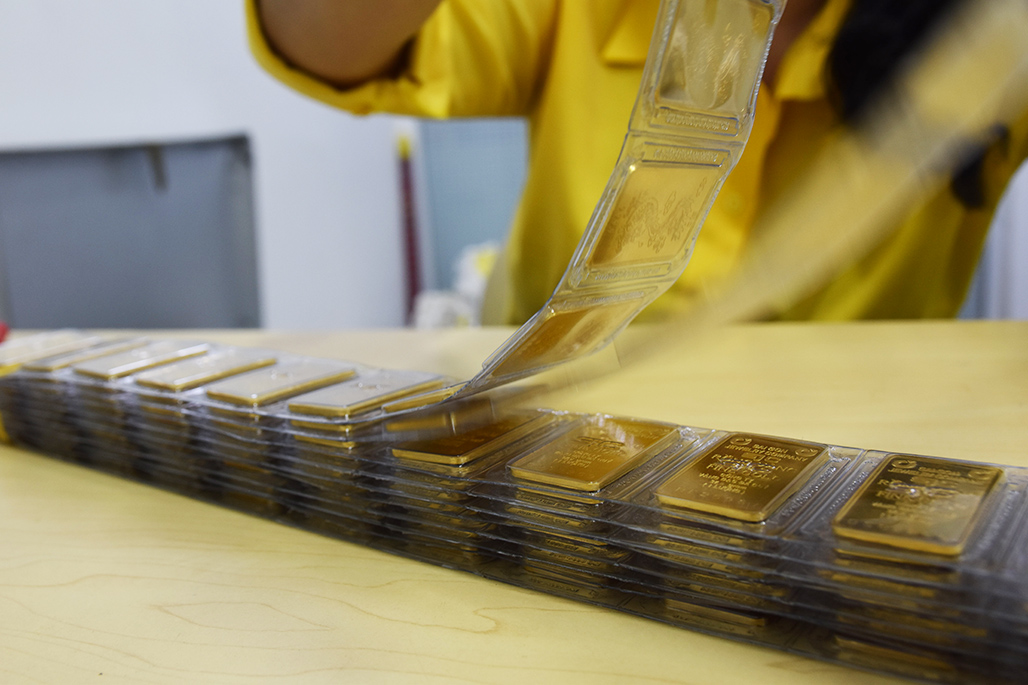
In response to recent market volatility, an increasing number of investors are turning to SJC gold bars for trading opportunities. These investors anticipate a substantial rise in gold prices as they closely track international geopolitical developments.
Prices soar amid geopolitical tensions
In the trading session ending on October 14 (Vietnam time), global gold prices surged by 3.3%, or more than US$62 per ounce, the biggest single-day spike in three months. Over the course of the week, prices climbed nearly 6.2% to US$1,932 per ounce. This surge in gold prices is attributed to renewed geopolitical tensions worldwide.
Ongoing military conflicts, such as between Russia and Ukraine, and between Israel and Hamas, indicate the potential risk of global warfare. Israel’s close ties with Western nations and the support for Hamas of some Islamic countries further contribute to this uncertainty.
Additionally, a military coup in Niger in mid-August has not only destabilized the nation but also raised concerns about the possibility of similar coups in neighboring countries. The regional security landscape remains unpredictable, with various factions receiving support from different European countries.
The growing apprehension of a widespread global crisis has bolstered the gold market, as investors seek refuge in this asset during times of conflict. In February, following Russia’s actions in Ukraine, gold prices surged by US$250 per ounce within a few months, reaching a record high of US$2,080 per ounce.
Beyond military conflict risks, gold prices are also supported by strong buying interest from central banks. This momentum could potentially drive gold prices close to their previous peak of nearly US$2,100 per ounce. A 2023 World Gold Council survey revealed that around 24% of central banks are planning to increase their gold reserves in the next 12 months.
Experts suggest a shift in central banks’ strategies, indicating a potentially uncertain future for the U.S. dollar in the coming years. Given that gold prices are closely tied to the dollar, the anticipated weakening of the U.S. dollar might encourage central banks to diversify their reserves further into gold, especially after its recent robust performance. This trend is reinforced by speculations that the U.S. Federal Reserve (Fed) might consider reducing interest rates again by 2024.
Effects on foreign exchange and interest rates
A recent report from the World Gold Council said that central banks purchased a substantial 1,136 tons of gold in 2022, marking the fastest pace of acquisition since 1967. Notably, 862 tons of gold were acquired in the second half of the year, with two-thirds of these acquisitions going unreported to the public. In the first half of 2023, central banks added 387 tons of gold to their reserves, as reported by State Street Global Advisors, the world’s fourth-largest asset manager.
China and Russia have emerged as prominent buyers in this trend, signaling a strategic move to diversify their reserves and reduce reliance on the U.S. dollar. This strategy gains significance given recent instances of the U.S. using its currency for sanctions. As of the end of August, the People’s Bank of China reported a gold reserve of 2,165 tons, representing an increase of around 217 tons since November 2022 when consistent gold purchases began.
These global market dynamics have also influenced domestic gold prices, which have been steadily rising over the past three months. The SJC gold price, for example, has climbed from VND66.7 million per tael in mid-July to its highest level since January 2022, at VND70 million per tael.
As gold prices continue to rise, trading gold has gained popularity among investors who speculate that domestic gold prices will align further with international market trends in the near future.

Geopolitical tensions, especially those involving ongoing military confrontations like the conflict between Hamas and Israel, have further fueled concerns about broader global conflicts. These tensions raise the appeal of safe-haven assets like gold for investors.
The escalation of these hostilities, combined with the ongoing Ukraine-Russia conflicts, could have significant repercussions for global energy and food markets, trade sectors, and diplomatic relations. Bloomberg Economics predicts that oil prices could leap to US$150 per barrel, potentially causing a 1.7% drop in global growth in 2023 and resulting in a potential loss of approximately US$1 trillion if Iran becomes involved in these conflicts.
The aftermath of such events might lead to increased energy and food prices, exacerbating inflationary pressures for countries that have struggled to control inflation through interest rate hikes in the past year. Economies heavily reliant on oil imports may also face stagnation. In this context of rising inflation and sluggish economic growth, the allure of gold as an investment is likely to grow, attracting more funds. Central banks may consider maintaining their strategy of raising interest rates to manage inflation, curb the the gold price spike, and discourage savings from shifting into gold investments.
For countries like Vietnam, rising gold prices and growing disparities between domestic and global gold prices could exert additional pressure on exchange rates, presenting new challenges in exchange rate management. This is due to increased demand for the U.S. dollar to import gold and capitalize on price differentials. Given the recent exchange rate movement, amplified by the interest rate gap between the Vietnamese dong and the U.S. dollar, foreign exchange management is trickier, especially amid the volatile gold market.