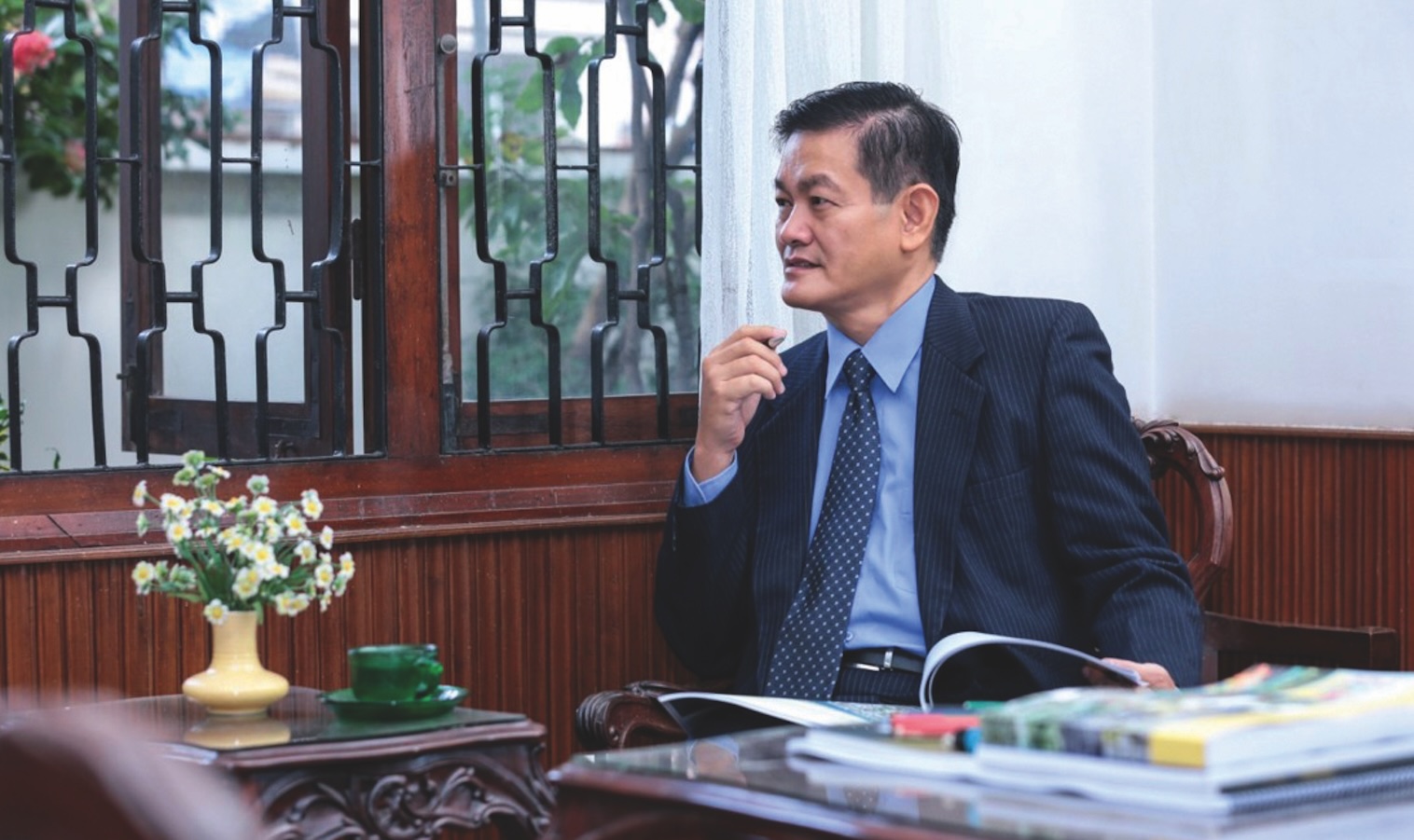
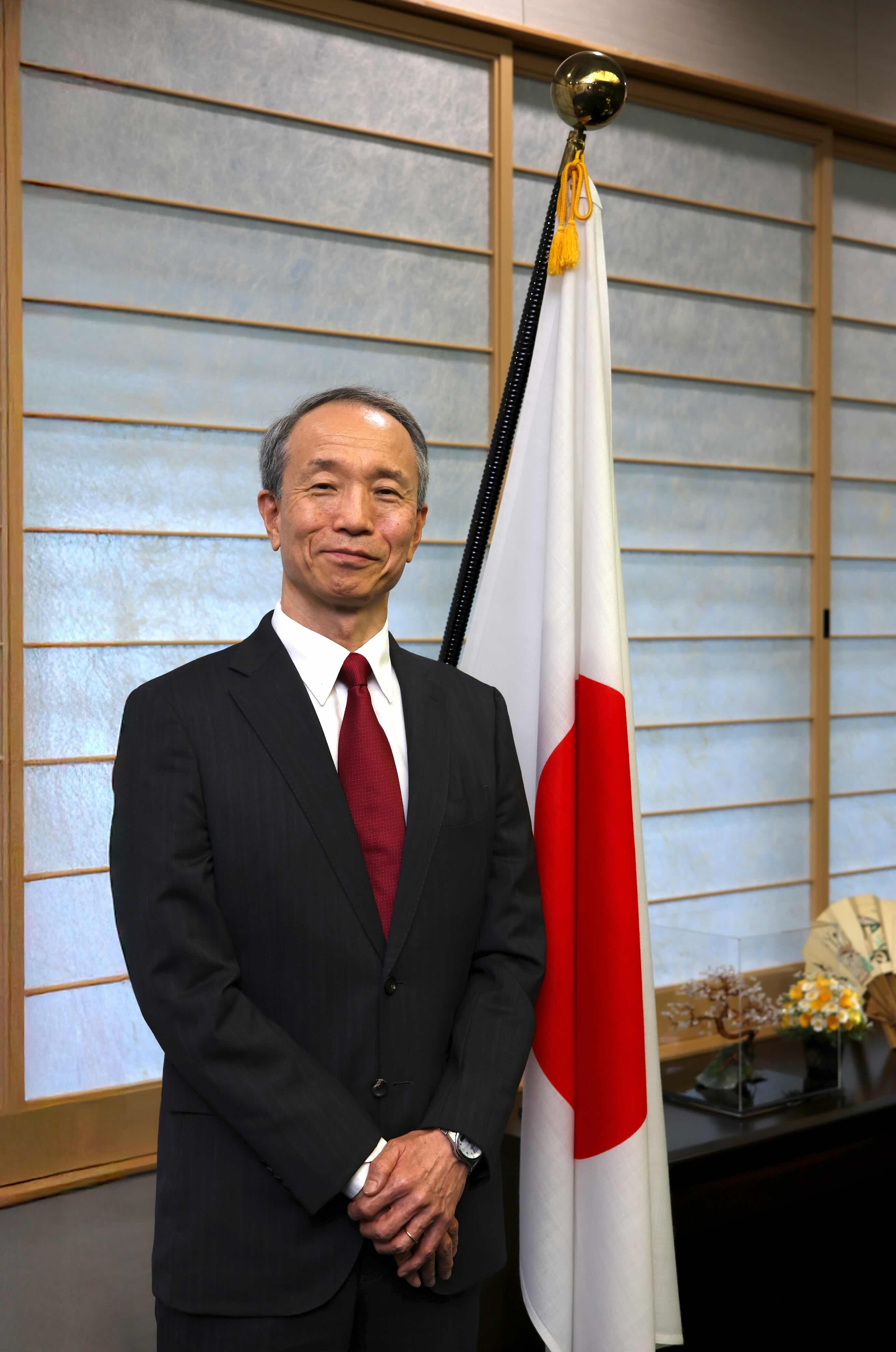
“Over the past 50 years, Ho Chi Minh City has achieved many accomplishments, but the city has yet to fully tap its potential. Once Binh Duong and Ba Ria-Vung Tau are merged into HCMC, this mega-city could contribute three to four times more to the nation’s economy and budget,” Architect Ngo Viet Nam Son told The Saigon Times.
A new look, a new miracle
The Saigon Times: In a 2021 interview, you said that you were involved in the planning of Shanghai’s Pudong area and, in retrospect, felt some regret regarding Thu Thiem. Has your perspective changed since then, and if so, why? After 50 years of development from a new starting point, from a planning standpoint, what has Ho Chi Minh City (HCMC) achieved, and what areas still need improvement?
- Dr. Arch. Ngo Viet Nam Son: HCMC’s urban development has advanced rapidly over the past 50 years. In 1975, when peace was restored, the tallest building in the city, then known as Saigon, was the 12-story Imexco building at 8 Nguyen Hue Boulevard. Today, the city is home to approximately 1,500 buildings over 10 stories tall, including the 81-story Landmark 81, which was once the tallest building in Southeast Asia.
However, from an international perspective, the city’s development still falls short of its full potential. For example, when comparing two new urban center projects launched under similar conditions—Thu Thiem in HCMC and Pudong in Shanghai—it is evident that Thu Thiem has developed much more slowly than its counterpart in Shanghai.
After earning my master’s degree at the University of California, Berkeley, I joined architect John Kriken’s planning consultancy team at SOM in San Francisco to study the planning of central Shanghai on both sides of the river, just as Pudong had been cleared for development. Based on that plan, Pudong’s modern International Financial Center took shape in less than 20 years, featuring many world-class skyscrapers.
While I was still in the United States, I got an invitation from the then-Prime Minister Vo Van Kiet to return and advise on the Thu Thiem project. HCMC also cleared the entire Thu Thiem area and, in 2003, held an international competition to select a master plan for its development. Although Thu Thiem had similar development conditions, albeit on a much smaller scale than Pudong, even with a plan in place, more than 20 years later, only a few small-scale projects have materialized. One of the main reasons is that HCMC lacked an effective strategy to attract investment to the East Bank, allowing high-rise clusters to continue concentrating on the West Bank. Furthermore, due to a mindset constrained by administrative boundaries, planning efforts for Thu Thiem focused solely on the East Bank without creating convenient, direct connections to the existing downtown on the West Bank—an essential factor for attracting investment.
In the near future, Binh Duong and Ba Ria-Vung Tau provinces will be merged into HCMC. What is your assessment of this newly expanded development space, and what advantages will the city gain from this administrative merger?
- To answer this, we need to take a broader global view.
First, as we entered the 21st century, global competition has shifted from individual cities to metropolitan regions — such as the Hong Kong–Shenzhen metropolitan area, the Shanghai metropolitan area in China, the Singapore metropolitan area, and the Manila metropolitan area in the Philippines.
Second, although the current HCMC metropolitan region, which includes HCMC and the provinces of Binh Phuoc, Tay Ninh, Binh Duong, Dong Nai, Ba Ria–Vung Tau, Long An, and Tien Giang, is a key economic region for the country and does have a regional plan in place, it has yet to operate as effectively as expected. These provinces still largely act independently, with limited collaborative regional planning and cooperation.
Third, within the HCMC metropolitan region lies a highly promising economic quadrangle, consisting of four localities with the highest gross regional domestic product (GRDP) in the country—HCMC, Binh Duong, Dong Nai, and Ba Ria–Vung Tau.
Based on this, the merger between HCMC and Binh Duong, Ba Ria–Vung Tau holds significant importance, offering new opportunities to strengthen HCMC through regional integration. The newly expanded HCMC would benefit from enhanced regional infrastructure, including Tan Son Nhat International Airport, Song Than Railway Station (Binh Duong)—the largest in Vietnam—and the Cai Mep–Thi Vai–Can Gio seaport cluster, one of Vietnam’s leading port systems. If the Kra Canal in Thailand is constructed, this port cluster could potentially rival the Singapore port system.
From a regional connectivity perspective, the cooperation between the megacity of HCMC and Dong Nai, with a direct link to the under-construction Long Thanh International Airport, will further unlock economic potential.
We still have to anticipate challenges, right? For example, managing an expanded HCMC will be quite different from managing HCMC on its own.
- Challenges will certainly arise, but they always come hand-in-hand with opportunities. A megacity with a large area and dense population, unprecedented in Vietnam, will pose management challenges.
After the merger, HCMC will have three dynamic hubs: The northern industrial urban hub in Binh Duong, where favorable high ground offers advantages for urban development with less concern over climate change and sea-level rise.
The central urban hub comprises the inner-city areas of HCMC and Thu Duc City, with strengths in economy, finance, high-quality human resources training, advanced technology innovation, and international integration.
The coastal urban hub in Can Gio and Ba Ria-Vung Tau, with strengths as an international port city surrounding the Thi Vai - Cai Mep - Can Gio port cluster, along with a chain of coastal tourism cities in Vung Tau and Can Gio.
A strategic multi-modal infrastructure system (road, highway, railway, waterway, and air) needs to be established to connect these three hubs, to connect to neighboring Dong Nai Province, and especially to connect major infrastructure hubs with industrial zones and other economic units in the region.
A 100-year vision
Many envision the merger of HCMC, Binh Duong, and Ba Ria-Vung Tau as the creation of a new Asian megacity. From the perspective of urban planning and architecture, what directions should HCMC consider to evolve into an international megacity while minimizing the pitfalls faced by other megacities?
- From the standpoint of urban development principles, I believe that after the merger, HCMC should focus on more than 10 strategic issues to ensure sustainable development:
First, develop and apply information technology and smart technology as a foundation to enhance efficient and seamless urban and regional management. In reality, HCMC and other provinces have already adopted information technology, but the effectiveness still lags behind development needs and remains far from the level achieved by advanced cities worldwide.
Second, restructure governmental departments towards multi-disciplinary operation, instead of the currently sector-based approach. The merger of central departments will create better opportunities for multi-sector collaboration.
Third, create mechanisms for participatory development for major projects. For example, in developing TOD (Transit-Oriented Development), urban area agencies will plan TOD zones, private investors will build TOD infrastructure, businesses will operate these areas, and citizens will contribute by supporting and using public transportation more, helping to reduce government subsidies.
Fourth, balance public and private interests, ensuring that corporate or investor interests do not undermine community benefits.
Fifth, development must be guided by feasible planning and implementation plans. This means that, when creating plans, authorities must simultaneously consider investment sources, execution timelines, exploitation plans, and be well-prepared for potential obstacles, delays, or cost overruns.
Sixth, urban development must be aligned with environmental protection, minimizing negative impacts such as traffic congestion and flooding.
Seventh, urban development must be accompanied by efforts to preserve urban heritage, which is critical for maintaining HCMC’s 300-year historical identity.
Eighth, urban development must embrace international cooperation and integration, not only to learn from global urban planning and architectural experiences but also to attract investment from international individuals and organizations.
Ninth, the development of the greater HCMC area should adopt a century-long vision so that future generations do not have to bear the heavy costs of today’s planning mistakes.
Tenth, as mentioned earlier, developing the greater HCMC area must be based on regional linkage and cooperation. The merger of the three localities will greatly facilitate this direction.
One final question. How would you describe the characteristics of HCMC’s urban identity from its early days to the present? What hopes do you have for building on these foundations? Will the new HCMC be able to leverage its advantages to create lasting value for future generations, decades from now?
- The people of old Saigon—today’s HCMC—have long been known for their dynamism. Throughout its 300-year history, the city has consistently attracted talent from across the country and abroad, becoming a fertile ground for startups, new initiatives, and experimental policies that have later been implemented nationwide.
After the merger, the new HCMC will emerge as the country’s leading megacity, presenting numerous strategic opportunities for national development. This megacity could foster new models such as TOD urban zones, integrated industrial urban zones, port towns, coastal tourism towns, and interconnected regional development. If successful, it will not only accelerate growth in HCMC but also serve as a model for other urban regions, such as the Hanoi Capital Region, the Central Key Economic Region, and the Mekong Delta.
Success in these models will help Vietnam’s economy grow rapidly and sustainably.
I firmly believe these expectations are achievable. China reformed its economic policies about eight years ahead of Vietnam, and within a few decades, they may become the world’s largest economy.
If Vietnam continues to innovate across all fields, deeply studies the success stories of China and other countries, and maintains a rapid growth pace similar to China’s, we can undoubtedly realize the dream of ushering in a new era of national advancement, overcoming the middle-income trap, and becoming one of the leading developed nations in Asia.
Reported by Hoang Hanh