Vietnam’s beverage industry has experienced significant changes, fueled by the increasing health consciousness and shifts in consumer spending habits. No longer content with mere refreshment, consumers now seek beverage brands that resonate with their values and promote their overall health. In response, many businesses are working to adapt to new market trends and prepare for future growth.
Rising trend of healthy drinks
With a population of over 100 million people, of them around 25% in the 16-30 age range, Vietnam offers substantial potential and opportunities for the beverage market to expand. At present, Vietnamese consumers are inclined towards beverages that care about health and environmental concerns.
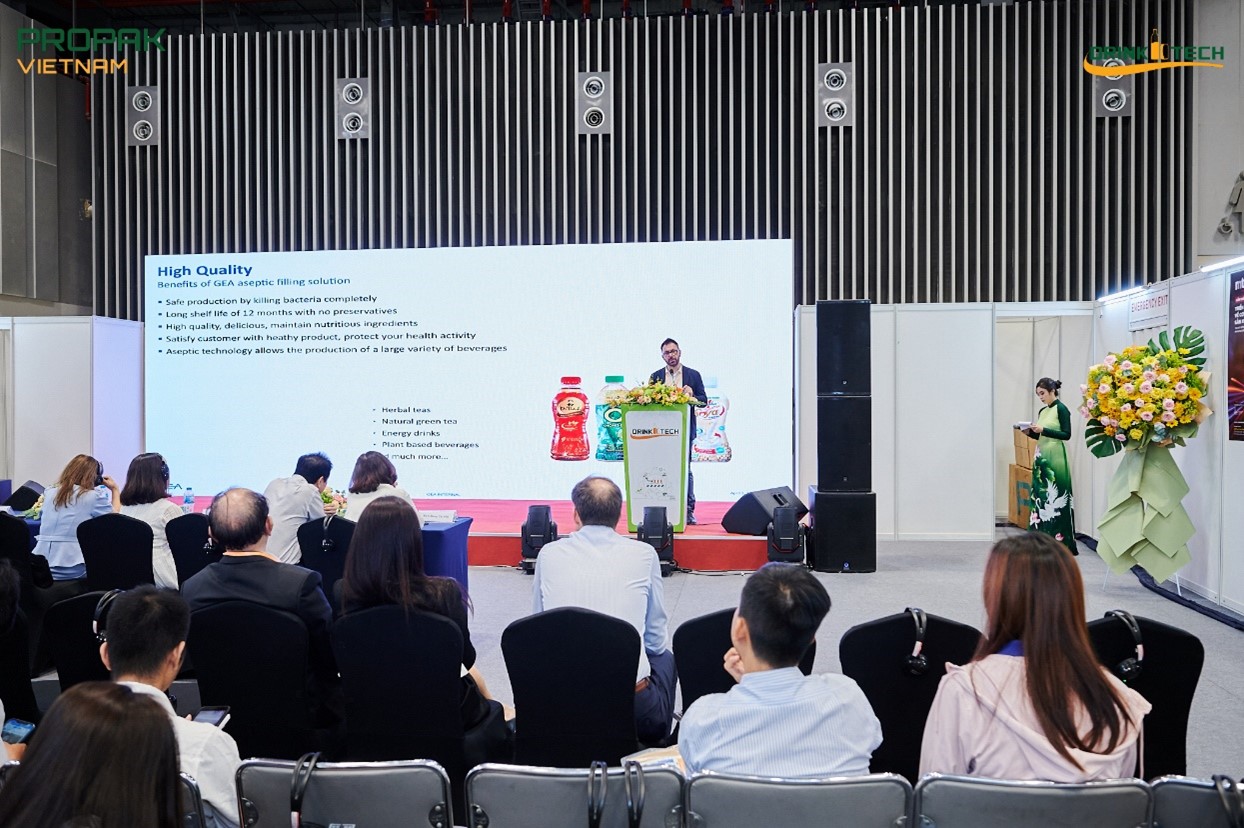
Customer preference for healthy drinks was put on the table at the “Vietnam’s market trends and beverage technology in the future” seminar, which took place as part of the Drink Tech Exhibition at the Saigon Exhibition and Convention Center (SECC) from April 3 to 5. Speaking at the seminar, Associate Professor Dr. Le Nguyen Doan Duy, head of the Department of Food Technology, HCMC University of Industry and Trade, emphasized that concern for health is a major trend of choosing drinks among consumers today.
Citing a survey from the market research firm Cimigo, he said that Vietnamese are more aware of health issues. When looking for beverages, they would prioritize factors such as reducing the risk of illnesses (58%), boosting the immune system (52%), enhancing cardiovascular health (50%), improving digestion (44%), and enhancing mood and mental health (52%). The growing focus on health is driving up sales of beverages added with herbal extracts known for their sleep-promoting properties. Retail sales of sleep-aid products surged from VND107.2 billion to VND328 billion over the course of five years, from 2018 to 2023.
Along with health standards, consumers are also interested in finding products at affordable prices. “Post-Covid-19 economic difficulties make consumers more price-sensitive,” Dr. Duy said.
In a related development, research by McKinsey & Company, a global management consulting firm, found that Vietnamese consumers are becoming increasingly sensitive and are clearly developing along four dimensions: heightened awareness of value, preference for multi-channel platforms, reduced brand and store loyalty, while also seeking purpose in their purchases. It requires beverage brands to develop products that prioritize health, care about the environment, and reflect a local presence to attract customers and aim for long-term development.
Changing towards sustainability
In recent times, both manufacturers and consumers have been prioritizing clean and healthy products, which also make meaningful contributions to the community by promoting environmental protection, energy conservation, and social welfare, said Chu Thi Van Anh, vice president and general secretary of the Vietnam Beer, Alcohol and Beverage Association (VBA). As a result, there will be a focus on “green” beverages made with herbal ingredients, low sugar, low salt, and eco-friendly packaging. Particularly, Gen Z consistently prefers new-gen drinks – modern, healthy and convenient products that are rooted in tradition.
Major players in the beverage market are responding to these changing consumer tastes by introducing new innovations, expanding their product offerings, and especially heading towards sustainable development. They have adapted to using new technologies, such as PET bottling (hot filling) and aluminum canning technology.
Tan Hiep Phat Group, for instance, has embraced GEA’s Aseptic filling technology since its inception, ensuring the production of hygienic beverages in a sterile environment from filling to capping, thereby creating healthy products. Massimo Nascimbeni, Product Manager for Blowing and Filling Products at GEA, a globally recognized Aseptic technology supplier, stressed that beverages packaged with this technology retain their nutritional composition and flavor for 12 months without preservatives, owing to the complete elimination of microorganisms. As the largest customer using GEA’s Aseptic filling technology in Southeast Asia, Tan Hiep Phat has effectively enhanced its product quality.
According to Massimo Nascimbeni, Aseptic technology holds multiple environmental benefits beyond ensuring product quality and food safety. This technology aids in reducing plastic packaging compared to alternatives like hot filling. In collaboration, GEA and Tan Hiep Phat have successfully decreased the weight of each bottle by 50%, from the initial 27 grams to just 13.5 grams. In addition, this technology provides sustainable and green solutions through low energy consumption, low water consumption and limited use of sterilization chemicals which affect the environment.
With well-defined strategies to align with market trends and pursue sustainability, Tan Hiep Phat has achieved significant milestones since its inception. The company distributes its products both domestically and internationally. Currently, Tan Hiep Phat exports its products to over 20 countries and territories worldwide, including high-demand markets like the U.S., Japan, and Korea.
Other beverage manufacturers in Vietnam have also worked hard to adapt to evolving consumer preferences and meet sustainability demands. Many have reformulated their products to incorporate natural ingredients, reduce sugar content, and provide additional functional benefits like added vitamins and antioxidants. Additionally, some companies have applied modern technologies to minimize plastic usage in packaging, ensuring product quality, and positioning themselves for future growth.
Adapting to change is a key to success in the modern world. With a growing demand for healthier and more sustainable options, businesses that adapt, innovate, and adopt modern technology will absolutely secure success in this dynamic and evolving market. Backed by Government support and a rising interest in diverse culinary experiences, Vietnam’s beverage industry is heading towards stronger growth and transformation.