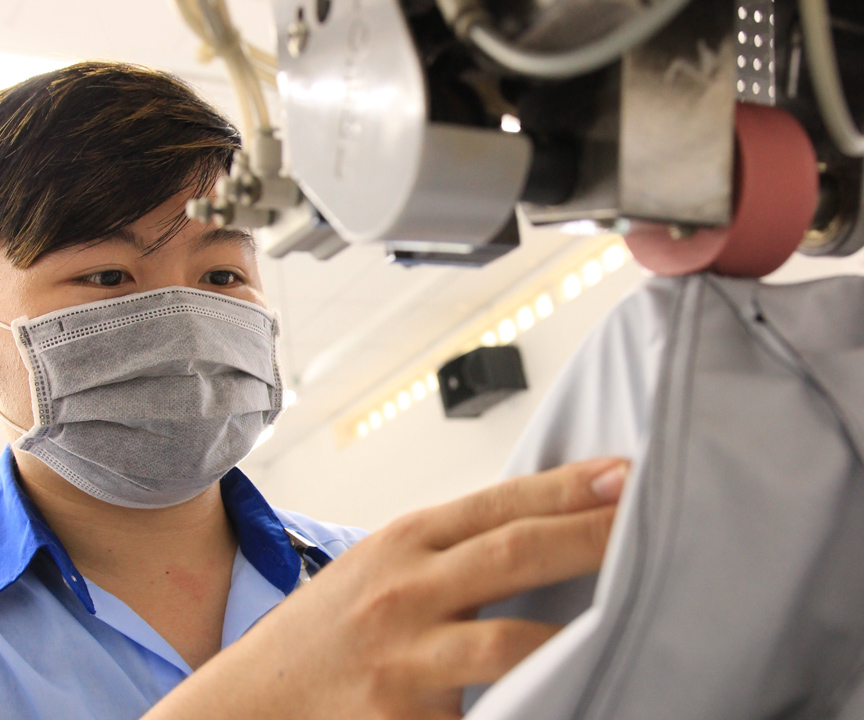
Vietnam’s textile and garment industry is showing signs of recovery after a challenging year marked by weak demand in key export markets. Orders from major markets like the United States and Europe are returning, indicating a positive turnaround. However, is this recovery strong enough for textile and garment businesses to confidently expand their operations?
In addition to the recovery in export markets, the ongoing political crisis in Bangladesh—Vietnam’s main competitor—could present a significant opportunity for Vietnam’s textile and garment industry to take some of the orders diverted away from Bangladesh. This situation may prompt Vietnam to reform its policies and processes to attract more investment and orders.
A strong business rebound in Q2
In Q2 2024, Vietnam’s textile and garment industry experienced a positive recovery, with total export revenue in the first seven months of the year expanding by 7.8% against the same period last year. This improvement is largely due to the return of orders from major markets, particularly the United States and Europe. Orders from the United States increased by 8.2% and 7.9% from Europe, indicating a recovery in consumer spending in these key markets. The resurgence has enabled Vietnamese textile and garment companies, especially those with long-term partnerships with major brands, to capitalize on the opportunity to boost revenue and profit, leading to better overall business results despite current challenges.
According to statistics, the industry’s revenue in Q2 grew by 6.6% year-on-year, and notably, profits surged by 63.8%, showing a significant improvement in business performance. But profit growth is uneven, with medium and large-sized businesses achieving a substantial recovery, while smaller businesses continue to struggle.
The primary reason for the improvement in the textile and garment industry is the increase in profit margins, which rose to 15.5% from last year’s 13.8%. This increase is mainly due to a year-on-year drop of more than 20% in fabric prices, reducing production costs. These cost savings have clearly enhanced the performance of many businesses. Compared to the same period last year, the hefty spike in profit margins reflects the better optimization of production processes and cost management. Consequently, profit growth has become the main driver of the solid recovery in the textile and garment industry, even as the export market gradually recovers. Larger businesses with higher production volumes and orders benefit more from these cost reductions than smaller firms.
Opportunity arises from Bangladesh’s political crisis
Bangladesh, one of Vietnam’s major competitors in the textile and garment industry, is currently grappling with a severe political crisis. Widespread demonstrations and riots have led to the resignation of the prime minister and the dissolution of parliament. This unrest has hindered Bangladesh’s textile and garment sector, affecting its ability to maintain operations and attract foreign investment.
The political turmoil has not only disrupted economic activities but has also impacted the implementation of policies related to LEED (Leadership in Energy and Environmental Design). LEED is an international certification system that sets rigorous standards for sustainable building and production processes, focusing on indoor energy and air quality management, efficient natural resource use, and greenhouse gas reduction. Compliance with LEED standards can boost a country’s appeal to international investors, particularly those from developed economies like the United States and Europe.
However, political instability in Bangladesh may make foreign investors more hesitant to set up shop there.
Vietnam’s textile and garment industry can seize this opportunity to enhance its production processes toward sustainability and increase the adoption of LEED standards to boost its competitiveness.
Transitioning to green technology and environmentally friendly production processes not only improves business performance but also opens up new opportunities in global markets, as more partners demand products that meet sustainability standards. If Vietnam’s textile and garment industry swiftly make these improvements and invest in green technology, it would be able to make great progress, positioning itself more competitively on the global stage.
The current situation presents a unique opportunity for Vietnam’s textile and garment sector, not just to recover from recent challenges but also to make major advancements in sustainable development.
Investment still gloomy
Despite the recovery in business performance, the financial conditions of Vietnam’s textile and garment businesses are not yet solid enough to conduct expansion investments. After a challenging 2023, businesses are regaining some stability but remain cautious due to ongoing risks in the global economy. The industry’s cash flows have returned to pre-Covid-19 levels, indicating an improvement in liquidity. The fast payment rate, a key indicator of the ability to meet short-term financial obligations, also shows positive signs. However, the debt-to-capital ratio is nearing 1, suggesting pressure from short-term borrowing to fulfill orders in the last quarter.

Meanwhile, the industry’s fixed asset growth declined by 4.2% compared to the same period last year, reflecting a cautious approach to investing in infrastructure and new equipment. Similarly, the growth of assets in progress (assets under construction and those in production that require a long time—over 12 months—to be put into use or sale) dropped by 20.8%. Businesses are still hesitant to expand production or invest in new projects. Inventories increased by only 3%, as companies are now more likely to produce on demand rather than maintaining stockpiles in advance.
This caution stems from global economic uncertainties. Although the European Central Bank has cut interest rates, U.S. monetary policy is not yet loosened to stimulate the economy. Concerns over inflation and declining consumer spending still linger, posing a threat to the sustainable recovery of these markets. Therefore, Vietnamese textile and garment businesses are focusing on maintaining current operations rather than taking the risk of expanding production under such uncertain conditions.
While the financial situation of the textile and garment industry has got better than last year, it is not yet strong enough to encourage businesses to confidently invest in expansion projects. This caution is understandable, given the current challenges from the global market and macroeconomic factors.
(*) Chartered Financial Analyst (CFA)
(**) Viet Dragon Securities Corporation (VDSC)