“I first began reading The Saigon Times during my earlier posting at the Consulate-General of Japan in Ho Chi Minh City, from 1994 to 1998. Those were exciting times, with Vietnam opening up under the Doi Moi reforms and many Japanese companies were establishing their presence in southern Vietnam. As an officer responsible for economic affairs at the Consulate-General in those days, I found the up-to-date information The Saigon Times provided on Vietnam’s economy truly invaluable — and I am sure the Japanese business community here shared that sentiment.
From early butterfly seasons in Cuc Phuong in the North to sea turtle conservation journeys off Con Dao Island in the South, ecotourism in Vietnam’s national parks is undergoing a profound transformation. It has become a search for a connection between humans and nature through responsible travel models.
In an unusual shift, summer arrived early at Cuc Phuong National Park in Ninh Binh Province in 2026. By late March, flocks of vividly colored butterflies were already fluttering along trails cutting through ancient primary forest canopies. Forest rangers see this as a sign of an ecosystem at its most balanced and pristine. The early arrival of these fragile wings not only draws visitors but also opens a broader conversation about how humanity engages with natural treasures amid the pressures of climate change.
The allure of responsible experiences
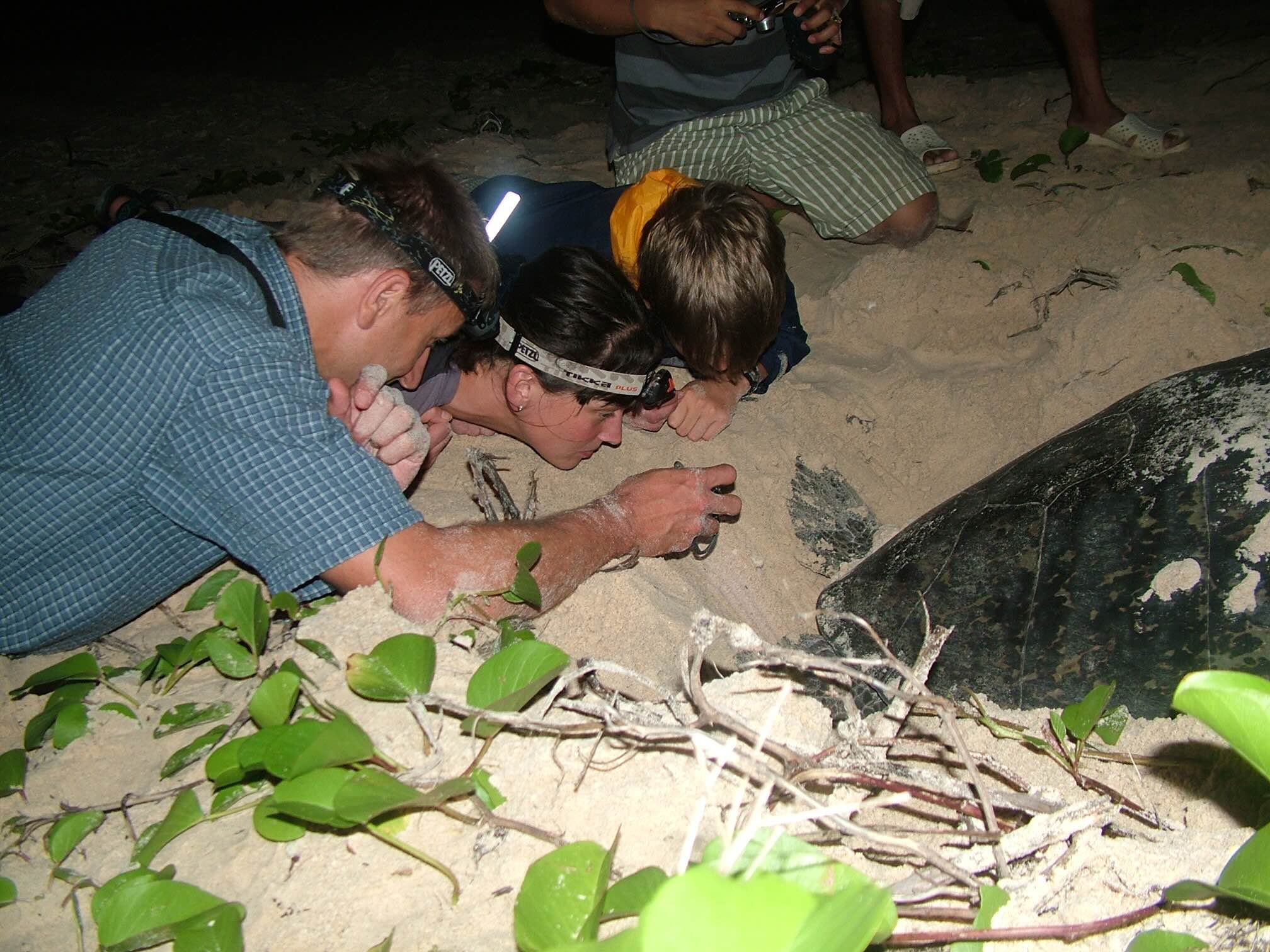
Under a new definition, ecotourism is no longer about exploiting nature for leisure, but rather a pathway for people to understand the value of conservation. At Con Dao National Park in HCMC, a true nature conservation tour is not designed for noisy crowds. Instead, it unfolds through silent nights spent waiting for sea turtles to lay eggs or early mornings watching hatchlings take their first tentative steps toward the ocean.
Such raw and authentic moments are made possible by a strict governance system. Nguyen Van Nga, director of the Department of Ecotourism and Environmental Education, head of ecotourism at the Con Dao National Park Management Board, explained the operating principles. As climate change increasingly impacts ecosystems, Con Dao National Park has drawn a very clear “red line”. All ecotourism activities must remain within the ecosystem’s carrying capacity and must not interfere with the natural biological processes of species or the broader environmental resources of Con Dao Island.
This “red line” represents a firm commitment not to trade environmental integrity for rapid growth. Visitors to Con Dao Island must strictly comply with regulations on space and timing, particularly in sensitive areas. “We remain steadfast in our principle of not sacrificing conservation or the environment for tourism-driven economic development. When ecosystems show signs of stress, we are ready to adjust or suspend activities to ensure nature’s integrity and recovery capacity,” Nga said.
Sharing the same philosophy, Bidoup - Nui Ba National Park has built its tourism model on absolute respect for the forest. Pham Van Dan, the park’s deputy director, says the park consistently applies the “Leave No Trace” principle. All trekking and biodiversity exploration programs prioritize conservation. “Not trading conservation for tourism development means every ecotourism activity must prioritize biodiversity protection above all else,” he said.
The sophistication of ecotourism here also lies in its educational value. At Bidoup - Nui Ba, visitors do more than trek under two-needle pine forests; they are introduced to scientific interpretations of primary forest formation and local cultural narratives tied to nature. Every tourism activity is paired with interpretive content that offers insights into biodiversity and indigenous cultural values connected to the natural environment.
Where heritage meets modern livelihoods
The shift of national parks from traditional conservation models to responsible tourism is not a passing trend but a necessary response to the Net Zero era. When visitors choose destinations like Bidoup - Nui Ba or Con Dao, they are not merely buying tickets. They are effectively paying for ecosystem services.
At Bidoup - Nui Ba, this connection is translated into experiential programs aligned with UNESCO principles. The park is adopting a dual approach, both applying technology and operating tourism in a low-emission, education-rich direction to contribute to global emission reduction goals,” Dan said. This is where visitors encounter the subtle intersection between conservation and culture, experiencing the lifestyles of buffer-zone communities and understanding how they respect forests as living entities.
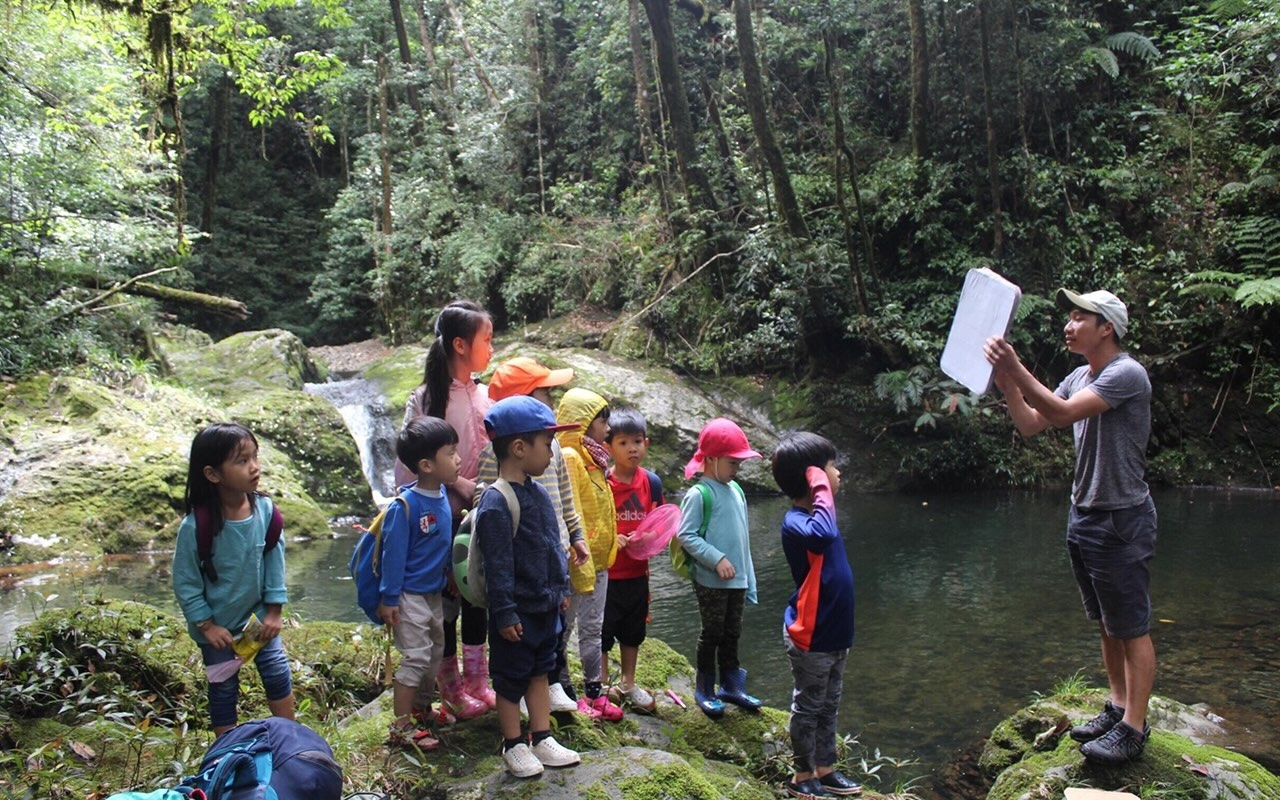
Children join an environmental education activity at Bidoup - Nui Ba National Park, where ecotourism is combined with biodiversity conservation and community-based learning - PHOTO: COURTESY OF BIDOUP – NUI BA NATIONAL PARK
The vitality of conservation areas lies not only in flora and fauna but also in the smiles of communities that depend on forests for their livelihoods. This is the most critical link in building a sustainable tourism ecosystem. On Con Dao Island, residents are no longer bystanders but active participants in the green economy. Nga explained: “To transition from strict protection to conservation for development, local communities must become true beneficiaries, not just subjects of management.”
Con Dao National Park has implemented benefit-sharing mechanisms, enabling residents to directly participate in transportation, accommodation, guiding services, and conservation programs such as sea turtle rescue and forest protection contracts. When economic benefits are closely tied to conservation responsibilities, people become not just beneficiaries but an extended arm of conservation efforts, working proactively and sustainably with authorities to preserve biodiversity, he added.
Meanwhile, conservation in heritage parks is increasingly shaped by future technologies. Nga noted that climate adaptation requires a combination of digital transformation and governance innovation. The park is prioritizing smart monitoring systems, including GIS, cameras, camera traps, sea turtle tracking devices, and real-time visitor data management, to control carrying capacity and minimize ecological impacts.
Similarly, Bidoup - Nui Ba National Park has adopted remote sensing and unmanned aerial vehicles to monitor forest resource changes, while piloting low-emission tourism models and minimizing single-use plastics.
In terms of governance, Con Dao is moving strongly toward co-management, where businesses, communities, and park authorities jointly design, operate, and oversee tourism products. Activities such as turtle-watching tours and coral reef restoration programs are standardized so that each participant can fully appreciate the fragility of life. As Nga put it, the ultimate goal is for every visitor to become an environmental ambassador.
The early arrival of butterflies in Cuc Phuong or sustainable tourism development at Bidoup – Nui Ba and Con Dao national parks is encouraging notes in the symphony between humans and nature. Yet nature is ever-changing, and “red lines” on carrying capacity and co-management models serve as necessary safeguards to protect these legacies.
The story of balance unfolding in Vietnam’s national parks today underscores a fundamental truth. Development is only truly sustainable when grounded in understanding and respecting nature’s limits. Preserving these primal values is how we maintain the strongest link between a heritage-rich past and a green, sustainable future.
“I first began reading The Saigon Times during my earlier posting at the Consulate-General of Japan in Ho Chi Minh City, from 1994 to 1998. Those were exciting times, with Vietnam opening up under the Doi Moi reforms and many Japanese companies were establishing their presence in southern Vietnam. As an officer responsible for economic affairs at the Consulate-General in those days, I found the up-to-date information The Saigon Times provided on Vietnam’s economy truly invaluable — and I am sure the Japanese business community here shared that sentiment.



 Meanwhile, conservation in heritage parks is increasingly shaped by future technologies. Nga noted that climate adaptation requires a combination of digital transformation and governance innovation. The park is prioritizing smart monitoring systems, including GIS, cameras, camera traps, sea turtle tracking devices, and real-time visitor data management, to control carrying capacity and minimize ecological impacts.
Similarly, Bidoup - Nui Ba National Park has adopted remote sensing and unmanned aerial vehicles to monitor forest resource changes, while piloting low-emission tourism models and minimizing single-use plastics.
In terms of governance, Con Dao is moving strongly toward co-management, where businesses, communities, and park authorities jointly design, operate, and oversee tourism products. Activities such as turtle-watching tours and coral reef restoration programs are standardized so that each participant can fully appreciate the fragility of life. As Nga put it, the ultimate goal is for every visitor to become an environmental ambassador.
The early arrival of butterflies in Cuc Phuong or sustainable tourism development at Bidoup – Nui Ba and Con Dao national parks is encouraging notes in the symphony between humans and nature. Yet nature is ever-changing, and “red lines” on carrying capacity and co-management models serve as necessary safeguards to protect these legacies.
The story of balance unfolding in Vietnam’s national parks today underscores a fundamental truth. Development is only truly sustainable when grounded in understanding and respecting nature’s limits. Preserving these primal values is how we maintain the strongest link between a heritage-rich past and a green, sustainable future.





