
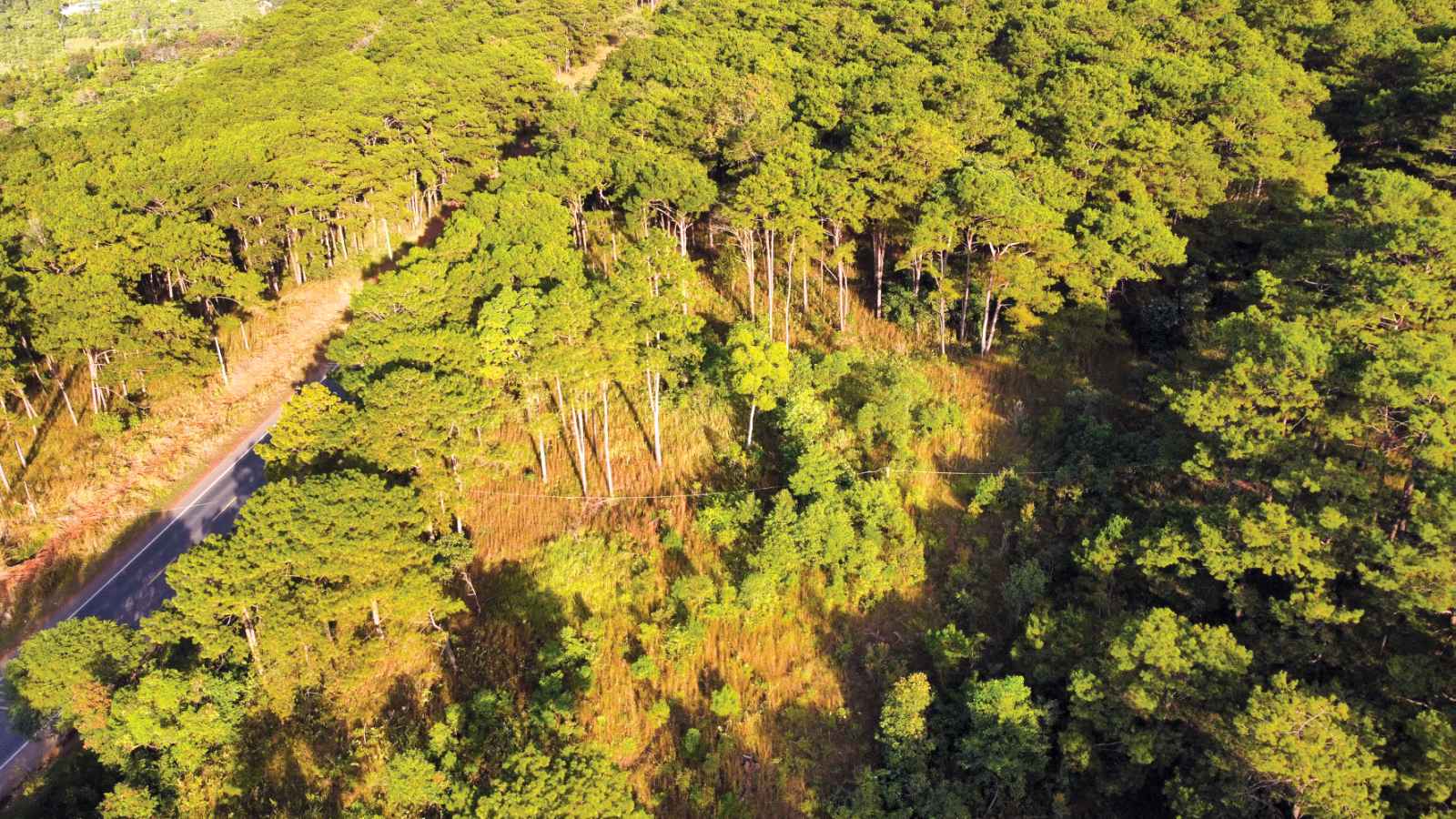



With immense potential, the forest carbon credit market is raising questions about how revenue from carbon credit trading can be equitably shared among stakeholders
Climate change and the carbon market The foundation of the carbon credit market can be traced back to the 1997 Kyoto Protocol for Climate Change, with Article 6 of the 2015 Paris Agreement providing the framework. Over time, global consensus has emerged regarding the establishment and operation of carbon markets to fund efforts aimed at reducing greenhouse gas emissions. Carbon credits, each representing the right to emit one ton of carbon dioxide or an equivalent volume of greenhouse gases, are tradable commodities on this market. At the 26th Conference of the Parties (COP 26), Vietnam, which is one of the most affected countries by climate change globally, made strong commitments to achieving net-zero emissions by 2050. Additionally, Vietnam pledged to reduce methane emissions by 2030, endorsed the Glasgow declaration on forests and land use, and actively engaged in global alliances for adaptive actions. The country is also in the process of developing its domestic carbon market, with plans to pilot it in 2025 and establish the carbon credit exchange by 2028, as per the Ministry of Natural Resources and Environment’s draft plan. With the impending operation of the carbon market, exploring the prospects of a forest carbon market in Vietnam becomes crucial. Such a market not only contributes to emission reduction targets but also offers economic benefits to forest-dependent communities. According to statistics of the forestry sector, in 2021 Vietnam had 14.7 million hectares of forest, including 2.2 million hectares of special use forest, 4.7 million hectares of protected forest and 7.8 million hectares of production forest, and a forest coverage of 42%. Sixty percent of the forests were managed by the State and 40% allocated to households, individuals and organizations. Forest carbon credit initiatives encompass various activities, including forest loss and degradation reduction, afforestation, reforestation, vegetative cover restoration, natural forest recovery, timber exploitation control, and sustainable forest management enhancements. Priced at US$5 per credit, Vietnam could potentially sell 57 million carbon credits annually, translating into substantial revenue that could fund emission reduction efforts, forest protection, and support the livelihoods of forest-dependent communities. Benefit sharing: Legal framework needed As the forest carbon market in Vietnam gains momentum, it is increasingly imperative to address the crucial issue of how revenue generated from carbon credit trading can be fairly distributed to those most affected by climate change and reliant on forests for their livelihoods. Specifically, the question arises: Are the proceeds from carbon credit sales reaching the people, particularly those directly engaged in forest preservation and conservation efforts? If so, what mechanisms are in place to facilitate this equitable sharing? Vietnam has actively engaged in various agreements and pilot projects focused on emission reduction, resulting in the country earning its initial income from carbon credit transfers. Notably, Vietnam recently transferred 10.3 million tons of carbon dioxide reductions from the forests in six north-central provinces to the International Bank for Rehabilitation and Development (IBRD) of the World Bank under the Emissions Reduction Purchase Agreement (ERPA) for the north-central region. Priced at US$5 per ton of carbon dioxide, this transfer has generated around US$51.5 million. This milestone marks Vietnam’s entry into the compulsory market with its forest carbon contributions. Revenue from carbon credit sales in the six provinces has undergone a structured allocation process, ensuring equitable distribution among stakeholders. Following the deduction of management fees and lawful expenses, profit distribution has been meticulously executed. For instance, the People’s Committee of Quang Binh Province, through Decision 3607/QD-UBND on December 15, 2023, officially approved the list of beneficiaries under the ERPA. Quang Binh Province received an advanced payment totaling VND82.4 billion, which was subsequently divided into two portions. A sum of VND2.4 billion (3%) was allocated to the local forest protection and development fund, while the remaining VND80 billion was disbursed to other beneficiaries. These beneficiaries encompassed 16 forest owners categorized as organizations, 10,762 forest owners representing households, individuals, and communities, in addition to 71 village people’s committees and nine other designated organizations responsible for forest management. The benefit-sharing process adheres to the guidelines stipulated in Government Decree 107/2022/ND-CP, focusing on the pilot transfer of emission reduction results and financial management for the ERPA within the north-central region. This decree marks a significant milestone as it establishes a structured framework for the exchange, transfer, and equitable distribution of profits generated from forest carbon initiatives in Vietnam. Under the provisions of Decree 107, revenue resulting from carbon credit transfers is allocated to five distinct beneficiary groups: (i) Owners assigned to manage natural forests, (ii) village people’s committees and other organizations assigned for natural forest management, (iii) communities and village people’s committees with agreements to participate in forest management with forest owners who are organizations, (iv) the Vietnam Forest Protection and Development Fund and the Fund for Protection and Development of Forests in six north-central provinces, and (v) Others who have activities related to the reduction of forest greenhouse emission and absorption in six north-central provinces. The profit distribution is used for four activities, namely (i) forestry to reduce greenhouse emissions, (ii) direct contribution to greenhouse emission reduction such as forest protection and silviculture, (iii) support for livelihood development, and (iv) management.
The regulations outlined in Decree 107 have laid the foundation for profit distribution from carbon credit transfers. However, these regulations, while crucial, are currently limited in scope. They function as pilot guidelines, addressing specific objectives and regions under the ERPA, primarily focusing on activities related to greenhouse emission reduction and absorption within the natural forests of six north-central provinces. Consequently, Vietnam lacks a comprehensive legal framework for the equitable sharing of profits from carbon credits.
The Environmental Protection Law of 2020, Decree 06/2022/ND-CP, and Circular 01/2022/TT-BTNMT are the legal instruments directly overseeing the organization and development of the carbon market. Article 8 of Decree 06/2022/ND-CP permits organizations, households, individuals, and communities serving as forest owners, engaging in sustainable forest development measures, and contributing to increased forest coverage, biomass, and quality to participate in domestic and international carbon credit exchange and offset mechanisms. Furthermore, Article 61 of the Forest Law designates forest carbon absorption and preservation, sustainable forest management, and green growth as forest environment services, subject to compensation as per the Forest Law and the detailed regulations outlined in Decree 156/2018/ND-CP.
However, the absence of overarching regulations governing forest carbon policies results in a lack of cohesion between carbon credit transactions, market dynamics, and forest environment service supply. This legal gap raises questions about the asset quality of forest carbon credits and the relationship between forest carbon credit ownership, forest ownership, and forest usage rights. Such uncertainties may lead to inadequacies in carbon credit transfers and profit distribution processes.
While the carbon credit market has yet to officially materialize in Vietnam, the implementation of the pilot mechanism is commendable. Nevertheless, to effectively establish and develop the carbon credit market nationwide, the formulation of a comprehensive legal framework stands as a paramount task.
The profit distribution is used for four activities, namely (i) forestry to reduce greenhouse emissions, (ii) direct contribution to greenhouse emission reduction such as forest protection and silviculture, (iii) support for livelihood development, and (iv) management.
The regulations outlined in Decree 107 have laid the foundation for profit distribution from carbon credit transfers. However, these regulations, while crucial, are currently limited in scope. They function as pilot guidelines, addressing specific objectives and regions under the ERPA, primarily focusing on activities related to greenhouse emission reduction and absorption within the natural forests of six north-central provinces. Consequently, Vietnam lacks a comprehensive legal framework for the equitable sharing of profits from carbon credits.
The Environmental Protection Law of 2020, Decree 06/2022/ND-CP, and Circular 01/2022/TT-BTNMT are the legal instruments directly overseeing the organization and development of the carbon market. Article 8 of Decree 06/2022/ND-CP permits organizations, households, individuals, and communities serving as forest owners, engaging in sustainable forest development measures, and contributing to increased forest coverage, biomass, and quality to participate in domestic and international carbon credit exchange and offset mechanisms. Furthermore, Article 61 of the Forest Law designates forest carbon absorption and preservation, sustainable forest management, and green growth as forest environment services, subject to compensation as per the Forest Law and the detailed regulations outlined in Decree 156/2018/ND-CP.
However, the absence of overarching regulations governing forest carbon policies results in a lack of cohesion between carbon credit transactions, market dynamics, and forest environment service supply. This legal gap raises questions about the asset quality of forest carbon credits and the relationship between forest carbon credit ownership, forest ownership, and forest usage rights. Such uncertainties may lead to inadequacies in carbon credit transfers and profit distribution processes.
While the carbon credit market has yet to officially materialize in Vietnam, the implementation of the pilot mechanism is commendable. Nevertheless, to effectively establish and develop the carbon credit market nationwide, the formulation of a comprehensive legal framework stands as a paramount task.
(*) University of Economics and Law, National University in HCMC.
(1) The price is based on the Emission Reduction Purchase Agreement for the north-central region.