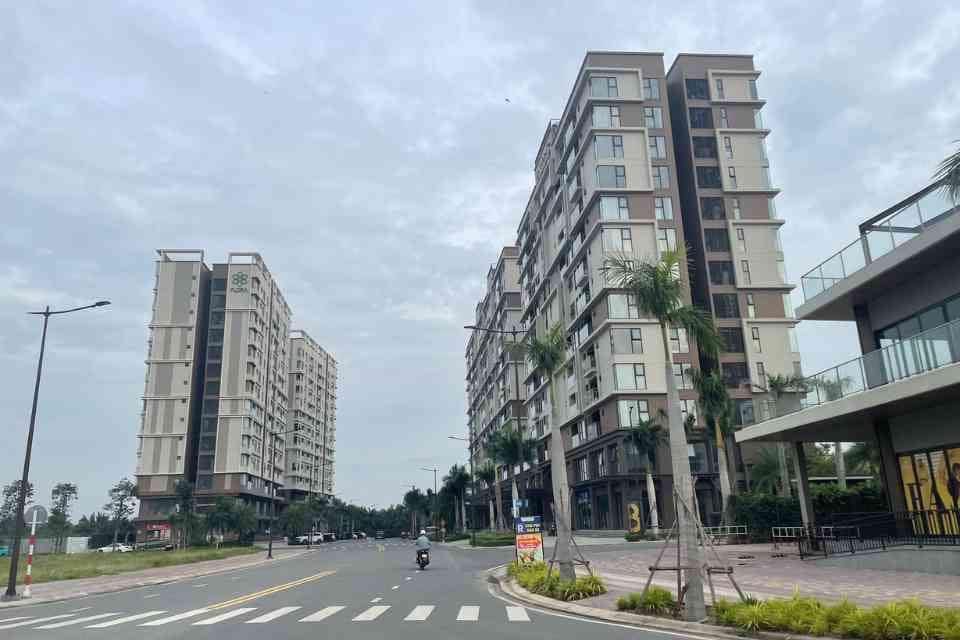
The real estate market in 2025 will facing a transformative phase as newly enacted laws bring opportunities and challenges. While stricter regulations enhance consumer protection, higher land taxes and fees raise concerns among smaller developers struggling with increased capital demands for upcoming projects.
Scouting for qualified investors
The introduction of the revised laws governing housing, land, and real estate business is expected to usher in a more structured property market. According to Pham Thi Mien, deputy director of the Institute for Market Research and Evaluation under the Vietnam Association of Realtors (VARS IRE), many of the sector’s current hurdles stem from legal ambiguities.
The revised laws aim to improve the overall quality of market supply by filtering out underperforming or non-compliant companies. Greater transparency in project information will allow investors and homebuyers to better assess the true value of properties, reducing associated risks.
However, these changes come with added financial pressures for developers. The new land pricing mechanisms have increased the costs tied to securing land for housing projects. Expenses related to compensation, site clearance, and land use fees—already significant contributors to development costs—are expected to rise, creating short-term challenges for developers.
This evolving legal landscape presents a significant challenge for developers as they plan their projects. To maintain profitability amid rising costs, many may be compelled to raise sale prices, increasing the risk of liquidity problems and difficulties in recovering capital.
The housing supply, particularly in the affordable segment, saw a steep decline in 2024. A report by Cushman & Wakefield said that HCMC’s total apartment supply during the first half of the year was only 1,842 units, marking a 54% drop compared to the same period in 2023. The third quarter of 2024 saw the launch of just 642 new apartments, a 31% fall from the previous quarter and an 83% drop year-over-year. Most of these new projects were concentrated in the eastern and southern areas of the city, with the mid-range segment making up 77% of the new supply and the high-end segment accounting for 16%.
A representative from Cushman & Wakefield attributed these trends to stricter regulations on land use compliance, which have made the acquisition and development of legally approved land more challenging. Obtaining permits and project approvals now involves more detailed and stringent procedures, requiring developers to be meticulous in their preparations and closely aligned with new legal standards.
While these procedural changes may lengthen project timelines, they also ensure that developments adhere to high-quality standards and comply fully with regulations.
“These changes demand that developers adopt more effective financial strategies and project management practices to navigate the new legal environment,” the representative noted. “However, with proper preparation and strategic planning, developers can capitalize on new opportunities and achieve sustainable growth in the real estate sector.”
Unlocking advantages for business transformation

Nguyen Xuan Quang, chairman of Nam Long Group, sees 2025 as the beginning of a new development cycle after the market downturn of 2023-2024. Speaking to The Saigon Times, he explained that his company evaluates the market over a three- to five-year horizon.
“In this new phase, we anticipate the market becoming more transparent and sustainable due to the implementation of new laws. It will also represent a period of maturation, similar to trends observed in countries that have undergone this transition,” he said.
Quang highlighted that infrastructure would play a crucial role in driving growth in markets around major urban centers. As these areas develop, property values will adjust accordingly. He noted that satellite cities currently offer diverse and affordable land options. However, beginning in 2026, new regulations and updated land-use fee calculations will lead to higher costs. Clean land in satellite urban areas will become scarcer and more expensive, increasing demand and limiting accessibility.
Nam Long Group’s projects, Quang said, have already settled all land-use fees, insulating them from near-term cost impacts. With over 32 years of experience, the company has secured 680 hectares of fully paid land in strategic locations, with clear project legalities. This provides a significant advantage as the market enters a new growth cycle.
Duong Kim Quan, CEO of Bcons Group, shared how his company has adapted to challenges in cost structures and total project investment. Bcons, which has multiple projects in Binh Duong, has taken steps to streamline operations, including eliminating unnecessary activities, optimizing workforce utilization, and employing advanced project management technology.
The company has also embraced a strategy of controlled profitability, remaining committed to the affordable housing segment in Binh Duong. With properties priced at VND30-40 million per square meter, Bcons aims to meet market demand while managing costs effectively.
Financial obligations and land costs in suburban areas are 30-40% lower than those in urban centers. Additionally, labor, construction materials, and other expenses in these areas are 10-15% cheaper, making them ideal for developing affordable housing projects.
Recognizing these advantages, Bcons Group plans to continue securing land with full documentation and competitive pricing for future projects. The company is also collaborating with banks to offer loans with preferential interest rates and provide tailored advice that aligns with customers’ long-term financial goals.
Nguyen Dinh Truong, CEO of TT Capital Investment Corporation, has also capitalized on the suburban shift. The company recently launched the TT AVIO project in Di An City, Binh Duong, offering over 2,000 apartments ranging from 40 to 81 square meters, with prices starting at VND1.23 billion.
Looking ahead, TT Capital aims to develop affordable housing projects in HCMC and surrounding areas, focusing on satellite cities such as Binh Duong, Long An, and Dong Nai.
These locations are chosen for their strong transportation connections to HCMC, including proximity to highways, belt roads, and public transportation hubs like metro stations. The company also prioritizes large land areas with long-term development potential and the capacity to integrate comprehensive amenities.
Pham Thi Mien, deputy director of the VARS IRE, highlighted the importance of collaboration and strategic partnerships in large-scale projects. This approach allows for sufficient land acquisition to enable the development of affordable housing with strong liquidity. She emphasized that developers must carefully analyze pricing and payment policies to align with market demand while partnering with banks to offer accessible financing options.
Mien also urged developers to reduce reliance on credit financing by increasing transparency, particularly in legal matters, to attract capital from corporate bonds or customer advance payments. A phased approach to project implementation, synchronized with market purchasing power, could help ease financial pressures while maintaining efficiency.