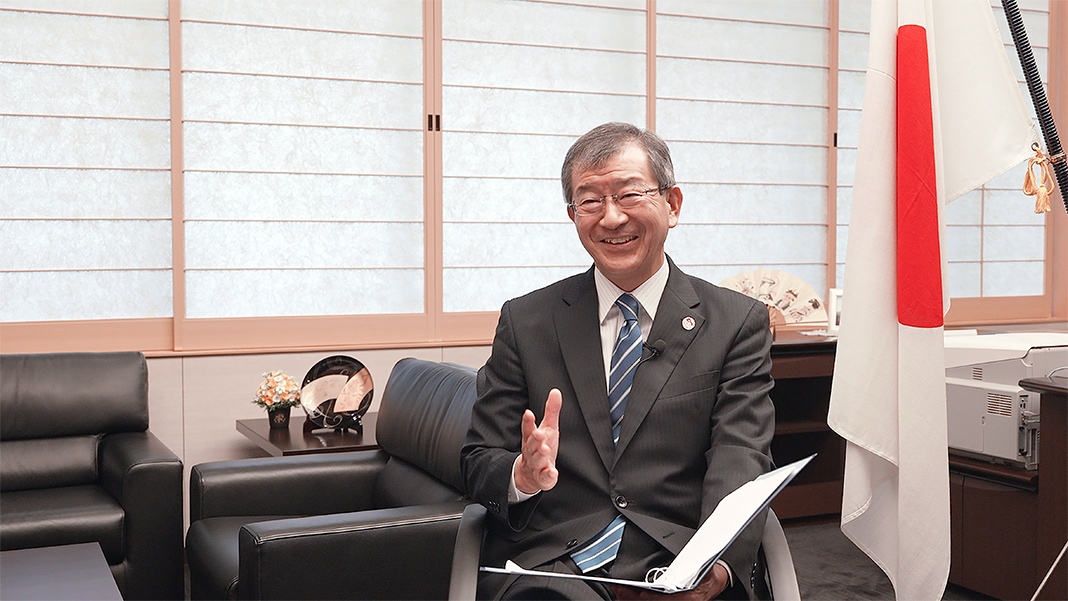
When it comes to Japan, many people might think of a world-leading creator of advanced high-tech equipment. However, the country of the rising sun is famous for agricultural, fishery, and food products which are being promoted to export to many countries, including Vietnam. In an interview with The Saigon Times, Watanabe Nobuhiro, consul general of Japan in HCMC, talked about the potential and expectations to foster the flourishing bilateral ties including food and agro-forestry-fishery field between Vietnam and Japan. Excerpts:
The Saigon Times: Japan has launched a platform to support food and agro-forestry-fishery exports to Vietnam, promoting trade and connecting businesses from the two countries. What expectations do you have for this? Watanabe Nobuhiro: Japan has been working hard over the years to increase the export of agricultural, fishery, and food products. As a result of such efforts, the export volumes in 2021 increased twice as big as those in 2012. And the volumes reached one trillion yen in 2021. The reasons for such an increase are among others, firstly incomes of many countries’ consumers, mainly those of consumers in Asian countries, increased in recent years. This shows that the potential buyers’ groups of Japanese agricultural products and food items are being expanded. Secondly, as foreign visitors to Japan increase, the popularity of Japanese food products also spreads overseas. The Japanese Government sets a target of 2 trillion yen in 2025 and 5 trillion yen in 2030 regarding export volumes of the agricultural, fishery, and food products. In order to achieve these targets, the Government sets out “The Export Expansion Strategy for Agricultural and Fishery Products and Food Products.” And “The Export Promotion Platform” was established in HCMC last August. Why does Japan seek to facilitate the distribution of agricultural products to Vietnamese consumers? The Platform in HCMC is the 8th Platform that our Government established overseas. You may ask why? Because the Vietnamese market is very promising for Japanese agricultural, fishery, and food products. Vietnam is now No. 1 among ASEAN countries and No. 5 in the world regarding importing volumes of these Japanese products. Looking at exporting volumes of the agricultural, fishery, and food products to Vietnam, according to the reported trade figures, the total volumes reached 50.3 billion yen from January through September 2022. The volumes of 2021 were 58.5 billion yen, the highest value so far. So the whole year of 2022 volumes may exceed those of 2021 and may reach record-high volumes. Thus, export volumes of Japanese agricultural, fishery, and food products to Vietnam have been continuously growing thanks to the country’s rapid economic growth. Even in the years of Covid-19, 2020 volumes were more than 2019, and also 2021 volumes overpassed 2020 volumes. Looking at the recent trend in Vietnamese people’s food habits, people’s attention toward their health has been growing since the outbreak of Covid-19. Vietnamese consumers are more interested in Japanese supplement foods and health food products. Also, Japanese retort (ready-to-eat) foods are gaining popularity. HCMC has a population of around 10 million. Retail shops and stores or supermarkets selling Japanese food products are increasing. Japanese food restaurants are also growing in and outside downtown HCMC. Therefore we believe that these elements should be “a tailwind” for promoting Japanese agricultural, fishery, and food products in HCMC. Given that local businesses see entering Japan’s high-standards market as a challenge, what steps should local farmers and exporters take to make things easier? You mentioned that Japan’s high-standard markets are a challenge. The recent trend of Vietnamese agricultural and food products’ entry into the Japanese market is remarkable. At the beginning of this January, Vietnamese longan from Long An Province was exported to Japan. This is the 4th Vietnamese fruit item shipped to Japan, namely dragon fruit, mango, litchi, and now longan. Vietnamese dragon fruit is said to occupy around 80% Japanese market share, which is remarkable. Likewise, litchi is also gaining popularity in the local Japanese markets even though litchi’s export to Japan has started recently. In addition to Vietnamese fruits, Vietnamese rice is also being imported into Japan. Last September, high-quality Vietnamese rice called “ST25” was exported to Japan, and there was news that ST25 was served as one of the lunch menus at one of the Japanese Central Government offices’ restaurants. The Vietnamese side made great efforts in negotiations and successfully cleared many stringent technical standards. Also, in the fishery area, there is a larger demand for Vietnam’s processed shrimp products in Japanese fishery markets. Vietnamese shrimp products are known to have strong competitiveness compared to other major exporting countries’ products. Thus, Vietnamese agricultural and fishery products exports to Japan are expanding, indicating that Vietnamese products are becoming high-quality items. I appreciate Vietnamese people concerned for all the efforts they have made. In light of further increasing Vietnamese products’ export to Japan and exploring the ways of gaining the confidence of Japanese consumers in Vietnamese products, it is necessary to follow Japanese import procedures and processes such as animal and plant quarantines. Also, regarding the products, effective and thorough quality control in each phase, from production to export, needs to be ensured. In this regard, obtaining GAP (Good Agricultural Practices) certificate would help prove the products’ high quality. By providing ODA for Vietnam, Japan has significantly contributed to the nation’s development in many aspects, namely boosting economic growth, responding to social fragilities, and enhancing governance capability. Are there elements the Japanese Government now regards as priorities in cooperation with Vietnam? Under the “Extensive Strategic Partnership,” Japan and Vietnam have been cooperating in extensive areas such as politics, economy, security, and people-to-people exchanges. Japan has been and is still the largest ODA donor to Vietnam and has assisted the country’s nation-building since the 1990s. At last November’s summit meeting in Cambodia, both countries’ leaders agreed to revitalize Japan’s ODA to Vietnam. In light of Vietnam’s achieving “Socio-Economic Development Strategy” and “National Goals,” enhancing international competitiveness through the advancement of domestic industries, development of social infrastructure that has become the basis for economic growth, and strength of resilience to disasters and climate change are all important. Having said so, last year, both countries’ leaders agreed to strengthen our cooperation in the areas such as diversifying supply chains, digital transformation, technology innovation, assistance in energy transition toward decarbonization, assistance in improving capacity for disaster prevention, and control, assistance in capacity building in the field of cyber security, and assistance in improving maritime police capacity. These cooperation areas are important in order to respond to various international issues that both countries need to urgently work with, such as digitalization, energy security, economic security, climate change, current regional and international situations, and the Asia Pacific region.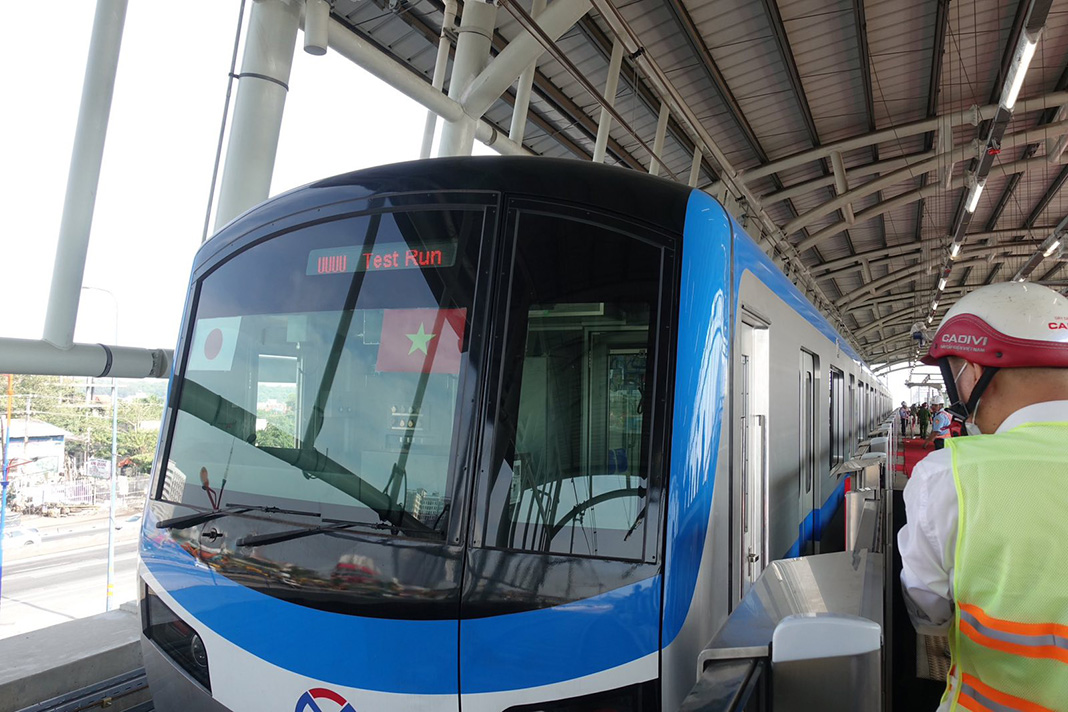
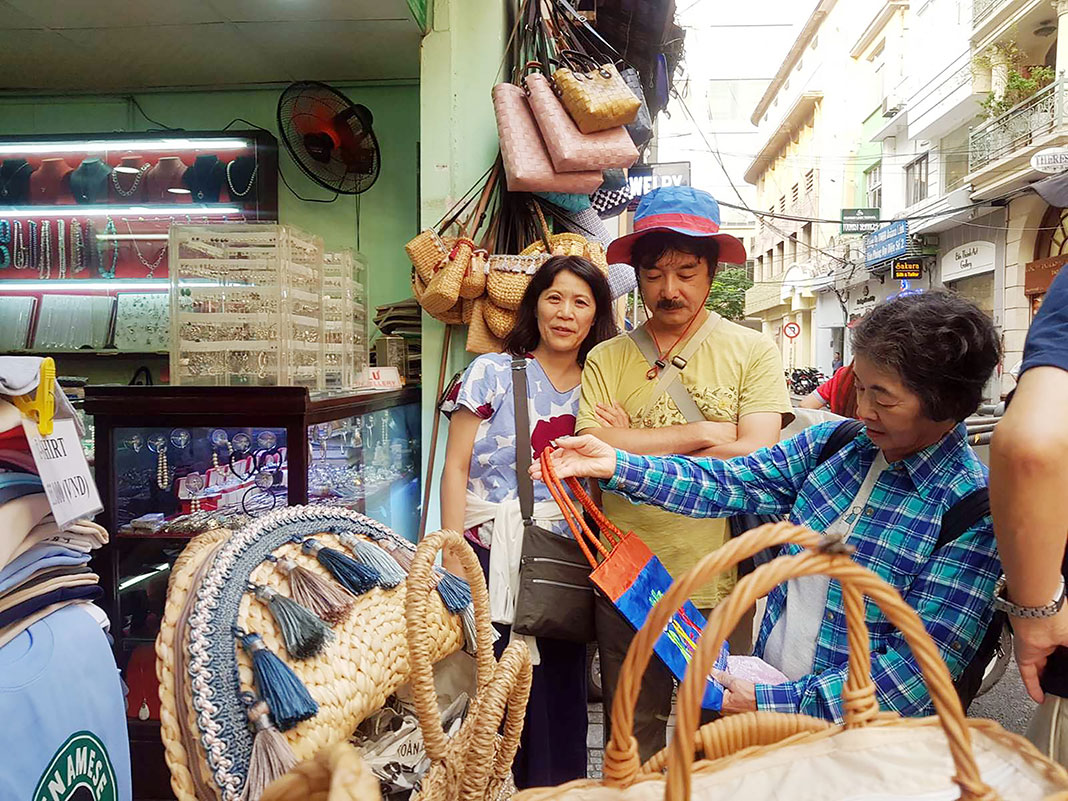
 Looking back over the past 50 years, I truly feel that there is unwavering confidence between our two peoples that have been established through the past 50 years’ efforts in each different level, from governments to localities, private sectors, and individual groups. I renewed this feeling when we experienced and underwent the Covid-19 menace. In June 2021, Japan provided coronavirus vaccines to Vietnam as one of the first countries to do so. Likewise, Vietnamese people and authorities extended assistance to our local Japanese community. Particularly when the community people were in a difficult time and greatly needed vaccination, the Vietnamese authorities, including HCMC, kindly facilitated enabling the Japanese community to receive early vaccination. Through these incidences, I felt that our two countries are “A friend in need is a friend indeed.”
Our two countries have established an “Extensive Strategic Partnership for Peace and Prosperity in Asia.” This year’s 50th anniversary slogan is “Hand in hand to the future and to the world.” This is the year to celebrate our past 50 years’ walks and achievements and at the same time look to the future of the next 50 years. We need to draw the chart for the next 50 years to bring our relations to a higher level. Our excellent Japan-Vietnam ties and Japan-HCMC relations cannot develop and grow on their own in the future without our continued efforts. It is important that both people must commit themselves to maintaining the relationship and bringing it to a higher level.
Looking back over the past 50 years, I truly feel that there is unwavering confidence between our two peoples that have been established through the past 50 years’ efforts in each different level, from governments to localities, private sectors, and individual groups. I renewed this feeling when we experienced and underwent the Covid-19 menace. In June 2021, Japan provided coronavirus vaccines to Vietnam as one of the first countries to do so. Likewise, Vietnamese people and authorities extended assistance to our local Japanese community. Particularly when the community people were in a difficult time and greatly needed vaccination, the Vietnamese authorities, including HCMC, kindly facilitated enabling the Japanese community to receive early vaccination. Through these incidences, I felt that our two countries are “A friend in need is a friend indeed.”
Our two countries have established an “Extensive Strategic Partnership for Peace and Prosperity in Asia.” This year’s 50th anniversary slogan is “Hand in hand to the future and to the world.” This is the year to celebrate our past 50 years’ walks and achievements and at the same time look to the future of the next 50 years. We need to draw the chart for the next 50 years to bring our relations to a higher level. Our excellent Japan-Vietnam ties and Japan-HCMC relations cannot develop and grow on their own in the future without our continued efforts. It is important that both people must commit themselves to maintaining the relationship and bringing it to a higher level.
Reported by The Ky