Once again, the Prime Minister emphasized the urgent need for reform during a recent meeting with the business community, urging the effective implementation of the Politburo’s Resolution 68-NQ/TW.
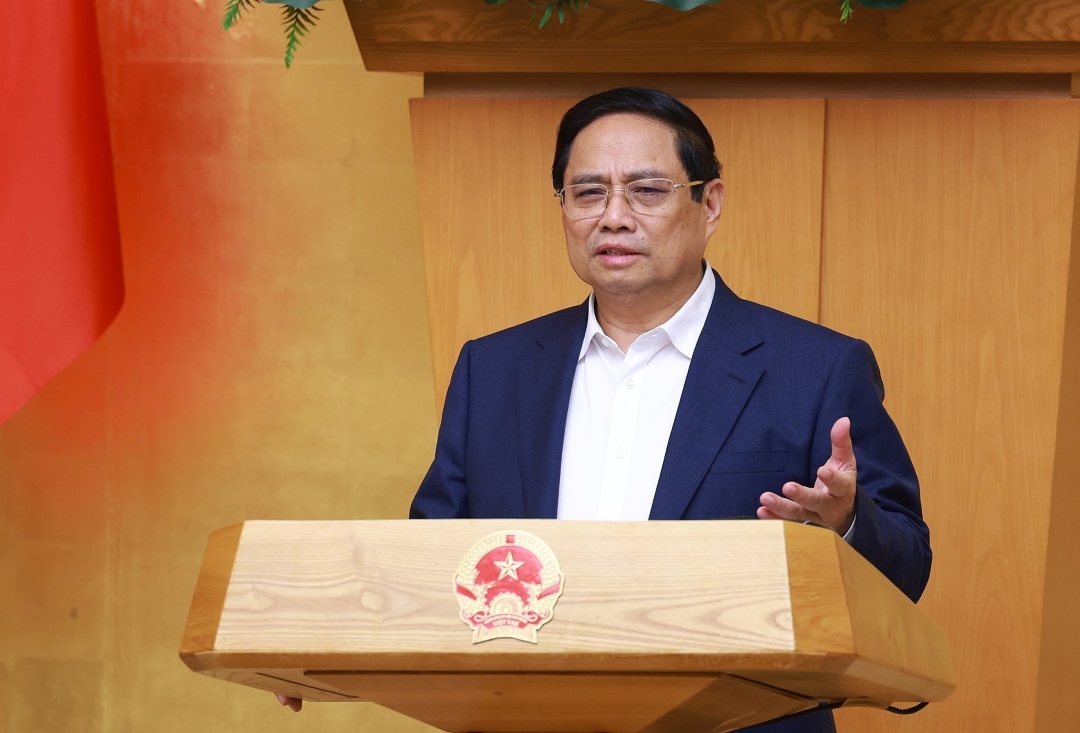
Prime Minister Pham Minh Chinh called on ministries, agencies and localities to respond to businesses’ issues and petitions within two weeks. “They must clearly say yes or no and keep businesses informed about the progress of the resolution—not just handle matters internally. Silence is unacceptable.”
On Saturday, May 31, the Government leader chaired a discussion with the business community and industry associations to promote the effective implementation of Resolution 68 on private economic development.
This marked the second direct dialogue the prime minister held with businesses within a fortnight. Earlier, at the national conference on May 18 focused on implementing Resolution 66-NQ/TW on legal reform and Resolution 68-NQ/TW, he listened closely to extensive feedback from the private sector. However, businesses expressed a strong desire for deeper discussion. In response, he organized an additional session to engage more thoroughly on Resolution 68 with business leaders.
At the meeting, many business leaders candidly highlighted existing shortcomings. Nguyen Quoc Hiep, chairman of the Vietnam Association of Construction Contractors, noted that one breakthrough of Resolution 68 is its shift from a “management” mindset to one of “service” for businesses. However, he emphasized that achieving this requires a genuine revolution in both the mindset and actions of public servants.
Hiep cited a local example: during a bidding process to select investors, unclear guidelines led the local Department of Planning and Investment to ask businesses to seek opinions from units under the then Ministry of Planning and Investment. After five months of waiting, the response only referenced general regulations and directed local authorities to resolve the issue themselves.
Due to unclear guidance, businesses continued sending letters to the then Ministry of Agriculture and Rural Development and the then Ministry of Natural Resources and Environment seeking their opinions. The issue was only fully resolved seven months later. “If a service-oriented mindset had been adopted, we wouldn’t have had to wait so long,” Hiep said.
Also at the meeting, Mai Kieu Lien, CEO of Vinamilk, said, “The policy and the resolution are very clear. The challenge lies in implementation. If everyone is aligned with the Government and fully committed to executing the policy as intended, I believe all businesses will thrive.” At Vinamilk, she noted, issues are typically resolved within 48 hours, because “an opportunity can move us 5–10 years ahead, but if missed, it could set us back by as much as 50 years.” She proposed that the Government adopt a clear resolution timeline—within 7 to 15 days—so businesses don’t miss critical opportunities.

The feedback reflects that businesses remain bogged down not only by cumbersome procedures but also by the “attitude” of some government agencies—marked by inaction, delays, and ambiguity. In response, the prime minister urged ministries, sectors and localities to maintain regular dialogue with businesses and resolve issues thoroughly within two weeks. “They must clearly say yes or no, and keep businesses informed of the progress of resolution—not just discuss it internally. Remaining silent is unacceptable,” he stressed.
This is not the first time the prime minister and the Government have demanded faster responses to business petitions. Yet many businesses report that waiting without a reply remains common. Letters often go unanswered, files are sent but receive no feedback from responsible officials, or responses are issued merely to check a box, leaving businesses uncertain about how to proceed.
To change this situation, the first priority is to clearly define personal responsibility and identify the specific agency or individual responsible for receiving and handling petitions. Businesses need to know who the point of contact and final decision-maker are, and they must be able to track the progress of their cases.
One notable initiative is the recently launched national legal portal, which allows businesses to access legal information, submit petitions, and monitor how their issues are being addressed. However, the portal will only be effective if it is used as a genuine tool for modern governance, not merely as a display of documents. In addition, local authorities should hold regular, sector-specific dialogues, as suggested by Nguyen Quoc Hiep, to stay informed on emerging issues and bring administrative reform closer to real-world impact.
The two-week deadline is not merely an administrative timeline; it is a benchmark for public service performance and a test of the shift from a control-based to a service-oriented administration. A dynamic economy cannot thrive under the weight of bureaucracy, outdated mindsets, and a culture of avoiding responsibility.
Therefore, the PM’s two-week ultimatum should be institutionalized through a concrete mechanism that includes transparent tracking and strict accountability. Only then can we drive a real transformation in both the mindset and operations of the public sector, paving the way for an honest, enabling government that truly serves the people and supports business development.