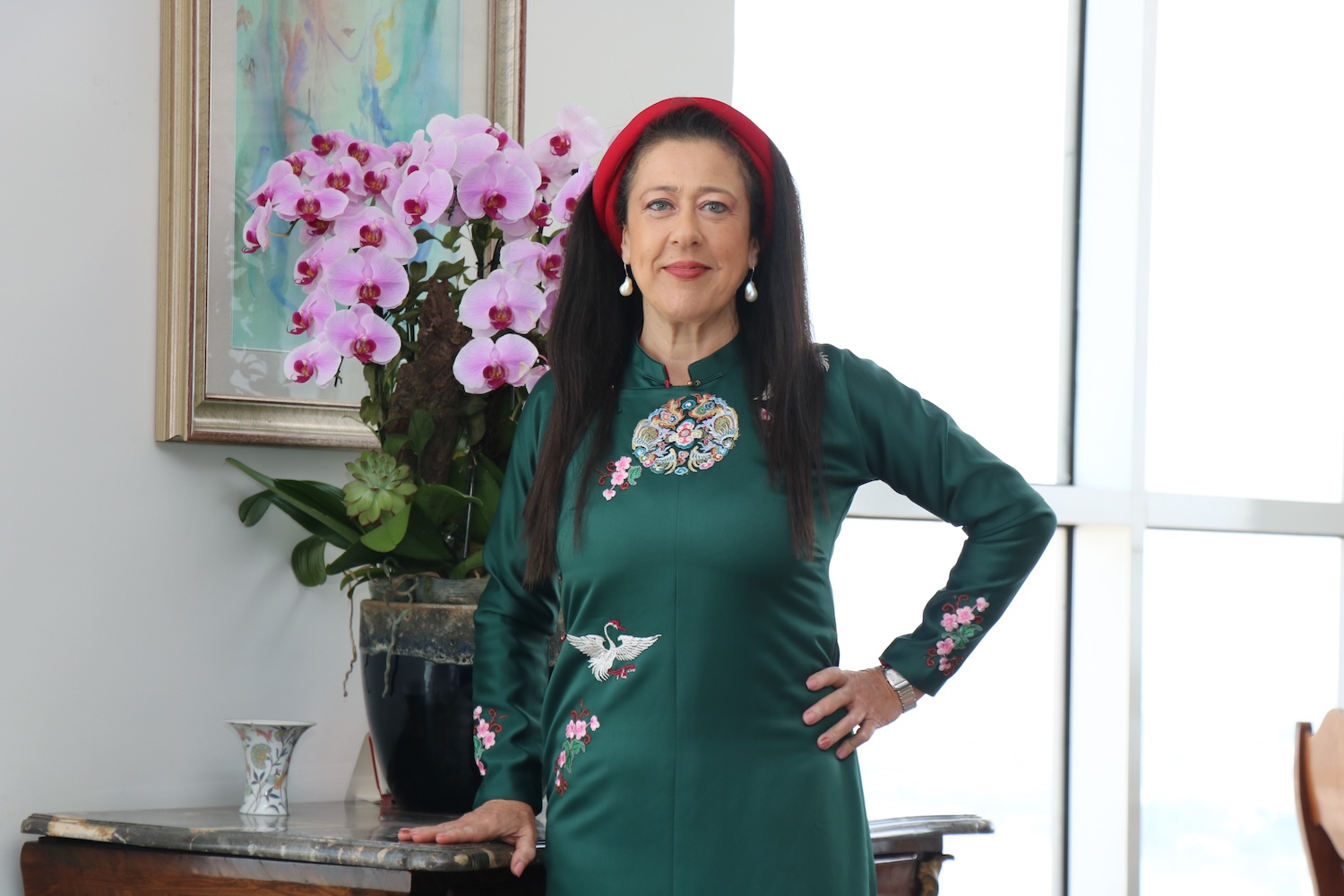
For Milena Padula, the spouse of the Italian consul general in HCMC and President of the Consular Club HCMC, Vietnam is more than just a diplomatic posting—it is a place that has touched her heart profoundly. In a conversation with The Saigon Times, she shares her observations on how Vietnam’s traditions, cuisine, and sense of community have shaped her journey.
The Saigon Times: What brought you to Vietnam, and how has your experience in the country been so far?
Milena Padula: My husband’s assignment from the Italian Ministry of Foreign Affairs brought us to HCMC three years ago. As the spouse of a diplomat, I’ve lived in several countries, but Vietnam holds a special place in my heart.
One of the things I deeply admire here is the strong family culture, which reminds me of Italy. In Italy, we have family reunions during Christmas and Easter, and in Vietnam, families come together for Tet. That sense of togetherness feels very familiar to me.
Another highlight for me is the food. As someone who loves exploring cuisines, I find Vietnamese food fascinating. The emphasis on rice, soups, and fresh vegetables is quite different from Italian food, which features a lot of pasta. Yet, I see a unique connection between the two cuisines. Vietnam’s fish sauce reminds me of garum, a fish sauce from ancient Rome that is still made today on Italy’s Amalfi Coast.
What elements of Vietnamese culture have you embraced during your time here?
I’ve adopted a few Vietnamese traditions and habits that I truly cherish. First and foremost, the coffee culture here is incredible. I’ve fallen in love with ca phe sua da (iced coffee with condensed milk). The bold flavor of Vietnamese coffee is perfect for mornings, and I enjoy visiting the beautifully designed coffee shops, either to meet friends or simply to people-watch and soak in the atmosphere.
I’ve also developed a love for photography, inspired by how much value Vietnamese people place on capturing memories. My phone is now filled with photos of landscapes, family, and friends—precious reminders of my life in Vietnam.
Finally, I’ve been captivated by the elegance and tradition of ao dai (traditional Vietnamese long dress). As someone who is passionate about fashion, I see ao dai as a stunning blend of cultural heritage and modernity. Its graceful design enhances the beauty of every woman and reflects Vietnam’s rich traditions. I also admire how Vietnamese designers are innovating with ao dai, blending contemporary elements into its design to appeal to younger generations while preserving its cultural essence. I believe ao dai has great potential to thrive in both Vietnamese and global fashion, and I’m excited to see how it continues to evolve.
Could you tell us more about the Consular Club and your role as its president?
The Consular Club is an association that includes the spouses of consuls general in Ho Chi Minh City, honorary consuls, and staff members from various consulates. This year, we proudly celebrated our 30th anniversary. Our primary mission is to enhance the quality of life for underprivileged communities in southern and central Vietnam. We are a team of dedicated volunteers, and our main activity is organizing an annual fundraising event to support a variety of charities. I took on the role of president three years ago, shortly after arriving in Vietnam. Interestingly, I learned about the club even before coming here, from the spouse of the previous Italian consul general. She spoke highly of the club’s meaningful work and its impact on the local community, which inspired me to get involved. It has been a privilege to lead such a passionate group of volunteers and witness the positive changes we’re able to bring to those in need.
How did you develop your passion for fundraising, and how has it shaped your journey?
Over the years, fundraising has become a central part of my life. As a diplomat’s spouse, having a traditional career can often be challenging, so I turned to fundraising as a way to make a meaningful contribution. My journey began in Moscow, where I supported fundraising initiatives at the Italian Embassy. From there, I continued this work in London, Bahrain, and Montreal, with each experience deepening my understanding of organizing events and engaging donors. While in Montreal, I pursued a postgraduate degree in Public Relations Management and Fundraising at McGill University, which helped me significantly enhance my skills.
When I arrived in Vietnam, I brought this knowledge and experience to the Consular Club, working to professionalize our fundraising efforts. I’ve realized that successful fundraising depends on teamwork. Collaborating with volunteers and witnessing their enthusiasm has been incredibly inspiring and rewarding. Together, we’ve been able to support hundreds of charities, and seeing the tangible impact of our efforts remains one of my proudest achievements.
What makes the Consular Club HCMC different from other organizations?
The Consular Club stands out because of the unique support it receives from consulates. This ongoing assistance is vital for the club to operate effectively. Another distinctive aspect is that our members are primarily spouses of diplomats who volunteer their time and energy. We also benefit from the help of honorary consuls and local Vietnamese staff working at various consulates. The fact that everyone involved is a volunteer makes our efforts genuinely collaborative.
The club also serves as a bridge between the diplomatic and Vietnamese communities. Diplomatic postings are typically short-term, lasting three to four years, so it is important to establish connections quickly. The Consular Club plays a key role in fostering networking and mutual understanding, while also promoting cultural exchange and collaboration.
What challenges does the Consular Club face?
One significant challenge is deciding which organizations to support. Vietnam has countless worthy causes, but as a small charity, our resources are limited. Each member country can propose a project, and we discuss and vote on them during meetings. Our goal is to support a variety of causes, ensuring our impact reaches different communities each year.
Another challenge is maintaining the club’s vitality. Since members typically rotate every three to four years due to diplomatic assignments, attracting new members from the incoming diplomatic community is essential. Fortunately, many new diplomats and their spouses are inspired by our mission and eager to join.
Transparency and accountability are also critical. With growing scrutiny around fundraising, we ensure every cent raised is accounted for, and we clearly communicate how the funds are used. We also verify that the charities we support utilize the funds appropriately.
Lastly, building relationships and attracting donors is key to sustaining our efforts. I focus on “friend-raising”—networking, sharing our mission, and encouraging people to support our initiatives. These efforts culminate in the success of our major fundraising events. For example, thanks to the unwavering support of our generous sponsors, we raised VND1.5 billion (US$60,000) at the International Charity Bazaar in November 2024. This remarkable amount allows us to continue supporting impactful projects and reinforces our mission of creating positive change in the community.
What are your hopes for the future of the Consular Club?
My hope is for the Consular Club to continue growing and making a meaningful difference in the lives of those we support. I envision more collaboration with local businesses and individuals to amplify our impact. Above all, I hope the spirit of volunteerism and community support remains at the core of everything we do.
What was your first impression of Tet in Vietnam?
My first Tet experience was in February 2022, shortly after I arrived in Vietnam. I was captivated by the stunning decorations on the main streets, especially the giant tiger and vibrant flowers symbolizing the year. It was a magnificent celebration of life, family, friendship, and joy. Embracing the tradition, I purchased my first ao dai and proudly wore it to a party, capturing photos to share with my family in Italy. It was a unique and unforgettable experience that I recommend to any foreigner visiting Vietnam.
Have you embraced any Tet traditions over the years?
Absolutely. Over the years, I’ve embraced several Tet traditions. I even tried making banh chung (a traditional Vietnamese sticky rice cake with pork and Mung bean fillings for Tet). A peach blossom always graces my home during Tet, and watching it bloom brings joy and adds to the festive atmosphere. The tradition of giving and receiving lucky money is particularly delightful—I’ve collected the beautifully designed red envelopes and plan to take them back to Italy as cherished keepsakes. What I value most about Tet is its
emphasis on family—spending time together, cooking, taking photos, and creating lasting memories. I admire how Vietnamese families document each year with a photo featuring the zodiac animal, creating a beautiful archive of shared history that we don’t often see in Europe.
What lessons from Tet do you think other cultures could learn?
The most valuable lesson from Tet is the importance of family. Vietnamese families prioritize spending time together, sharing meals, and creating memories. The tradition of annual family photos featuring the zodiac animal is something I find particularly meaningful—it becomes a treasured archive of family history, preserving the memory of loved ones who may no longer be with us. In Europe, we sometimes overlook the significance of cherishing these moments and keeping them alive. Tet has taught me to embrace togetherness and celebrate the joy of creating lasting memories.
Reported by The Ky