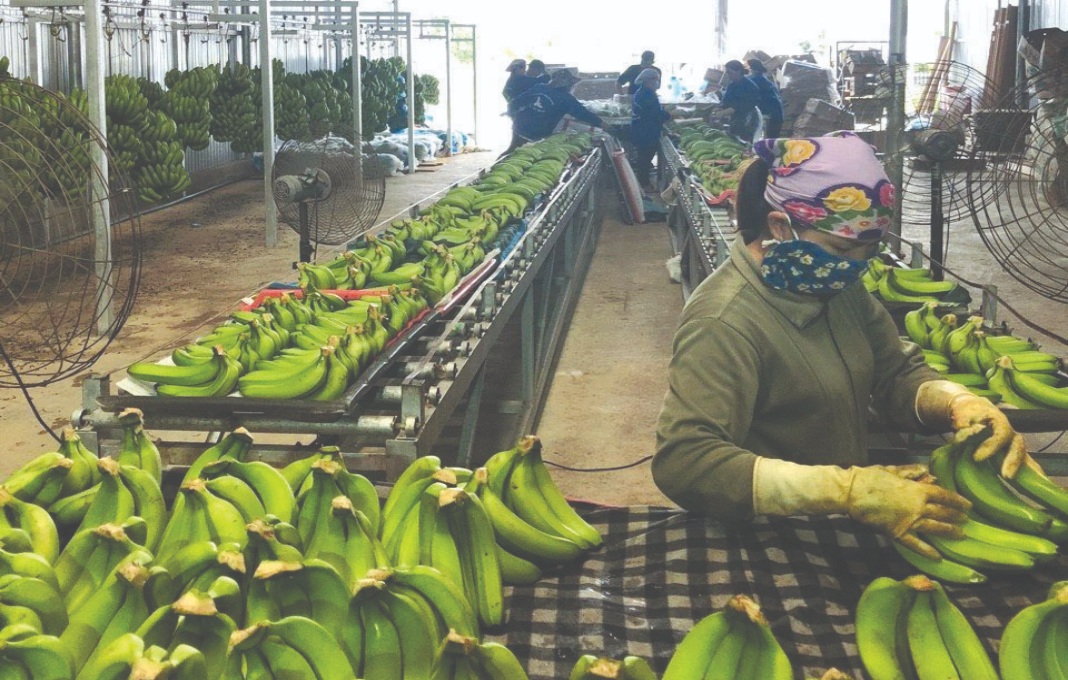
To bolster the export of agricultural and fishery products, understanding market demands and adhering to customer-established "rules" are pivotal factors.
A persistent concern regarding Vietnam's agricultural exports revolves around biological safety and food hygiene. Despite numerous discussions and solutions over the years, this issue remains unresolved.
In mid-September, several shipments of Vietnamese durians, bananas, and dragon fruit sent to China were discovered to contain insects, such as mealy bugs. Consequently, there was a proposal to revoke 47 area codes where these fruits are cultivated. While this may seem like a harsh measure, it is unlikely to entirely address the problem, as the practice of disregarding quarantine and safety regulations has become a chronic issue in Vietnam's agriculture. A new approach appears to be necessary.
During the "Developing the Safe Agricultural Production Supply Chain" forum organized by the Vietnam Chamber of Commerce and Industry (VCCI) on September 29, 2023, Huynh Quang Duc, deputy director of the Department of Agriculture and Rural Development of Ben Tre Province, proposed that the agricultural product supply chain should target the market, with the market serving as the "standard market." The term "standard market" implies that the areas supplying agricultural products must meet specific minimum standards required by the market.
To implement this concept for Vietnamese agricultural products, the first step is to define what constitutes the standard market and then establish a code of production practices to meet these standards.
During the forum, several speakers emphasized the importance of effectively tapping into the domestic market. The challenges faced by Vietnamese agricultural products in the domestic market are not solely due to quality concerns but are primarily a result of diminishing consumer trust in food safety and hygiene. Therefore, if the domestic market is chosen as the standard market, measures must be taken to rebuild consumer trust. This entails addressing issues related to pesticide residues and growth enhancers. If authorities can guarantee that subpar products will be returned and not introduced into the market, Vietnamese agricultural products can regain a foothold in the domestic market. This approach is equally applicable to the export market and is crucial for ensuring the stable and sustainable development of agricultural product exports.
As per data from the Ministry of Industry and Trade, China stands as Vietnam's largest market for agro product exports, accounting for approximately 28% of the total revenue generated from agro product exports. In 2021, exports of fruits and vegetables to China made up a substantial 56% of the total revenue from such exports. To sustain and expand in this vital market, Vietnamese agro products must meet, at the very least, the import standards set by China.
A significant challenge arises in ensuring that agro products avoid the risk of receiving a "red card" for violating the rules of the game before exportation. This challenge primarily pertains to the inspection and oversight of the regulations governing the allocation of growing and rearing area codes for agro products. Additionally, it extends to the management required to prevent discrepancies within the growing and rearing area codes, both during the assessment for code allocation and in verifying that the exported products genuinely originate from the designated areas.
Vietnam can learn valuable lessons from Thailand, the world's leading fruit exporter, with durians serving as a prime example. Thailand has consistently upheld high-quality standards for durians through the establishment of national standards for this fruit. Durians intended for export must meet specific criteria concerning shape, shell color, taste, and must be free of insects or spoilage. Moreover, they must be harvested at the appropriate time to ripen naturally. Notably, these standards are rigorously inspected and monitored to ensure strict compliance.
According to a report by the Ministry of Agriculture and Rural Development, exports of agro, forestry, and fishery products in the first nine months of this year reached an impressive US$38.48 billion. The potential for further growth in exports of these products remains substantial. Addressing the existing challenges is paramount, as a well-functioning agricultural sector will undoubtedly become a robust pillar of the economy.