Rising input costs driven by geopolitical tensions, higher energy prices and more expensive logistics are squeezing margins across manufacturing and distribution, while weak demand leaves little room for price increases. As a result, keeping prices unchanged to retain market share has become both a tough business decision and a government challenge.
Higher costs…
Businesses and industry groups say cost increases are being felt throughout the production and distribution chains.
Vu Dinh Tuan of Petrovietnam Ca Mau Fertilizer said the Middle East accounts for about one-third of global urea supply. Ongoing conflict in the region has raised concerns over supply disruptions, pushing urea prices at times to US$700 per ton, or around VND19,000–20,000 per kilogram—well above domestic levels.
Energy remains the biggest cost driver. Each US$10 rise in oil prices can add hundreds of billions of dong to gas input costs, he noted.
At the same time, international logistics costs have risen by 20–30%, while domestic transport costs are up 15–20%, creating a double burden that feeds through the entire supply chain.
Other sectors are facing similar pressures. Feed producers report input costs rising 15–19% in a short period. Cement makers are dealing with coal price increases of 7–10% and other inputs up 15–20%. Steel producers are also facing higher iron ore and scrap import prices.
La Van Kinh of the Vietnam Feed Association said corn and soybean prices have surged, while hog and poultry prices have fallen by VND1,000–2,000 per kilogram. With feed making up about 70% of production costs, profit margins are being squeezed.
Most of these costs are tied to global markets, making them tough for companies to control and adding to cost-push inflation pressures.
… but same prices
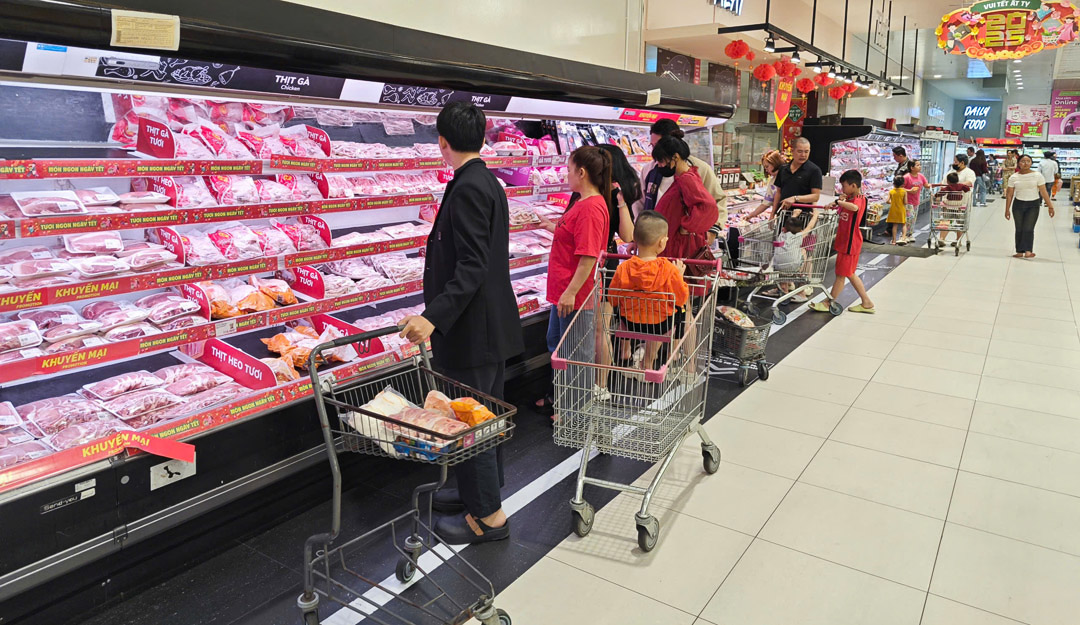
Although rising costs would typically lead to higher prices, weak consumer demand is forcing companies to hold back.
Nguyen Thi Thu Hien of Central Retail Vietnam said operating costs have jumped about 15%, while many suppliers have proposed price increases of 10–20%, and 5–20% for food.
With consumers cutting back on spending, the retailer has increased inventories by about 30% to create a price buffer and stepped up promotions to support demand.
Nguyen Minh Tam of WinCommerce said higher logistics and input costs are putting direct pressure on retail prices, especially for fresh food and imported goods. Some suppliers are considering price hikes of 5–20%, but the company is negotiating to limit the impact on consumers.
AEON Vietnam said it is using warehouse capacity to stockpile goods and delay price increases in the short term. Still, some imported products such as Norwegian salmon have already climbed 15–20% due to longer shipping times and supply risks.
Cost pressures extend beyond food. The plastics sector has been hit by resin prices rising up to 30%, raising concerns about supply shortages.
In fertilizers, price restraint is closely linked to farmers’ livelihoods. Despite global prices surging 40–50%, domestic prices have increased by only about 20% thanks to efforts to contain costs, though input pressures remain high.
Holding prices is therefore not just a competitive strategy, but a way to maintain market share and cash flow as costs continue to pick up.
Coordinated measures needed
In the short term, companies absorbing higher costs helps stabilize the market and support consumers. But if input costs keep rising, margins will shrink further, weakening production capacity and increasing the risk of supply disruptions.
Retailers are negotiating with suppliers to keep prices stable, but suppliers face the same pressures, limiting how long this can last. In some cases, refusing price increases could lead to supply disruptions, forcing companies to raise prices later to ensure availability.
In such environment, policy measures need to focus on the root cause—input costs—rather than relying only on administrative controls.
Central Retail Vietnam has proposed focusing on three key cost areas: energy, tax and finance, and logistics. Cutting the environmental tax on fuel could help lower transport costs and overall prices.
Extending the VAT reduction to 8% and deferring taxes and land rents could support cash flow, stimulate demand and give businesses more room to hold prices in the short term.
Proposals to cut import tariffs to zero on key inputs such as corn, soybeans, palm oil and dairy materials reflect growing pressure in the food and livestock sectors. As fiscal space narrows, attention is shifting to improving logistics and customs procedures to reduce actual costs.
Retailers are also restructuring supply chains, strengthening links between supply and demand, and prioritizing domestic goods to shorten transport distances and reduce reliance on imports. Simplifying product certification procedures could also help expand supply at lower cost.
From a policy standpoint, market stabilization programs, promotions and demand stimulus measures remain in place, showing that authorities are not only managing prices but also helping businesses share cost pressures.
Past experience suggests that when costs rise sharply, the most effective response is to reduce financing and input costs. Three key bottlenecks—energy, logistics and finance—need to be addressed at the same time. Without progress on these fronts, efforts to keep prices steady will not be sustainable.
In short, holding prices cannot rely on businesses alone. It requires coordinated action. Only when input costs ease can prices stabilize in a meaningful and lasting way.