HCMC has made a commitment to follow a long-term roadmap for sustainable growth. However, successfully navigating the complex challenges of urban issues and the impacts of climate change requires a meticulously crafted strategy.
HCMC currently finds itself at a critical juncture in its development, with skyscrapers piercing the smog-filled skyline and rivers choked with plastic waste. The rapid urbanization of Vietnam’s largest city has raised concerns about environmental pollution and resource depletion.
How can this city sustain its rapid growth while simultaneously pursuing a more sustainable trajectory? While the concept of green growth holds promise, its success depends on achieving a delicate balance between environmental well-being and economic prosperity.
Undoubtedly, finding a comprehensive solution to this multifaceted challenge is no easy task.
Peril in the path of growth progress
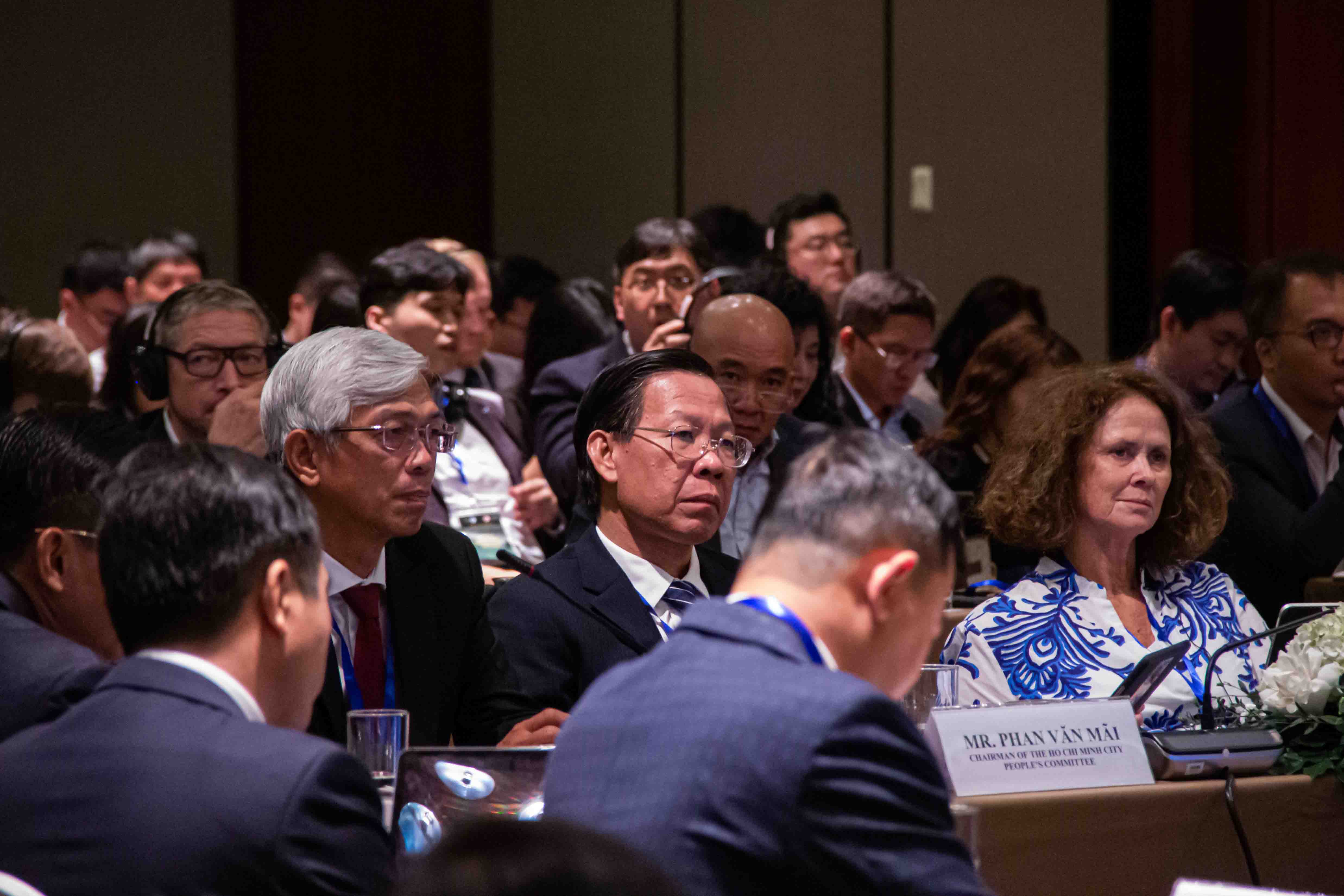
During an investment conference held in District 1 of HCMC last week, Phan Van Mai, chairman of the HCMC People’s Committee, highlighted the city’s commitment to embracing green growth as its future development strategy, aligning with global trends.
HCMC has set an ambitious goal to reduce emissions by 10% by 2030 as part of its Action Plan to address climate change for the next decade. This effort aims to create a safer and more efficient living and working environment for residents and businesses.
The conference served as a pivotal platform for unveiling HCMC’s strategic roadmap to achieve its green agenda. The city government also released a list of 28 projects open for investment, spanning various sectors, including technology, infrastructure, and environmental initiatives integral to HCMC’s green growth vision.
Sustainable development has emerged as HCMC’s top priority, given the urban challenges and environmental pressures that have resulted from its rapid growth. According to the Department of Planning and Investment, only 12.8% of the city’s urban sewage is treated to meet environmental standards before being discharged.
Moreover, the city’s overwhelmed transportation infrastructure struggles to accommodate its growing population. With a population of 10 million, the southern metropolis had by end-November 2023 had nearly 8.3 million motorbikes, up by 4.56% year-on-year, and almost 935,000 automobiles, up by 5.8%. In 2022, levels of PM2.5 fine dust and harmful gases such as NO2, SO2, and CO in HCMC exceeded World Health Organization limits by four to five times, according to the Vietnam News Agency.
Adding to these challenges, climate change impacts have become increasingly pressing, particularly in Thu Duc City. HCMC is among the top 10 cities grappling with the daunting consequences of climate change, putting coastal communities, low-lying areas, and infrastructure systems at risk.
The Urban Infrastructure Construction Investment Project Management Unit (UICI) projects that by 2050, HCMC may incur damages of US$275 million due to flooding, while Thu Duc City may face damages of about US$120 million. Last January, the Thu Duc People’s Committee reported that the city has 37 areas prone to flooding and 24 other
flood monitoring locations.
Local authorities attribute the high vulnerability to flooding to the lower water absorption capacity of artificial surfaces like asphalt compared to permeable surfaces like soil or vegetation. Waterlogging in Thu Duc City occurs due to an insufficient drainage system and the lack of stormwater drains on many roads.
Forging resilience
In response to imminent threats, HCMC has made commendable progress within a limited timeframe, particularly in the face of socioeconomic challenges post pandemic.
The city is committed to improving living standards, enhancing competitiveness, and transitioning towards a more sustainable growth model. Ongoing efforts involve fostering collaboration with both domestic and international partners to achieve common objectives in urban development.
The HCMC-World Bank Group Joint Working Group (HWG), established on March 23, 2022, is an initiative designed to create a structured support system that addresses HCMC’s challenges and opportunities in realizing its green growth aspirations. Phase 1 of the project, spanning from December 2021 to November 2022, witnessed significant contributions and expert participation, with 150 meetings, 17,000 working hours, and US$2 million in grant funding.
These efforts led to the development of 44 deliverables, encompassing reports, workshops, and various activities. Eight technical groups were formed to address 15 key issues facing HCMC, including digital transformation, low carbon emissions, and urban flood control.
HCMC officials and World Bank partners have established upcoming activities, with a roadmap in place until June 2024. One of the top priorities is Phase 1 of the integrated flood risk management project in Thu Duc City, a US$430-million endeavor aimed at addressing flooding issues in the city’s northeastern region, scheduled for implementation between 2025 and 2030.
The HWG will also work on the low carbon urban project, focusing on prioritized areas in HCMC. It seeks to reduce carbon emissions and transform HCMC into a greener metropolis. Total investments of US$250 million will be sourced from various channels, including a US$170-million World Bank loan, US$30 million from the HCMC budget, and US$50 million in grants from the Dutch Government. The project’s planning phase is slated for 2024 to 2025, with implementation anticipated between 2025 and 2030.
A crossroads moment
Experts hold an optimistic view of HCMC’S future, given its ambitious annual development target of 8.3% up to 2030. This growth rate is expected to accelerate from 6.6% in the period of 2021-2025 to 10.1% in 2025-2030, driven by ongoing development projects and favorable mechanisms and incentives outlined in Resolution 98, adopted by the National Assembly in June of the previous year.
HCMC Chairman Phan Van Mai emphasized that the city’s journey towards green growth could potentially serve as a case study for other rapidly developing metropolitan areas facing similar challenges. As HCMC takes the lead, both the country and the world are closely watching how to ensure its prosperity. With words and actions aligned, the city has displayed growing optimism despite the current tough economic conditions.
The aspiration to build a city that nurtures its inhabitants and empowers them to pursue their dreams does not solely rely on government policies or business investments. More importantly, it represents the collaborative efforts of society as a whole.