Addressing environmental pollution, Vietnam is shifting from data to field-level action, implementing agricultural and urban interventions to safeguard public health and economic prosperity.
The economic toll of environmental degradation has moved beyond theoretical modeling into a stark reality for national treasuries and public health systems. Lead exposure alone accounts for a 7% loss in global gross domestic product (GDP), representing not just a health catastrophe but a profound failure in resource management and human capital protection.
Economic realities and the global burden
Such comments were heard during the Regional Pollution Forum for Southeast Asia, held in HCMC on March 2 and 3, hosted by the Global Alliance on Health and Pollution (GAHP) in partnership with the UK government through the Department for Environment, Food and Rural Affairs (DEFRA).
According to data presented at the event by the Global Burden of Disease Research Center under the Institute for Health Metrics and Evaluation (IHME), pollution remains a primary driver of health loss.
Marie Ng, the center's director, said that environmental and occupational risks, led by air pollution and lead exposure, account for a sizable share of Disability-Adjusted Life Years (DALYs) lost worldwide. In the Western Pacific Region, air pollution ranks as the third-highest risk factor for the global burden of disease, contributing to an estimated 2.1 million deaths annually.
At the forum, experts highlighted that pollution does not respect national borders. Transboundary haze, driven by agricultural burning and forest fires in Laos, Thailand, and Cambodia, continues to affect regional air quality, particularly during the dry season. Data from the 2024 and 2025 dry seasons showed alarming trends in fire hotspots, releasing massive quantities of fine particulate matter (PM2.5) into the atmosphere.
Enkhtsetseg Shinee, coordinator at the WHO Asia Pacific Center for Environment and Health, said: "Ambient particulate matter pollution continues to affect the region, sustaining a significant burden of respiratory and cardiovascular diseases. Strengthening regional cooperation is necessary to tackle transboundary air pollution challenges."
Vietnam's strategic response: Policy to fieldwork
At the same points, Toks Akinseye, head of the International Hub for Chemicals and Hazardous Waste at DEFRA, highlighted the importance of localized action to address this matter. "A priority for the UK government is collaborating with all stakeholders to deliver sustainable and locally led environmental pollution solutions. The forum is a DEFRA-led multilateral approach aiming to bring benefits to national governments and local communities," she said.
DEFRA and GAHP have supported Vietnam in conducting evidence-based field implementation through the Environmental Pollution Program in Vietnam (EPP-VN), in collaboration with the Vietnam Association for Conservation of Nature and Environment (VACNE). The program is conducted from 2022 to 2025 across three primary areas: agricultural open burning, pesticide management, and urban solid waste.
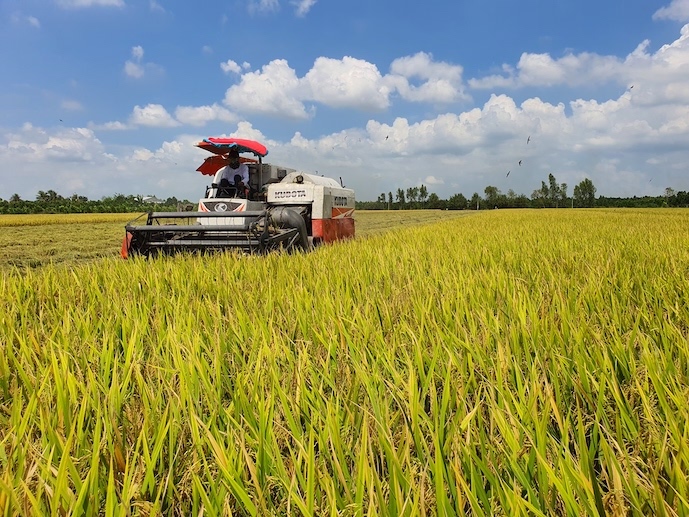
Phung Anh Duc, VACNE's project coordinator, presented findings from 19 localities nationwide, noting that the program used both "top-down" remote sensing and "bottom-up" emission inventories to map open-burning hotspots. The project did not just identify the problem; it provided alternatives. National adoption of microbial straw decomposition and bio-pellet production has been promoted as a sustainable alternative to burning.

Studies conducted by VACNE in several localities revealed a direct correlation between open burning episodes and increased hospital admissions for respiratory issues. By educating over 3,500 stakeholders - including farmers, local managers, and students - the project increased awareness levels from approximately 40% to over 65% across surveyed groups.
Another matter is the overuse of pesticides, which remains a critical threat to both soil health and human ecology. Through the EPP-VN, the Rainforest Alliance (RA) has expanded Integrated Pest Management (IPM) practices across Vietnam's key export sectors, including coffee, tea, and black pepper.
The results are quantifiable. In the project's second phase, the number of farmers trained in IPM and Gender Equality, Disability, and Social Inclusion (GEDSI) principles rose to over 11,000. Data showed a significant reduction in pesticide use; for example, average application rates in certain tea-growing regions dropped from 1.69 to 1.16 kilograms per hectare.
Nguyen Thiet, RA's Vietnam country director, highlighted the program's success in building local capacity. He said the organization has trained 95 trainers and built 23 demonstration farms to show farmers that chemical pesticides should be used only as a last resort.
While agriculture remains a focus, urban pollution - specifically solid waste and plastics - presents a separate set of economic challenges. In the central tourism city of Danang, waste impacts are significant (approximately 1.2 kilograms per tourist per day, of which 60% is plastic). To counter this, the EPP-VN has supported research into sustainable plastic alternatives and signed agreements with nine enterprises to implement waste management improvements.
Maria Paola Lia, executive director of GAHP, asserted that the model's success stems from being built on the actual needs of local communities rather than being imposed from the outside. She cited surveys showing that public awareness rose from 35% to over 60% following training sessions.
According to Lia, the lessons learned from Vietnam's rice fields are being closely monitored by nations such as Uganda, Tanzania and Southeast Asian neighbors for replication.
In the global context, as the forum participants agreed, the transition to clean energy, sustainable agriculture, and circular waste management is the only viable strategy to ensure both public health and long-term economic prosperity.