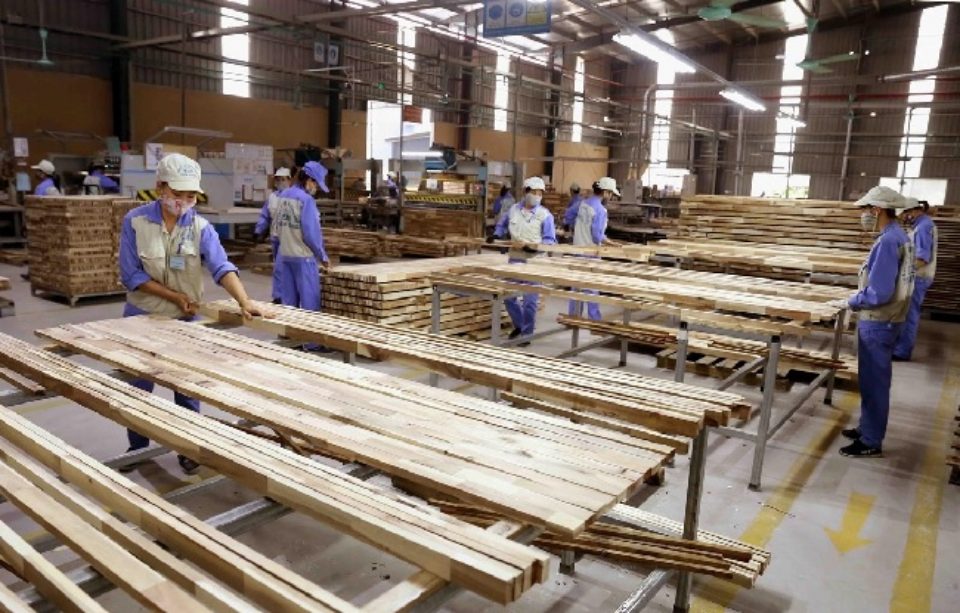
In the midst of challenging economic conditions, handicraft and woodworking businesses are proactively participating in international trade fairs and exploring new markets to sustain production activities and retain their workforce
Finding new customers
Gia Nhien Company Limited, after grappling with a lack of orders for three years, has successfully secured orders from two new customers in the Netherlands and Poland. Tran Huu Hoai, the company’s director, said that they invested significantly in advertising on cross-border e-commerce platforms and actively participated in international trade fairs. Additionally, the company offered substantial discounts, at times up to 30%, and even accepted unprofitable deals. Their efforts have finally paid off, leading to a significant increase in foreign customer interest in their products.
Dang Quoc Hung, general director of the Alliance Handicraft Wooden Fine Art Corporation, noted that customer demand in traditional markets like the U.S. and the EU has remained sluggish due to prolonged inflation and economic recession. Consequently, Vietnamese enterprises must broaden their presence in numerous other foreign markets through advertising and active participation in international trade fairs to seek new customers and secure substantial orders.
During the Vietnam ASEAN International Furniture and Home Accessories Fair (VIFA ASEAN 2023) in HCMC, representatives from numerous firms expressed their expectations of a gradual recovery in customer orders in the near future. The Vietnam International Furniture and Home Accessories Fair (VIFA EXPO) in March provided them with excellent opportunities to pique the interest of new customers.
According to Tran Quoc Manh, vice chairman of the Vietnam Handicraft Exporter Association (VIETCRAFT), new orders are on the rise. However, customers are now setting higher standards for product quality and seeking competitive prices. He stated, “We hope that the number of orders will return to previous levels by late this year or early 2024, as some businesses are already operating at over 50% of their capacity.”
Exploring new markets

Handicraft and woodworking businesses are actively seeking new markets, including India, the Middle East, Australia, Turkey, and Canada. Nguyen Phuong, director of Minh Thanh Company Limited, believes that finding new customers, particularly in niche markets, is essential to maintaining stable production during challenging economic times. After a trip to Dubai (the United Arab Emirates), he realized that Dubai could become a primary target market for Vietnamese wood exporters due to the rapid growth in housing construction.
Other furniture and interior manufacturing companies, such as Tran Duc Homes and AA Corporation, have discovered new customers in Dubai while participating in furniture exhibitions and trade fairs.
According to Nguyen Quoc Khanh, chairman of the Handicraft and Wood Industry Association of HCMC (HAWA), the Middle East has become a favored investment destination in this decade. Numerous mega projects are planned for development in the region, including the NEOM mega-project with its four complexes (Sindalah, The Line, Trojena, and Oxagon), the US$800 billion Mukaab project, and the US$1 trillion Mirror Line project in Saudi Arabia.
“These projects all require high-end furniture,” Khanh stated. This explains why many prominent Vietnamese furniture brands are expanding their presence in the Middle East, particularly in affluent countries like Saudi Arabia and the United Arab Emirates, to seize opportunities for supplying furniture for these new real estate mega-projects.
Data from the Vietnam Trade Office in the United Arab Emirates (UAE) reveals that furniture imports in Gulf Cooperation Council (GCC) countries are growing at an annual rate of over 45%. This presents an excellent opportunity for Vietnamese wood exporters to enter these markets and offset losses resulting from declining orders in traditional markets.
Seizing opportunities in challenging times
In the face of challenging economic conditions, businesses must proactively adapt to changes and seize opportunities to remain resilient. Some enterprises are cutting costs through restructuring, while others are seeking support from trade promotion agencies to enter new markets. However, it is important to recognize that these strategies may not be effective for all businesses.
For example, not all enterprises can take advantage of opportunities to enter the Indian market or affluent Middle Eastern countries. In the case of the Indian market, statistics from the General Department of Vietnam Customs show a remarkable 250% year-on-year increase in the value of wood products exported in the first seven months of 2023. However, it is essential to understand that Indian consumer preferences differ from those in Europe and the U.S. Indian consumers often prefer custom-made products, which may not align with the production capabilities of many Vietnamese wood businesses. Only a small group of young consumers in India show interest in products similar to those in Western countries. Furthermore, the export value of wooden and furniture products to India remains modest, at less than US$100 million per year, significantly lower than the US$8-9 billion per year export value to the U.S. market.
Similarly, major foreign corporations have already secured significant projects in the UAE market, making it challenging for smaller businesses to compete.
“It is essential for businesses to enhance their internal strength and be ready to secure new orders when the market recovers,” said Tran Si Chuong, an economic expert and strategic advisor for businesses. He believed that the global economy has entered a new stage for development with new rules, so companies need to adapt to changes proactively.
One of these new rules is the growing demand for sustainability in furniture products. Sustainability is not merely an option but a mandatory requirement that businesses must meet before entering new markets. Embracing sustainability, or greenization, is crucial for enhancing competitiveness.