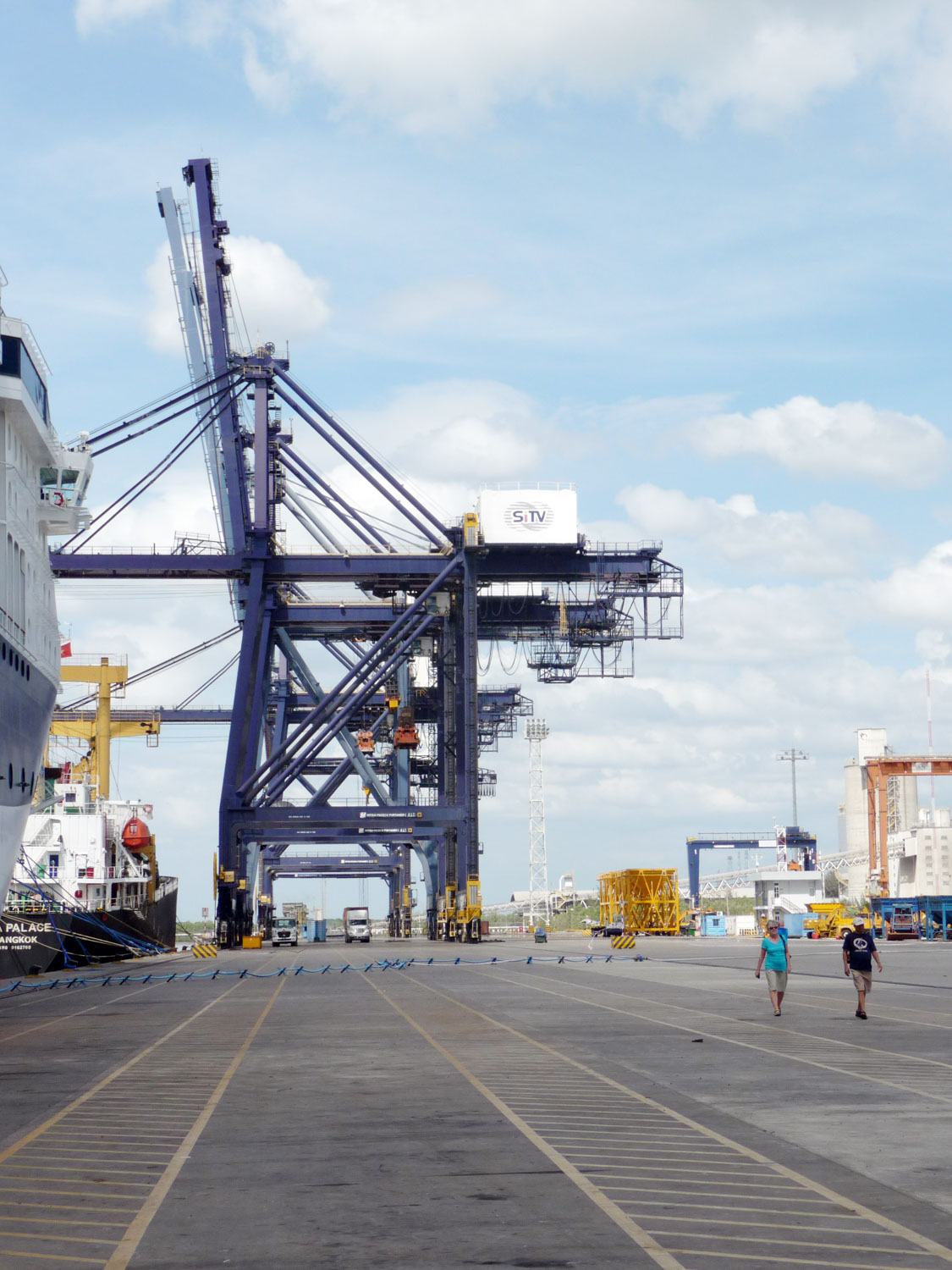
U.S.-Israel attacks on Iran have done more than just ignite military hotspots across the Middle East; they are now casting a long shadow over critical maritime arteries, specifically the Strait of Hormuz and the Suez Canal-Red Sea corridor.
For a highly open economy like Vietnam, any resulting shock would likely manifest not as a direct impact, but as a secondary surge in operational costs—namely oil prices, war risk insurance, and logistics, the very lifeblood of exports. While large-scale trade disruptions have yet to materialize, a “risk premium” is already being factored into individual commercial contracts.
Logistics: The most sensitive chokepoint
Pham Quang Anh, CEO of Dony Garment Company, stated that the firm is closely monitoring shipments to Jordan—a market that has remained stable since 2017 and accounts for nearly 20% of their total export revenue.
Vietnamese garments bound for Jordan typically transit through the Red Sea, a route directly exposed to any escalation in regional tensions. During previous periods of instability, transit times surged from one month to upwards of four months—a fourfold increase. Furthermore, freight rates for 40-foot containers spiked from approximately US$1,500 to US$5,000. These soaring costs, coupled with war risk surcharges and limited vessel availability, have made the threat of delivery delays a constant pressure.
“A delay of just 15 to 20 days can cause us to miss a sales season; a three-to-four-month delay renders the entire season lost,” Quang Anh noted. Given the short life cycle and high seasonality of the textile industry, the primary risk is not merely an additional few thousand dollars in freight costs, but the potential disruption of the client’s entire business cycle.
Despite these challenges, Quang Anh observed that the market has become more resilient. Unlike previous crises where clients might have halted orders to wait out the uncertainty, the current trend is to maintain existing contracts while adjusting volumes or delivery schedules.
Dony is currently preparing to ship a 40-foot container to Jordan within the next two weeks, while working closely with logistics partners to stay abreast of the situation. “Logistics remains our primary concern. Regarding market demand, we are hopeful that the conflict will not escalate into a full-scale war,” he stated.
According to Associate Professor Dr. Nguyen Huu Huan, the most significant risk currently lies within the logistics sector. A vast majority of exports to Europe, along with a portion of those destined for the United States, pass through the Suez-Red Sea corridor. Should vessels be forced into detours or if war surcharges spike, logistics costs—which typically represent 10–20% of total product costs—could surge by an additional 15–25%.
Under a scenario where tensions persist for six months, export revenue could decline by 2–4% relative to base projections. This downturn would result from a diminished price advantage and the disruption of delivery timelines.
Racing against delay
In the supporting industries sector, Le Mai Huu Lam, CEO of Cat Van Loi, said that his firm is currently supplying equipment for a thermal power plant project in Saudi Arabia through a Japanese general contractor.
The inaugural shipment was dispatched prior to the Lunar New Year and is currently in transit. While the partner has assumed responsibility for war risk insurance and associated surcharges, the company remains concerned with the overall project timeline. In industrial projects, every component is tied to strict installation and commissioning milestones; a delay in even a single phase can create a domino effect, throwing the entire construction sequence off track.
“Should full-scale hostilities break out, all strategic plans could be upended. Our highest priority remains human safety, though project timelines will undoubtedly suffer,” Lam noted. While the second shipment is scheduled for completion and delivery in late March, the company will have to look into the possibility that the developer may push back deadlines due to the escalating conflict; furthermore, additional transit surcharges appear nearly inevitable.
Any extension of the project schedule would trigger a domino effect, impacting both the firm’s cash flow and its broader production planning.
Despite these palpable risks, Lam maintained that the Middle East—particularly Dubai (UAE) and Riyadh (Saudi Arabia)—holds immense growth potential driven by aggressive infrastructure investment. To capitalize on this, the company plans to proceed with trade promotion activities in Dubai this April, followed by a mission to Saudi Arabia in October.
“Risk and opportunity are inseparable. Amidst global volatility, Vietnamese enterprises that remain vigilant and adaptable can still find significant openings in these rapidly expanding markets,” Lam said.
When time becomes cost
Dang Phuc Nguyen, general secretary of the Vietnam Fruit and Vegetable Association (Vinafruit), noted that Red Sea tensions impact more than just direct shipments to Middle Eastern markets like the UAE or Saudi Arabia; they trigger a ripple effect across European trade. This is because the majority of vessels traveling from Asia to Europe must traverse the Suez Canal and the Red Sea, the primary maritime artery for Asia-Europe commerce. As security risks mount, many shipping lines are forced to reroute around the Cape of Good Hope in South Africa, extending voyages by several days or even weeks.
For fresh produce, a delay of just a few days can directly compromise freshness, appearance, and market value. Operating refrigerated containers for longer periods entails higher costs and an elevated risk of quality degradation, thereby narrowing the price advantage of Vietnamese agricultural products.
While fruit and vegetable exports to the Middle East and Europe account for less than 10% of the industry’s total turnover, they are vital to market diversification strategies. Should logistics costs return to the strained levels seen during the 2024–2025 period, Nguyen believes growth rates are unlikely to meet expectations.
Addressing whether small enterprises are hit harder than larger ones, Nguyen clarified that current challenges are industry-wide. “The issue isn’t company size, but rather the nature of the commodity. Those exporting fresh fruits and vegetables face the most acute pressure,” he stated.
The general secretary of Vinafruit asserted that, given the persistent geopolitical uncertainties, enterprises must proactively refine their logistics strategies, diversify their target markets, and enhance their preservation capabilities. Nevertheless, should the situation in the Red Sea remain volatile, the dual pressures of rising costs and extended lead times will continue to pose significant challenges for the fruit and vegetable sector in the foreseeable future.
Calm amidst uncertainty

A representative from an Israeli trading firm operating in HCMC noted that shipments of cashews and dried fruits to Ashdod Port have yet to experience significant disruptions. Most goods are transported by sea, and vessel schedules remain stable; while air freight has been impacted by airspace reconfigurations, it represents only a marginal share of total volume. “The situation remains localized, and civilian supply chains continue to function,” the source stated.
Despite this, the firm has already recalibrated delivery timelines, budgeted for potential surcharges, and initiated early discussions with import partners regarding potential price adjustments. While these risks have not yet materialized, they have been formally integrated into the company’s contingency plans.
Analysts suggest that while the Middle East conflict has not yet fractured global trade, it is driving up logistics costs through rerouting and elevated insurance premiums. Supply remains intact but has become increasingly expensive. Thanks to a diverse maritime network and the ability to pivot routes flexibly, the flow of goods persists. The prevailing principle for both enterprises and logistics providers is to absorb higher costs rather than allow trade arteries to be severed.
Maintaining momentum in unpredictable world
To date, there have been no signs of large-scale disruption. Exports continue to flow, and contractual obligations remain intact. However, the current state of “normalcy” now carries a new, embedded contingency cost.
Reports regarding the potential blockade of the Strait of Hormuz—a transit point for approximately one-fifth of global oil consumption—combined with warnings of the crisis spreading to the Red Sea, have placed the international shipping industry on high alert. The Suez-Red Sea corridor, which handles roughly 12% of global trade and up to 35% of container volume, faces the risk of localized disruptions should the conflict escalate.
For Vietnam, this is more than a geopolitical narrative. In 2025, the total value of Vietnam’s merchandise imports and exports amounted to over US$930 billion, with exports to the EU totaling US$56 billion. A significant portion of goods destined for Europe and the U.S. East Coast traverses this corridor. Any requirement for vessels to reroute around the Cape of Good Hope, coupled with rising war surcharges or escalating insurance premiums, will immediately inflate both costs and delivery lead times.
Given its highly open economy, instability in strategic maritime corridors can swiftly translate into tangible costs per container. In this context, risk management capabilities—ranging from diversifying transport routes and negotiating cost-sharing agreements to enhancing product value—will determine a firm’s ability to maintain order momentum.
A “turbulent” Red Sea does not yet equate to a full-blown crisis. However, in an increasingly unpredictable geopolitical landscape, the challenge for Vietnamese exporters is not merely making a sale, but protecting profit margins and ensuring delivery reliability. These remain the core factors for preserving market share and securing long-term growth.