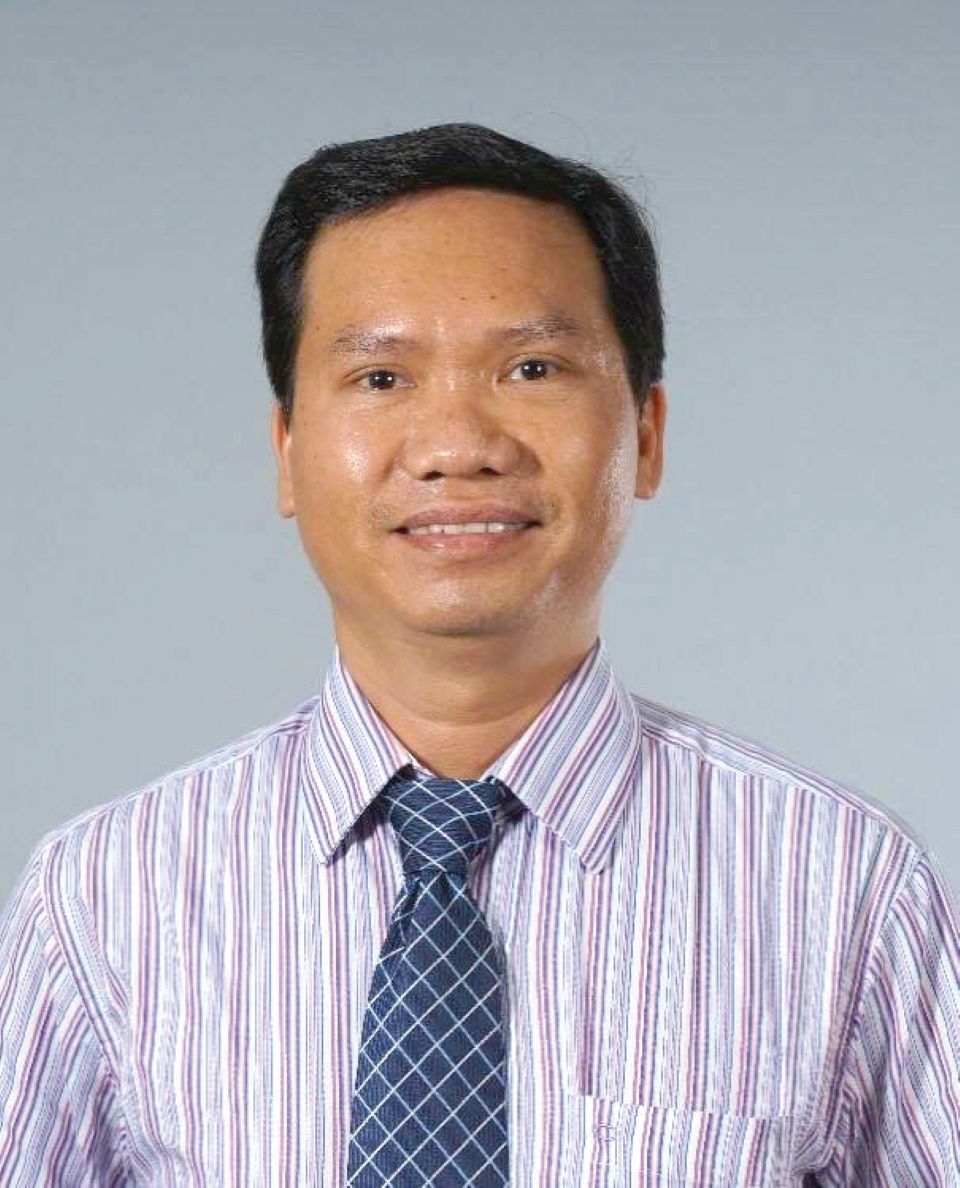
“Financing the development of Ho Chi Minh City (HCMC) cannot be adequately provided by isolated sources alone. It must be treated as a system and designed as a multi-layered architecture, with streams of capital flowing through project pipelines that are predictable and sustained over many years,” Dr. Le Dat Chi, dean of the School of Finance at the College of Business, University of Economics Ho Chi Minh City, told The Saigon Times.
Project pipelines must become cash-flow pipelines
The Saigon Times: HCMC is targeting an average annual growth rate of 10–11%. To achieve this goal, the city is estimated to require around VND1.2 quadrillion in investment capital each year. The draft Special Urban Law proposes several mechanisms to strengthen resources for the development of HCMC as a special urban area, including authority to issue local government bonds on international markets and the retention of additional revenues from import-export duties, supplementary import taxes, and special consumption taxes. What is your assessment of these proposals?
Dr. Le Dat Chi: In recent years, HCMC has been granted greater authority to address its development challenges, reflecting both the city’s aspirations and the nation’s expectations for its role. Nevertheless, finance remains a critical resource, and the city’s capital mobilization challenge remains substantial.
First, even if HCMC is granted a larger share of retained budget revenues, the additional resources would still be insufficient to meet the estimated annual capital requirement of VND1.2 quadrillion. Local government bond issuance could help bridge part of the funding gap. In principle, the city already possesses this authority under Resolution 98/2023/QH15 on piloting special mechanisms and policies for the development of HCMC.
However, once a decision is made to issue local government bonds, there must be an entity responsible for managing the process. That entity must calculate financing needs, assess market absorption capacity, manage incoming and outgoing cash flows, and forecast future revenue streams that can service obligations to bondholders. Without a designated institution empowered to undertake these responsibilities, HCMC will not be able to fully realize its fundraising potential through local government bond issuance.
At this stage, the city should consider a more comprehensive approach to financing its development objectives. Financing a special megacity such as HCMC cannot rely solely on individual funding sources. It must be conceived as a system, designed as a multi-layered architecture with capital flows aligned to project pipelines that are predictable and sustained over many years.
 Could you elaborate on these ideas?
- As mentioned earlier, isolated financial sources—for example, the additional resources generated by a higher budget retention ratio—will not be sufficient to turn HCMC’s vision of becoming a special megacity into reality. Therefore, finance must be viewed as a system. That is the first point.
Second, once finance is treated as a system, the system itself must be designed to optimally support development needs. It should function as a multi-layered architecture operating through project pipelines, with cash flows circulating dynamically across those pipelines to ultimately generate economic growth and create the revenues needed to repay investors.
Take the green transition as an example. If HCMC only announces and raises capital for individual projects, investors will be unable to see the broader picture. They are likely to focus solely on projects offering the highest returns, pursue the lowest-cost implementation strategies—possibly by importing equipment from abroad, assembling it locally, recovering their investment quickly upon project completion, and then moving on to similar opportunities.
By contrast, if the city publishes an entire portfolio of projects planned for implementation over the next five or ten years, investors can see that successful participation in one project may lead to opportunities in subsequent projects. In this sense, a project pipeline becomes a cash-flow pipeline.
This creates incentives for investors to establish manufacturing facilities and localize equipment production because they can better estimate production scale, forecast costs, and calculate expected profits. If they lack sufficient capital to invest on their own, they may seek joint ventures with other firms, since potential partners can also clearly identify the benefits arising from such cooperation.
The city can also attract financial participation from businesses whose interests are closely tied to a project, because only when the project is implemented can they secure stable, sustainable, and long-term revenue streams. These businesses can themselves become capital-raising entities, investing in projects to achieve their own objectives while generating returns for the individuals and organizations that invest alongside them. In this way, we begin to see a multi-layered financing architecture emerging for the projects of a special megacity like HCMC.
Finally, transparency is essential. The city needs to publicly disclose the project pipelines that underpin the development of the megacity. Only then will businesses and investors be able to evaluate opportunities and decide whether to participate. More importantly, once these project pipelines are made public, corresponding cash-flow pipelines can emerge, interact, and reinforce one another.
For example, if the city decides to invest in a metro system and publicly announces both the project and the transit-oriented development (TOD) stations along the route, investors will understand that by supporting the metro project, they will also be able to capture value from the TOD developments.
Construction contractors, equipment suppliers, and providers of materials for the project will likewise gain long-term revenue opportunities and sustained workloads over many years. In other words, when a large-scale project is launched, a broad ecosystem comprising multiple economic stakeholders generates interests that are directly linked to the project’s success. All of these stakeholders can become investors in the project and benefit directly from its outcomes.
In short, special policy mechanisms alone are unlikely to solve the financing challenge of a megacity like HCMC. Finance must be viewed as a multi-layered structure. Project pipelines that generate predictable cash flows must be disclosed transparently and publicly in order to attract businesses and investors. For mega-projects, there should be mechanisms that encourage stakeholders with direct economic interests to participate in financing. If this approach is adopted, the most critical challenge—financing—can be effectively addressed.
Mobilizing public participation
Once project pipelines are transparent, issuing municipal bonds to finance them would likely become easier. In your view, is a multi-layered financial architecture the best solution for HCMC?
- HCMC should consider the broader vision of its future as a megacity. If the city can sustain double-digit economic growth over many years, evolve into a multi-polar and multi-centered urban area, restructure its urban space, integrate digital technologies, expand green spaces, and improve quality of life, then the value of existing assets will rise accordingly. Every resident will benefit from such development. Therefore, mechanisms and policies should be designed to encourage citizens to contribute to building that future.
From the perspective of residents, as HCMC develops and living standards rise, the cost of living will also increase, requiring higher incomes to meet daily needs. This means that individuals will need additional sources of passive income alongside conventional pension benefits.
Many cities around the world have developed financial products that address both objectives. A certain portion of residents’ income should be contributed to a common investment fund, with those contributions being deductible from personal income tax. As a result, the city gains access to a stable, long-term source of capital that can be invested in infrastructure and development projects.
To implement such a policy, as well as to issue local government bonds effectively, there must be an institution responsible for managing the process. The city could establish an infrastructure investment bank tasked with raising capital, managing revenues and expenditures, and overseeing debt repayment plans.
At the same time, Resolution 98/2023/QH15 has opened the door for HCMC to issue bonds. However, once special mechanisms are granted, there must also be appropriate safeguards. If debt is raised to finance investment projects, a debt ceiling should be established for oversight purposes, along with mechanisms to ensure that borrowed funds are directed toward their intended objectives. This would help prevent wasteful public investment that generates limited added value and weak spillover effects for the broader economy.
Citizens will support the development of HCMC into a megacity that fully realizes its potential. In return, the city must create mechanisms to ensure that public support translates into economic growth, improved living standards today, and greater financial security for residents in the future.
In your opinion, does the draft Special Urban Law provide an adequate legal framework for these ambitions? Are there any additional provisions that should be considered?
- Financial resources within the city are like water in a reservoir, while special mechanisms are like pumping stations that enable water to circulate more efficiently and return quickly to the reservoir before being pumped again to where it is needed most. The draft Special Urban Law should focus on granting decision-making authority to city leaders so they can create and design such “pumping stations.”
Of course, this also requires leaders who are willing to think boldly, act dynamically, and make decisive choices—leaders capable of devising innovative financial solutions that can effectively mobilize the resources required for the development of HCMC as a special megacity.