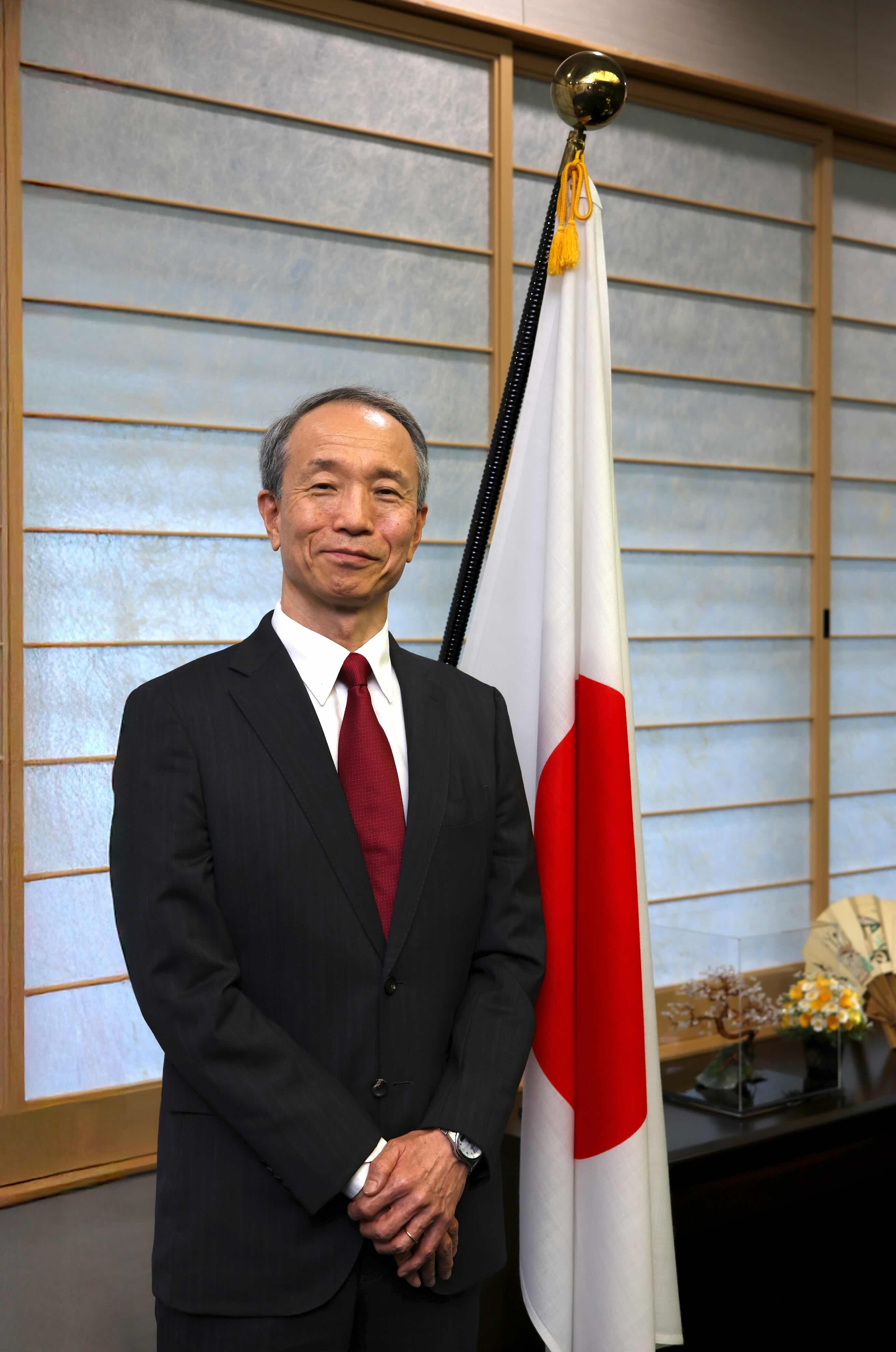
Dao Trong Khoa, chairman of the Vietnam Logistics Association, said in an interview with The Saigon Times that restructuring global supply chains presents a significant opportunity for Vietnamese businesses to engage further in the international logistics network.
DUAL RISKS
The Saigon Times: The U.S. decision to collect port call fees (under a roadmap) from Chinese-built ships is putting the global shipping industry at risk as it will directly impact export-reliant countries like Vietnam. How do you assess this situation? What do you think of the possibility of the U.S. to proceed with the fee collection?
Mr. Dao Trong Khoa: The U.S. administration’s decision to impose port call fees on Chinese-built ships marks a significant shift in global shipping dynamics. While still in its early stages, this policy signals a strategic effort to reduce reliance on China in the maritime sector. The impact extends beyond Chinese shipping companies, affecting all operators using Chinese-built vessels, which currently make up nearly 80% of the global fleet and are projected to reach 98%.
For export-driven economies like Vietnam, the immediate concern is rising transportation costs. Shipping firms will need to absorb additional fees or restructure their fleets, potentially leading to reduced transport capacity and altered shipping routes. Over time, this could introduce instability into global trade flows, as businesses and logistics providers adjust to the new financial and operational realities.
The U.S. administration’s plan to impose port call fees on Chinese-built ships has been structured as a phased approach, with gradual increases leading up to 2028. The policy aligns with broader efforts to restore domestic industrial manufacturing and protect strategic supply chains. Shipping firms that place shipbuilding orders in the U.S. may receive exemptions or reductions in fees, reinforcing the administration’s intent to incentivize domestic shipbuilding.
However, the implementation of this policy depends on several factors, including the response from the U.S. business community, international trade partners, and the readiness of the U.S. shipbuilding industry. Public hearings have drawn over 300 opinions, reflecting ongoing debates about the feasibility and economic implications of the plan.
Vietnam needs to stay ahead of the curve by closely monitoring policy shifts and collaborating with key industry players. Proactively reassessing supply chain structures will be crucial to maintaining stability and mitigating potential disruptions. At the same time, there could be opportunities to capitalize on fleet adjustments, especially if shipping firms begin diversifying their routes or seeking alternative manufacturing and logistics hubs.
Besides the above risk, the fall in exports from China and other countries has forced shipping firms to cut/narrow their itineraries or reorganize routes. How do these actions affect the stability of and increase the uncertainty for the logistics market?
China’s exports to the United States have recently declined due to high reciprocal tariffs on Chinese goods. In response, shipping firms have adjusted their operations by cutting service itineraries and restructuring routes to maintain freight stability.
For instance, in May 2025, shipping capacity ebbed sharply, with 29% of journeys for shipping week 18/2025 (by May 5, 2025) being canceled, resulting in an estimated 70% reduction in shipping capacity from China to the U.S. Additionally, ten services have been temporarily or indefinitely suspended by the Ocean Alliance (CMA CGM, COSCO, Evergreen, and OOCL), Premier Alliance (ONE, HMM, YML), and ZIM/MSC.
The suspension of certain trans-Pacific routes and rerouting shipments through transshipment ports could lead to higher operational costs due to extended shipping times and increased reliance on intermediary services. Additionally, the uncertainty in ocean shipping corridors diminishes predictability, impacting exporters’ production schedules and delivery timelines.
Furthermore, amid a global economy in transition and weakened consumer demand, the decline in shipping frequency and reduced goods flow from China have begun to affect ASEAN nations, including Vietnam. This shift may challenge regional trade competitiveness, requiring businesses to adapt their logistics strategies to mitigate potential disruptions.
EARLY COPING SCENARIOS
Amid global trade uncertainties, preparation is very important. How should Vietnam prepare a coping scenario for this situation, and what is it specifically?
First, Vietnam should establish a mechanism to monitor developments of international policies that may affect the transport and logistics industries, especially decisions from major markets, such as America, the EU, and China. The Government, ministries, and sectors, especially the industry and trade sectors, have had swift reactions and timely policies to minimize adverse economic impacts.
Trade associations and logistics businesses should coordinate to develop flexible coping scenarios, including changing shipping routes and selecting suitable transshipment ports. Companies can choose Canada’s ports, such as Prince Rupert on the West Coast and Montreal and Halifax on the East Coast, and then use railway and road transport to carry goods into America.
For industries, exports which are of high value, time sensitive and dependent on maritime shipping, such as garments and textiles, footwear (which require strict delivery time and are often bound for America and the EU), electronics and high-tech components (which have high value and are easily affected upon port congestion or slow shipping time), and frozen seafood and fresh farm produce (high risk if shipping time is prolonged), should be prioritized for preparing early coping scenarios.
Businesses should proactively work with many shipping firms, instead of relying on a sole partner, especially with firms with direct shipping routes or good connections with transshipment hubs outside China like Singapore, Busan (South Korea), Klang (Malaysia), and Dubai. They should also consider green logistics development and diversification of shipping modes, including the combination of sea, overland, and railway routes to maintain stable goods flows. Diversifying markets and fully utilizing free trade agreements to boost exports are advisable. In addition, a strategic move is to promote localization of the supply chain, enhance the domestic logistics capacity, and expand the port infrastructure and the inland container depot (ICD) to increase pro-activeness in import-export coordination. Promoting the digitalization of logistics is also very important to help businesses predict risks early and optimize the operational plan.
TURNING CHALLENGE INTO OPPORTUNITY
Though the U.S. announcement has yet to turn into reality, it has already delivered a blow to the global logistics industry. Could Vietnam take advantage of the time when businesses have to diversify the transport chain to participate more deeply in the global logistics system? Any suggestions?
Though Vietnam does not yet have a container shipping fleet big enough to operate on trans-ocean routes independently, many Vietnamese logistics businesses are providing trans-national services, including international multi-modal transport, customs declaration, third-party logistics (3PL), overseas warehousing and supply chain management for foreign direct investment (FDI) enterprises and global corporations. Many Vietnamese businesses are members of international logistics networks and can manage orders from the departure point to the final consumption point in many regions across the world.
That said, restructuring global supply chains is the opportunity for Vietnamese businesses to participate more deeply and actively in the international logistics chain instead of “staying outside” as before. An important milestone in this process is that Vietnam will host the FIATA World Congress 2025 (FWC 2025) with the theme “Green and Resilient Logistics” in Hanoi from October 6 to 10. This is the biggest international event of the logistics industry organized annually by the International Federation of Freight Forwarders Associations (FIATA), which gathers thousands of logistics business leaders, shipping companies, international organizations, and experts from all continents. It is an opportunity for Vietnamese companies to network with partners, learn the modern management model and discuss new logistics trends, such as green development, digital transformation and multi-modal transport. If companies can take good advantage of this event, along with their efforts to professionalize and renovate, they will be able to reach out and gradually take on a greater role in the global supply chain.
Additionally, Vietnam should (1) strengthen the competitiveness of domestic logistics businesses, not only in terms of technology and service standards but also in terms of financial capacity and the ability to provide comprehensive solutions for importers and exporters, (2) enhance the alliance between domestic producers and logistics businesses to develop integrated supply chains “owned by the Vietnamese”, from the operation phase to the data phase, (3) actively connect with and participate in the global logistics network through international associations, 3PL networks, and cross-border logistics digital platforms, and (4) invest in human resources, as logistics is an industry which requires general knowledge, the capacity for international coordination, and the ability for chain management.
Vietnam is in the process of “changing role”, from individual execution to deep participation in the chain operation system. The matter is the country must go faster and more systematically and dare to invest in difference. I think that over the next few years when the Can Gio International Transshipment Port and the Long Thanh International Airport are operational, the role of Vietnam in the global supply chain would be defined more clearly.
What support do Vietnamese businesses need to have a better position in the logistics chain to serve businesses in Vietnam and reach out to the world?
The role of the State is vital, especially concerning three aspects: policy, logistics infrastructure, and capacity enhancement.
First, for policy, it needs to have consistent, transparent, and stable policies to create favorable conditions for the development of logistics businesses, for example, streamlining customs and sector specific inspection procedures and building a mechanism for sharing logistics data among stakeholders in the supply chain.
Second, for infrastructure. Logistics is an industry that depends greatly on infrastructure. So, the development of planned logistics hubs and synchronized connection of seaports, inland container depots, airports, railways, and roads should be promoted and executed on schedule. In addition, ensuring land for the development of logistics services, including warehouses, depots and distribution centers, at a reasonable price is a matter that businesses want to be addressed.
Third, for capacity enhancement. Vietnamese logistics businesses badly needs assistance in high-quality human resources training, digital transformation application, and especially logistics trade promotion, that is to bring Vietnamese logistics services to regional and international markets as well as to attract big logistics events to Vietnam, such as the FWC 2025 mentioned above which is the start that we should pay attention to and enhance its value to a maximum when thousands of the world’s leading logistics businesses gather in Hanoi. In the past, trade promotion programs were mainly intended for driving goods exports. Now they need to include promotion of Vietnamese logistics brands and services.
Finally, an important thing is that we need a mechanism for frequent, substantive dialogues with clear results between government agencies and logistics businesses to remove obstacles quickly. The Vietnam Logistics Association is happy as the
Government, ministries, and agencies have invited us to important trade and economic meetings over the past few years. We greatly appreciate the opportunity to contribute opinions directly to the highest-level agencies and representatives of the Government. We hope that such meetings will be made regular in the future.