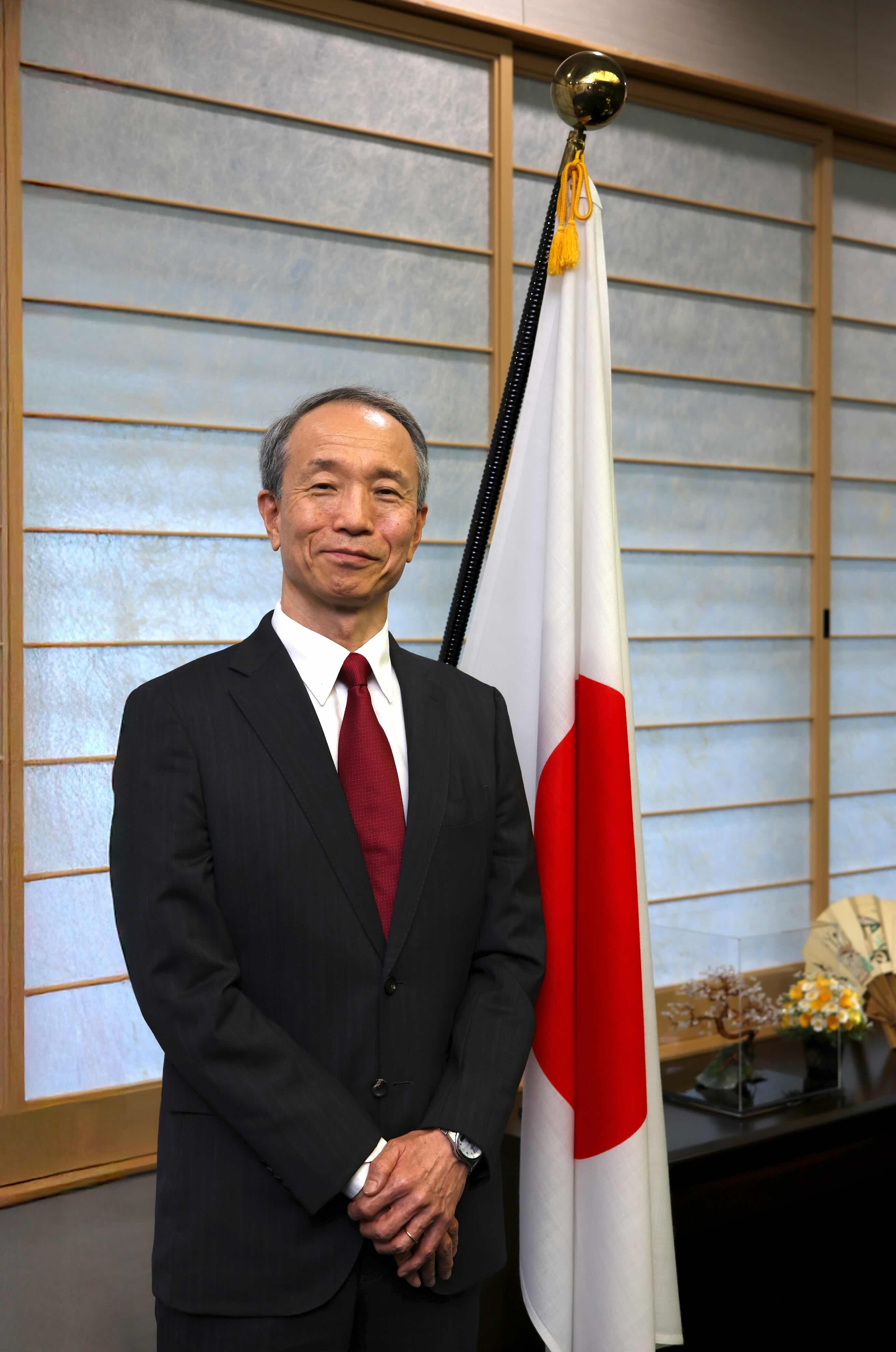
“I first began reading The Saigon Times during my earlier posting at the Consulate-General of Japan in Ho Chi Minh City, from 1994 to 1998. Those were exciting times, with Vietnam opening up under the Doi Moi reforms and many Japanese companies were establishing their presence in southern Vietnam. As an officer responsible for economic affairs at the Consulate-General in those days, I found the up-to-date information The Saigon Times provided on Vietnam’s economy truly invaluable — and I am sure the Japanese business community here shared that sentiment.
There is a question that has occupied philosophers across cultures and centuries: what does it mean to live in a world where everything changes, and nothing lasts?
"The Saigon Times has been a trusted source of information for the French Consulate for many years. Its English edition enables expats like me to stay well informed about business, economic and social developments in Vietnam. It has also been one of the reliable sources we use for our daily news round-ups and updates, helping us keep track of what is happening both locally and nationally.
In an interview with The Saigon Times, Dr. Nguyen Quoc Viet, deputy director of the Vietnam Institute for Economic and Policy Research (VEPR), discusses how to take a fiscal policy approach that can help mobilize resources from society in general and tax revenues in particular to create the best conditions for the economy to grow.
Why not tightened?The Saigon Times: Recently, Minister of Finance Ho Duc Phoc said at the National Assembly that by the end of 2024, we should wrap up the expansionary fiscal policy as the global trend now is to enhance public finance. What is your view on this matter?Dr. Nguyen Quoc Viet: After Covid-19, most countries rolled out stimulus packages to restore economic growth and alleviate difficulties faced by households and businesses. Vietnam is no exception.
Dr. Nguyen Quoc Viet, deputy director of the Vietnam Institute for Economic and Policy Research (VEPR)
At the recently concluded 7th sitting of the 15th National Assembly, NA deputies discussed and passed a resolution on the results of a review of the implementation of Resolution 43/2022/QH15 on fiscal and monetary policies meant to support economic recovery and development. Fiscal programs – such as reducing value-added tax by two percentage points (to 8%) for certain groups of items, lowering environmental taxes and fees, providing two-percentage-point interest rate support through the commercial banking system for businesses, cooperatives and business households, and supporting rental payments for workers, with disbursements reaching hundreds of trillions of Vietnam dong – have left positive impacts on the economy. However, some policies, like the two-percentage-point interest rate support and rental payment aid for workers, have not worked, as businesses and people have found it hard to gain access to such financial support.
In such a situation, coupled with the upbeat outlook of Vietnam’s economic recovery after 2024, it is reasonable to consider stopping the short-term financial support packages that have been implemented and not to introduce broad-based support programs.
How should we understand expansionary fiscal policy?
- A fiscal expansion is the Government’s policy to increase the money supply through public spending and tax and fee reductions for a certain period (to stimulate economic activity). These two measures can be implemented simultaneously or separately, depending on macroeconomic management priorities and various other economic variables.
In theory, expansionary fiscal policy is introduced when the economy is in difficulty or crisis, while tight fiscal policy can only be adopted when the economy expands strongly, or when there are unstable macroeconomic factors such as high inflation. In principle, expansionary fiscal policy aims to alleviate difficulties in a short term. However, even when initial difficulties are resolved, if investment does not recover and consumer demand shrinks due to low growth expectations or income uncertainties, countries would still have to maintain and extend some measures within expansionary fiscal policy.
Another variable is macroeconomic indicators. Even if a country underperforms but has high inflation, exchange rate volatility or unstable asset markets, State agencies may still need to take measures from tight fiscal policy.
Of course, the adoption of either tight or expansionary fiscal policy depends on the budget balance. If the budget deficit and public debt increase, it would be necessary to cut spending and increase revenue sources, making it challenging to discuss expansionary fiscal policy.
Do you think it is time for Vietnam to consider changing fiscal policy and why?
- For Vietnam, the growth recovery momentum has gained traction but growth is not yet as high and sustainable as expected. In 2022, GDP soared by 8.02%, but in 2023, it only grew by a mere 5.05%, below the year’s target. GDP growth in 2024 might reach the 6%-6.5% target but it would be close to 6%, and 6.5% might be difficult to obtain.
Secondly, difficulties are affecting both export-oriented companies and those supplying products and services to the domestic market. According to the General Statistics Office, the first half of this year saw nearly 18,400 businesses pulling out of the market a month on average.
Regarding investment, although there are positive signs, it is mainly in the foreign direct investment (FDI) sector. According to the General Statistics Office, by the end of the second quarter of 2024, new FDI approvals expanded by 10.3% against the same period last year, above the 6.7% increase in the private domestic sector and the 4.8% improvement in the state sector. Notably, the private domestic and public investment spikes were lower than the 6.8% investment increase of the national economy.
Final consumption in the first two quarters of 2024 increased by 5.78% compared to the same period in 2023, showing signs of recovery but staying below the pre-Covid-19 years (when it was over 7% per year). Therefore, without continued policy support for businesses and domestic consumption recovery, it would be challenging to meet the 2024 growth target approved by the National Assembly.
From a budget balance perspective, we still have room for a fiscal expansion. Last year, despite investment rises and tax and fee exemptions, along with other social security policies, the country had a budget surplus, with public debt controlled at about 37% of GDP, way below the 60% GDP ceiling. In the first six months of this year, the budget surplus amounted to over VND200 trillion, with revenue exceeding 59% of the estimate and spending reaching nearly 38% of the estimate. This means we are not in a tight spending situation that would necessitate a shift from expansionary to tight fiscal policy.
From a macroeconomic perspective, the General Statistics Office’s data showed that in June 2024, the consumer price index edged up by 4.34% versus the same period last year. There are certain pressures weighing on in the asset and monetary markets, such as volatile gold prices and the 5.64% fall of the Vietnam dong currency against the U.S. dollar in the first six months of the year. We should consider these factors in fiscal policy. However, I believe the situation is still under control. We don’t need to shift the fiscal policy focus from supporting growth to ensuring macroeconomic stability. Instead, we should prioritize recovering business production, consumer demand and economic growth.
Direction for choiceEven without fiscal policy change, adjustments are likely necessary. How should these be made to best support the economy?
- When manufacturing shows signs of improving, from 2025 onwards, tax and fee reductions should not be implemented across the board. We should choose to incentivize key industries that can create breakthroughs for the economy, balancing support between supply and demand.
For example, the VND30-trillion loan package with interest rates 1-2 percentage points lower from those at commercial banks for key export-import sectors such as textile, seafood and wooden products has been well disbursed and effective, so it should be continued. It can even be expanded based on the localization rate of the final product. This way, we support exports and ensure higher domestic added value, thus creating jobs and distributing profits back to domestic businesses.
In terms of consumption stimulus, alongside prioritizing products with a high localization ratio, we can promote the consumption of goods and services that meet higher standards on quality, green economy, circular economy, and social justice. If there is support policy and good communication to encourage consumers to choose these goods and services, the production scale would gradually increase, prices would decrease, and it would motivate other businesses to transform.
Ensuring efficient budget spending is also crucial. If we increase the efficiency of expenditures, including regular spending, development investment, and infrastructure development, businesses would benefit directly, and the business environment would become more favorable.
When should Vietnam consider tightening fiscal policy, and increasing taxes and fees to boost revenues for new development investments and for improving social welfare quality?
- We should not equate tight fiscal policy with tax and fee hikes. In choosing fiscal policy, it is important to determine an optimal approach to mobilize resources from society and boost tax revenues.
If we only aim to increase budget revenue through higher taxes and fees, we might reduce the tax base. Businesses might shift to the informal sector or reduce production and business, affecting budget revenues and other contributions. Workers may lose jobs or have fewer opportunities to increase income, and related industries may take a hit from negative consequences, leading to a decrease in overall income and consumption, negatively impacting the production of goods and services.
Of course, if necessary, taxes and fees should be increased to ensure budget revenue. However, the scope, extent, and roadmap for increasing taxes should be weighed carefully.
In a word, whether tight or expansionary, fiscal policy should be made in a way that best supports the business environment, creates opportunities and allows businesses to survive and grow.
“I first began reading The Saigon Times during my earlier posting at the Consulate-General of Japan in Ho Chi Minh City, from 1994 to 1998. Those were exciting times, with Vietnam opening up under the Doi Moi reforms and many Japanese companies were establishing their presence in southern Vietnam. As an officer responsible for economic affairs at the Consulate-General in those days, I found the up-to-date information The Saigon Times provided on Vietnam’s economy truly invaluable — and I am sure the Japanese business community here shared that sentiment.
There is a question that has occupied philosophers across cultures and centuries: what does it mean to live in a world where everything changes, and nothing lasts?
"The Saigon Times has been a trusted source of information for the French Consulate for many years. Its English edition enables expats like me to stay well informed about business, economic and social developments in Vietnam. It has also been one of the reliable sources we use for our daily news round-ups and updates, helping us keep track of what is happening both locally and nationally.





 - We should not equate tight fiscal policy with tax and fee hikes. In choosing fiscal policy, it is important to determine an optimal approach to mobilize resources from society and boost tax revenues.
If we only aim to increase budget revenue through higher taxes and fees, we might reduce the tax base. Businesses might shift to the informal sector or reduce production and business, affecting budget revenues and other contributions. Workers may lose jobs or have fewer opportunities to increase income, and related industries may take a hit from negative consequences, leading to a decrease in overall income and consumption, negatively impacting the production of goods and services.
Of course, if necessary, taxes and fees should be increased to ensure budget revenue. However, the scope, extent, and roadmap for increasing taxes should be weighed carefully.
In a word, whether tight or expansionary, fiscal policy should be made in a way that best supports the business environment, creates opportunities and allows businesses to survive and grow.
- We should not equate tight fiscal policy with tax and fee hikes. In choosing fiscal policy, it is important to determine an optimal approach to mobilize resources from society and boost tax revenues.
If we only aim to increase budget revenue through higher taxes and fees, we might reduce the tax base. Businesses might shift to the informal sector or reduce production and business, affecting budget revenues and other contributions. Workers may lose jobs or have fewer opportunities to increase income, and related industries may take a hit from negative consequences, leading to a decrease in overall income and consumption, negatively impacting the production of goods and services.
Of course, if necessary, taxes and fees should be increased to ensure budget revenue. However, the scope, extent, and roadmap for increasing taxes should be weighed carefully.
In a word, whether tight or expansionary, fiscal policy should be made in a way that best supports the business environment, creates opportunities and allows businesses to survive and grow.