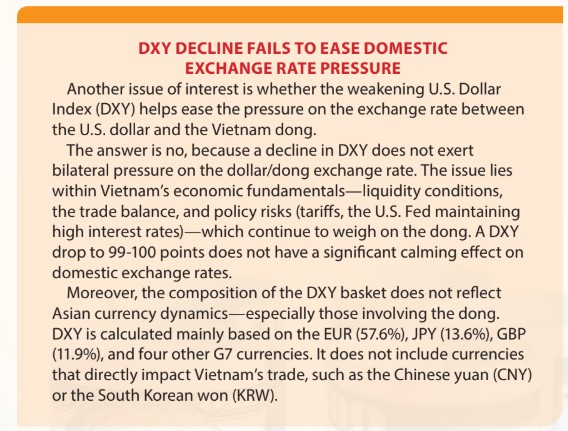
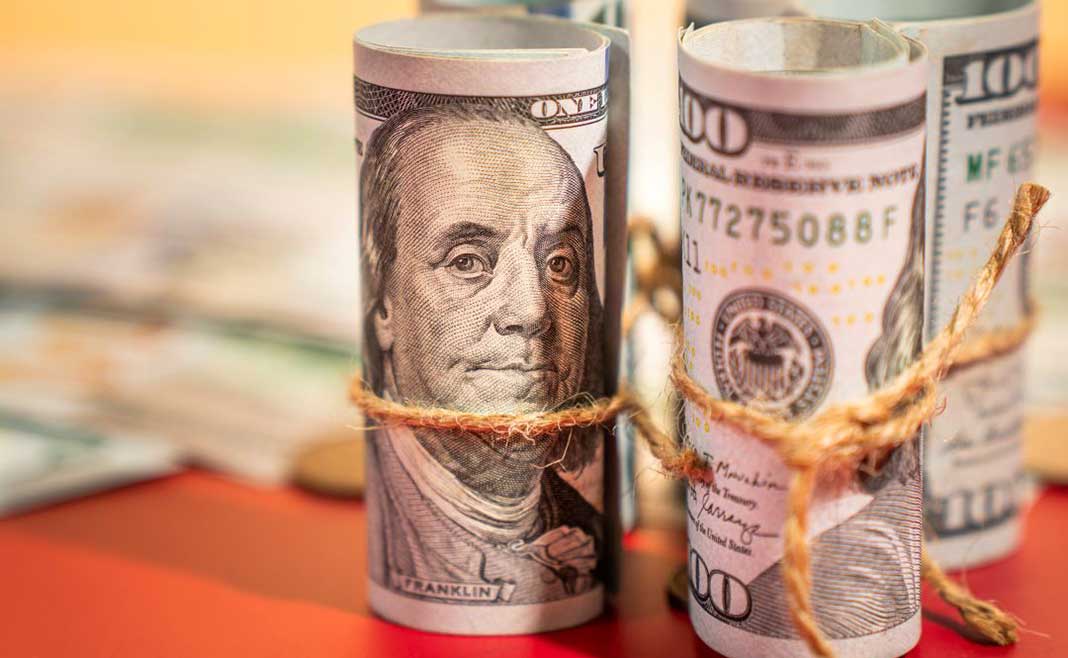
The tariff shock and excess liquidity are exerting pressure on the exchange rate between the Vietnam dong and the U.S. dollar in the short term. However, a stable macroeconomic backdrop gives Vietnam enough tools to regulate and mitigate systemic risks.
Rising pressure
Since early 2025, the U.S. dollar has steadily appreciated against the dong even though the State Bank of Vietnam (SBV) has actively sold the foreign currency for intervention. The reference rate published by the SBV on April 28, 2025, rose to VND24,960 per dollar, up by more than 2.5% against the beginning of the year. Given the trading band of 5% on either side of the reference rate, the selling price of the dollar at commercial banks picked up to above VND26,000. Notably, the exchange rate pressure was increasing sharply in April, with the rate rising over 1% this month alone.
But it is important to note that the current exchange rate pressure mainly stems from two short-term factors: trade disruptions in April following the announcement of the new U.S. tariff policy, and internal pressure from excess liquidity on the interbank market.
Tariff pressure wipes out half of Q1 2025 trade surplus
The tariff shock forced many importers—especially of textiles, footwear, and electronics—to postpone or cut orders, leading to a sudden drop in foreign currency supply to the market.
While Vietnam posted a trade surplus of US$3.16 billion in Q1, the trade balance swung to a deficit of US$1.94 billion in just the first half of April (April 1–15), with total imports at US$18.69 billion and exports at US$16.75 billion.
Thus, merely the short-lived disruptions in exports during early April caused a significant trade deficit, wiping out more than half of the Q1 2025 trade surplus. The prolonged tariff negotiations also mean that trade is likely to remain disrupted at least through Q2—this is the main factor for exchange rate volatility in April and Q2 as a whole. If negotiations proceed smoothly and export orders resume from late June, the trade balance may return to a surplus in Q3, which would help ease foreign exchange pressure.
Excess liquidity and negative SWAP rates
The SBV is still maintaining liquidity injections via the open market operations (OMO). Abundant liquidity has driven Vietnam’s overnight interest rate down to around 2.5%, which is lower than the U.S. overnight rate (above 4%). This negative interest rate differential has led short-term dong/dollar SWAP fees to turn negative.
Domestic financial investors are incentivized to buy U.S. dollars on the spot market and sell them forward to profit from the rate differential, which further increases demand for foreign currency and intensifies exchange rate pressure.
However, this excess liquidity issue could be resolved soon, as the SBV is gradually scaling back OMO injections to maintain moderate Vietnam dong liquidity. Specifically, in the last week of April, OMO volume in circulation dropped sharply from VND113 trillion on April 24 to VND75 trillion on April 28. New injections were also relatively small in volume, suggesting that the overnight interest rate may rebound soon, narrowing the interest rate gap between the dollar and the dong and reducing the incentive for SWAP speculation.
Variables to watch
Overall, short-term exchange rate pressure is notable but not yet systemically risky. Current exchange rate pressure primarily stems from two short-term factors: a confidence shock (U.S. tariffs) coupled with a liquidity shock (SBV injections).
While foreign currency supply is sharply down due to trade disruptions, demand is on the rise due to interest rate differentials and capital outflows.
However, Vietnam’s stable macroeconomic fundamentals—ample foreign exchange reserves, steady FDI inflows, and controlled inflation—provide a buffer for the dong currency. In the face of short-term volatility, proactively hedging exchange rate risks and closely monitoring policy developments will help businesses mitigate risks and seize market opportunities.