Major international retailers are eyeing Vietnam as a crucial supplier and are establishing their presence by setting up offices in the country. This increased interest from global retailers presents both opportunities and challenges for Vietnamese suppliers, as product criteria and quality standards are becoming more stringent.
For example, Walmart is intensifying its focus on sourcing a wide range of products from Vietnam, particularly food products, household appliances, electronics, footwear, toys, and tropical fruits. Avaneesh Gupta, senior vice president at Walmart International, stated, “We are eager to boost our sourcing from Vietnam for both our private labels and global product offerings.”
Walmart is among the prominent international retailers that highly value Vietnamese goods as a means to diversify their supply chains.
Retailers increasing sourcing from Vietnam
Lionel Adenot, chief executive officer of Decathlon Vietnam Company, views Vietnam as a potential key player in its international supply chain. With over 2,080 stores in 56 countries, the French sporting goods retailer is actively seeking Vietnamese suppliers for a wide range of products, including clothing, footwear, and sporting equipment.
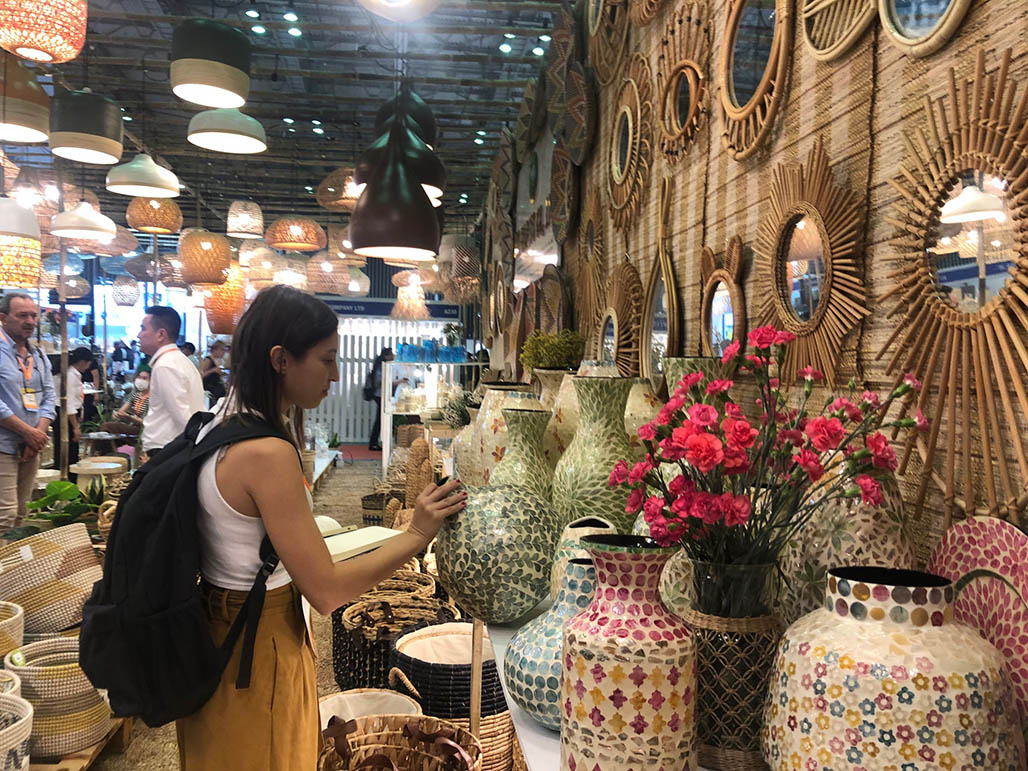
On the other hand, Federico Bucher, Asia Regional Director for the Chilean retail giant Cencosud, revealed the company’s plans to incorporate Vietnamese suppliers for clothing, household appliances, and fashion items, diversifying beyond their traditional sources in China and Bangladesh. Currently, only about 5% of Cencosud’s sourcing comes from Southeast Asia, including Vietnam. Bucher also noted that the company has, so far, only purchased a limited range of items such as handicrafts, furniture, and garden furnishing items from Vietnam.
Similarly, the Brazilian apparel conglomerate Renner has established a representative office in Vietnam to seek out high-quality textile suppliers, said Roberta Guttler Difini, the firm’s representative.
Emphasizing eco-friendliness and sustainability
While Vietnam is increasingly recognized as a significant goods supplier, major retailers stress that their criteria extend beyond competitive pricing and quality. They now place heightened scrutiny on products that are sustainably produced, environmentally friendly, and less reliant on imported raw materials, all while ensuring swift delivery times.
Walmart assesses Vietnamese suppliers based on various criteria, including capacity, consistent supply, financial stability, and adherence to environmental sustainability commitments. Additionally, the retail giant considers workforce management, organizational culture, and problem-solving capabilities to ensure a smooth, risk-mitigated supply chain.
Vietnamese firms aiming to join Walmart’s billion-dollar global value chain should focus on three core areas: a long-term business strategy, a robust supply chain with logistics solutions, and product design and development capabilities.
Meanwhile, French-based sports retailer Decathlon places a strong emphasis on digitalization. The company values suppliers who can effectively utilize digital data and incorporate digitalization into their business and production activities. Decathlon believes that digital tools enhance the efficiency of production system management and inventory, thereby increasing flexibility and reliability. Suppliers receive significant advantages if they meet these criteria, which involve sourcing local materials and using energy efficiently.
Decathlon also underscores the importance of sustainability and minimizing environmental impact. The company reveals that 80% of its carbon emissions originate from its products and raw materials for apparel. Decathlon has already reduced its carbon emissions in Vietnam by 17% compared to 2019 and 10% compared to 2021.
“This is an excellent performance, but we must continue to reduce emissions by completely switching to renewable energy sources like solar and biomass by 2023. These are conditions for Vietnam to become a new hub in the global sports apparel supply chain,” the Decathlon representative emphasized.
Dang Quoc Thang, director of Textile Manufacturing at Decathlon Vietnam, emphasizes that Vietnamese companies must adopt lean production methods, streamline operations, consistently reduce production costs, and prioritize sustainable manufacturing, including renewable energy sources. Decathlon Vietnam adheres to a policy of not collaborating with factories reliant on coal for energy.
Aeon, a retail giant with over 18,000 stores in 14 countries, echoes a similar message. The company advises its suppliers that the era of mass production and consumption is evolving toward a focus on environmental friendliness, sustainable development, and reducing carbon footprints.
Yuichiro Shiotami, general director of Aeon Topvalu Vietnam, reflects on the significant environmental changes he has witnessed. “In my over 60 years of life, this is the first time I have seen such a significant shift in the environment,” said Shiotami.
He emphasized that adapting to these changes offers tremendous global opportunities for Vietnamese businesses. “If we keep doing things the way we have done them in the past, we certainly can’t keep up with the world’s trends. (Vietnamese) Businesses that can adapt to the times will have enormous opportunities,” he said.