Urbanization transforms the natural environment, but when it disrupts nature’s self-balancing mechanisms, cities risk becoming uninhabitable. To counter this, large urban areas must pursue “greening” strategies that mitigate harmful agents and safeguard the living environment.
For many types of pollution, cities have traditionally relied on “export” solutions—transporting and pumping contaminants away from central districts—and “import” solutions, such as bringing in clean resources like fresh water from elsewhere. However, these conventional approaches cannot be applied to air pollution. As a result, adopting effective greening measures has become an urgent necessity.
“Greening” requires a comprehensive roadmap that ensures sustainability and coordination, respects property rights, safeguards the investment climate, and prevents wastefulness. The author thinks that this process should rely on fundamental tools and economic mechanisms rather than abrupt administrative directives.
The 20-year fee increase roadmap to prevent new registration of internal combustion engine vehicles
This roadmap will directly affect consumers’ economic interests by requiring them to phase out internal combustion engine vehicles, while indirectly influencing the behavior of manufacturers and importers. A sufficiently long and well-defined roadmap gives manufacturers the time needed to adopt new technologies, reconfigure production lines, and establish resilient supply chains.
Conversely, without a clear and adequately extended roadmap, abrupt administrative orders may be perceived by manufacturers as “force majeure” events, akin to natural disasters. In such circumstances, they may avoid investment environments with high legal risks, or continue investing but with substantial “provisions” to offset potential “legal accidents.” Both outcomes undermine the investment climate and weaken the broader economy.
The 20-year roadmap to develop public transport and green infrastructure
A roadmap to restrict the use of internal combustion engine vehicles must be accompanied by viable alternatives; otherwise, it risks generating public discontent. An effective metro system not only advances “greening” goals but also addresses traffic congestion, fosters punctuality, and enhances overall economic efficiency for the community.
When public transport operates around the clock, reaches all residential areas, ensures walking distances of less than 400 meters, and remains accessible to the elderly, children, and people with disabilities, citizens no longer need to worry about commuting to work by metro, attending family ceremonies by motorbike, or taking parents to the hospital by car.
Urban governments that achieve this—such as Berlin and Shanghai, where most transport has been moved underground—transform the cityscape: the ground level becomes a space primarily for strolling and leisure. In such contexts, banning internal combustion engine vehicles becomes unnecessary, as private transport naturally fades away in favor of efficient, inclusive public systems.
Internal combustion engine vehicles may still be permitted for traffic, and the ownership rights of wealthy individuals who view such vehicles as sports equipment or antiques should be respected. However, like yachts, they must be subject to high taxes and fees, thereby generating additional state revenue.
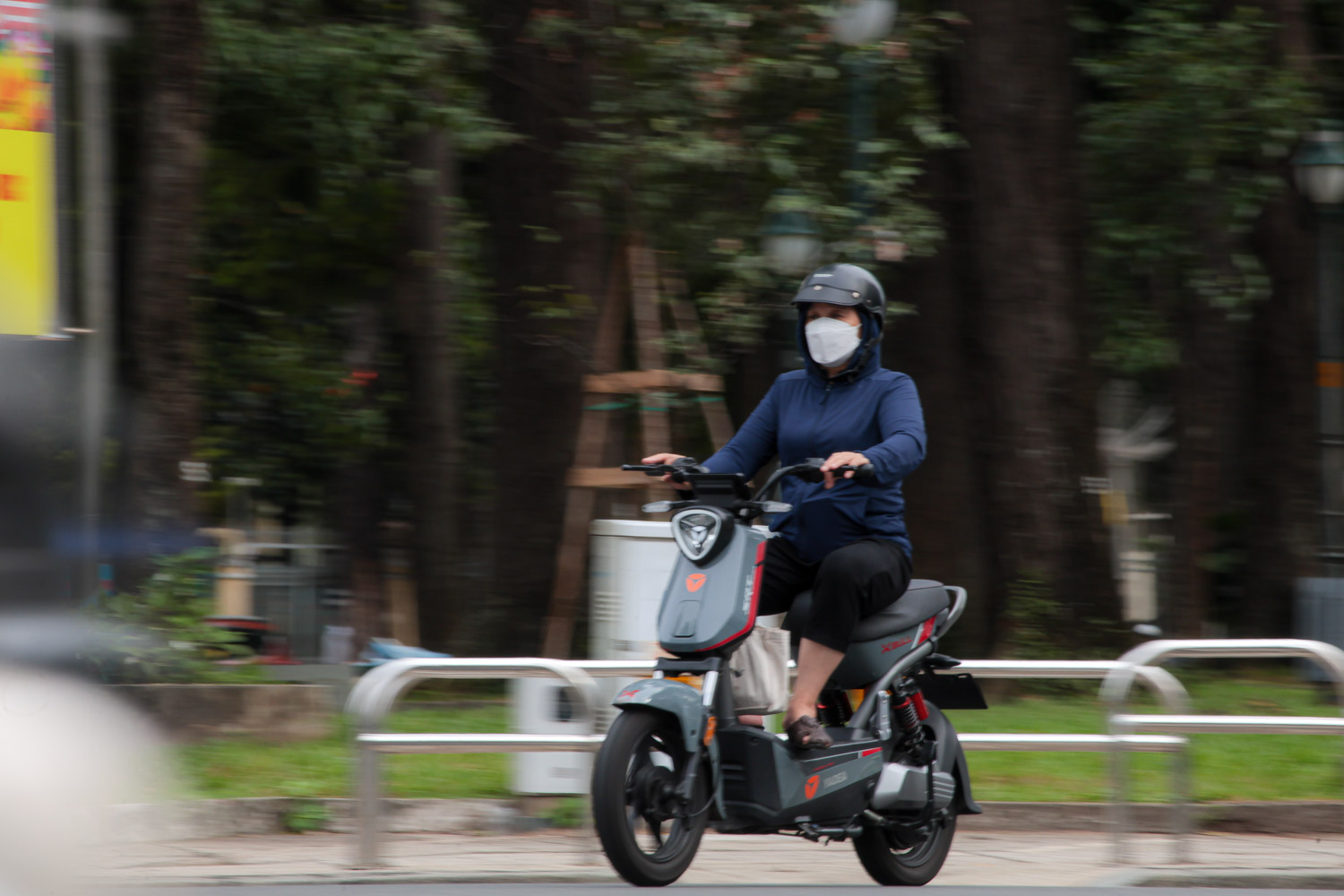
For public transport systems to operate effectively, frequency and capacity must be increased during peak hours and reduced during off-peak periods. Even so, private vehicles remain essential for certain occupations, such as shippers and chefs. Yet, with the authorities’ repeated failure to deliver on metro development commitments in Hanoi and Ho Chi Minh City, private transport continues to represent a lucrative market for major manufacturers.
At the same time, reducing emissions from private vehicles in large cities has become urgent. The rapid pace of urban concretization and the proliferation of high-rise buildings obstruct air circulation at lower levels, driving air pollution to alarming levels.
The mismatch becomes more pronounced when transport planning, the electricity system, and construction standards fall under the jurisdiction of three separate ministries. This fragmentation has fueled public concern: while authorities seek to ban gasoline vehicles, condominium management boards move to restrict electric vehicles. In cases where an “electric vehicle burns,” no single agency assumes responsibility, as each has issued its own regulations that are nonetheless considered “due process.”
Merging the Ministry of Transport with the Ministry of Construction would help resolve this disparity. Indeed, by late 2025, the Ministry of Construction had already announced plans to revise national condominium standards to regulate electric vehicle battery charging and swapping stations.
For green infrastructure to keep pace with and support green modes of transport, it is essential to revise electricity planning. More importantly, mechanisms must be established to encourage investors to participate in sustainable and stable green energy production. Hydropower offers limited expansion potential and must be supplemented by wind and solar energy, while thermal and gas power increase emissions and therefore require nuclear power as a fundamental source to ensure stability in the energy mix.
Until authorities fulfill their commitments to public transport and green infrastructure, people’s rights to livelihood and safety must be respected. Citizens should retain the proactive choice of daily transport modes that best suit their economic conditions and the fire and explosion safety standards of their living environments.
The 20-year roadmap for internal combustion engine vehicles to find new place of service and rest
In an era of national advancement, progress is expected to accelerate. Within the broader vision of “re‑arranging the country,” development must be guided by long‑term planning—less passive, less fragmented, and more consistent. This gives people hope that public transport and green infrastructure will evolve quickly enough to make choosing green mobility both practical and joyful.
Yet, two pressing challenges remain. First, green infrastructure cannot easily be integrated into old condominiums and existing construction projects. Second, the question arises of how newly purchased internal combustion engine vehicles—often worth a fortune—should be utilized so as not to become wasteful assets.
Most internal combustion engine vehicles are designed for a lifespan of around 20 years. In the author’s view, rather than issuing abrupt administrative orders to ban their circulation—effectively stripping vehicle owners of their property rights, particularly the right to use assets that remain relatively new and have depreciated only slightly—authorities should employ economic instruments that encourage owners to voluntarily seek “migration” destinations for their vehicles.
For such migration to occur, suitable destinations must exist. Rural areas or smaller urban centers with populations under one million, where density is low, greenery remains abundant, and households still rely on firewood and gas for cooking, provide appropriate environments for internal combustion engine vehicles to continue serving out their remaining lifespan.
When a “place for migration” exists, whether the migration of vehicles occurs depends on both sellers and buyers. A robust second-hand vehicle market, however, inevitably reduces the profit margins of manufacturers. To reassure buyers, authorities should establish a clear roadmap that guarantees internal combustion engine vehicles will not be banned in designated migration areas within a reasonable timeframe.
To simultaneously encourage and pressure sellers, authorities could implement a phased approach. In the initial “pulling” or encouraging phase, sellers would be exempt from personal income tax for five years. This would then transition into the “pushing” phase, where economic penalties are applied—such as collecting indirect emission fees from all internal combustion engine vehicles. Additionally, publishing a long-term roadmap for gradually increasing value-added tax on gasoline and oil over a 20-year period, applicable to stations in emission-restricted areas, would reinforce this strategy.
This solution not only reduces emissions from transport but also curbs pollution from other industrial machinery, contributing to a broader environmental impact.
To accelerate the development of green infrastructure, authorities should not only apply green standards to new construction projects and allocate land for public battery charging and swapping stations, but also provide support packages enabling condominiums to transform or develop green infrastructure within their own premises. In cases where condominiums cannot be upgraded, transport planning must prioritize the establishment of stations and terminals that allow residents convenient access to public transport.
A roadmap that avoids abrupt shocks and relies on economic tools will minimize wastefulness during the green transition. After the 20‑year roadmap concludes, if electric vehicles demonstrate clear superiority, the next challenge will be battery disposal. Establishing a dedicated battery disposal fund—requiring battery and electric vehicle manufacturers to contribute deposits from the outset—can help prevent future environmental disasters caused by battery pollution. Only through such foresight can the green roadmap be truly sustainable and genuinely “green.”
(*) Arbitrator of the Vietnam International Arbitration Center (VIAC), Senior advisor of the Institute of International and Comparative Law (ICCL)