Vietnam has set an ambitious goal of achieving economic growth of up to 10% during the 2026-2030 period. Yet with nearly half of 2026 already behind it, the economy is still grappling with a familiar problem: getting public investment money out the door.
The challenge facing fiscal policy
At the end of the first week of June 2026, Israel and Iran unexpectedly exchanged attacks, marking the first outbreak of fighting since the ceasefire reached in April. Although both sides later halted hostilities following calls from U.S. President Donald Trump, the episode highlighted how hopes for lasting peace in the Middle East are fading as negotiations stall and ceasefire agreements repeatedly come under pressure. The conflict continues to trigger the largest energy shock in decades, pushing up oil prices and production costs worldwide.
Vietnam is not immune to these pressures. The country is facing rising inflation risks and exchange-rate pressures, even as foreign exchange reserves have narrowed, leaving policymakers with less room to maneuver on monetary policy. Easing too aggressively to support growth could further fuel inflation and weaken the currency. In this environment, expansionary fiscal policy is increasingly seen as the main engine for growth.
More importantly, Vietnam still has considerable fiscal space. Public debt stands at around 35% of GDP, well below the 60% ceiling. According to economists, every additional 1% of GDP invested through public spending can add around 0.2 percentage point to GDP growth in the first year, with cumulative spillover effects reaching as much as 0.85 percentage point over the following four years. The Government's infrastructure investment plan for 2026-2030 is worth a record VND8.5 quadrillion, or roughly US$320 billion.
But having money available and getting it into the economy are two very different things. The latest data from the Ministry of Finance show that, in the first five months of this year, public investment disbursement reached just VND219.359 trillion, equivalent to 21.6% of the VND1.01 quadrillion allocated by the prime minister.
The problem is not simply one of general delay. There are striking differences across the country. Hanoi City has emerged as a standout performer, disbursing nearly 32.8% of its allocated funds by the end of May. Meanwhile, HCMC, the country's economic powerhouse, had managed only around 17.4%. Even more concerning, 13 ministries and central agencies reported disbursement rates below 1%, with some yet to spend a single dong.
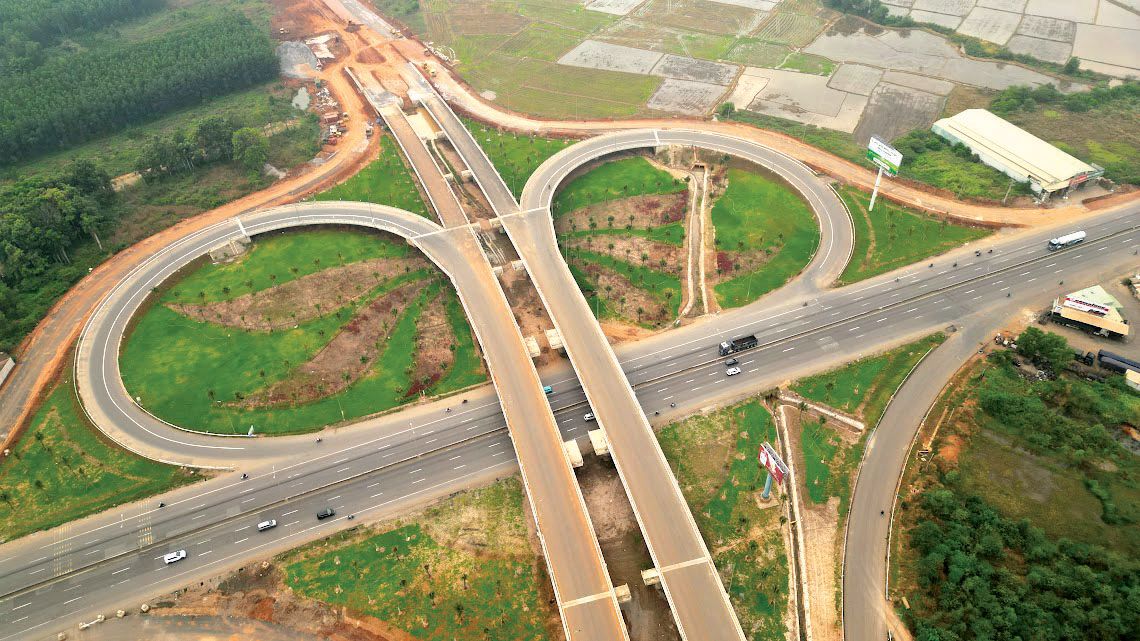
Looking at this year's public investment plan of more than VND1 quadrillion, the scale of the challenge becomes clear. Disbursing the remaining funds over the rest of the year will require a dramatic acceleration. It presents a striking paradox: hundreds of trillions of dong are sitting idle in the state treasury while construction sites are short of capital, contractors are weighed down by debt, and critical infrastructure projects remain stuck in bottlenecks.
Bottlenecks and possible solutions
Vietnam's economy grew 7.83% year-on-year in the first quarter of 2026. That is an encouraging figure given today's uncertain global backdrop, but it falls short of what is needed to achieve double-digit growth. To meet the full-year target, growth in the remaining quarters would have to exceed 10%. That makes it crucial to identify fiscal policy bottlenecks and address them promptly.
The first is the perennial challenge of land clearance — the nightmare behind almost every infrastructure project. Determining compensation rates remains a complex process. At the same time, many localities that have undergone administrative restructuring have yet to fully reorganize their management systems, leading to delays and overlapping paperwork. In some places, multiple land-pricing frameworks still coexist, making it harder to secure residents' agreement and prolonging negotiations.
The next obstacle is the shortage of construction materials. Expressway and beltway projects are facing serious shortages of sand, stone, and fill. Prices have risen sharply in recent months as supplies tighten and global developments add further pressure. Analysts have long pointed out that Vietnam lacks an effective mechanism to coordinate material supplies across regions. As a result, some areas have excess supply while others face shortages, leaving contractors squeezed between rising costs and project deadlines. The consequences are lower profit margins and slower construction progress.
The final bottleneck — and perhaps the hardest to resolve — is psychological. Fear of making mistakes, fear of accountability and fear of inspections have created a culture of caution. Faced with cumbersome procedures and regulatory ambiguities, some officials choose the safest option: doing nothing, or moving as slowly as possible while waiting for clearer guidance, rather than taking decisive action to remove obstacles. This mindset has delayed countless decisions.
If public investment continues at such a slow pace, construction firms will face rising financing costs and declining capital efficiency.
Delayed disbursement also weakens the economy's ability to absorb investment more broadly. When state funds fail to reach the economy on time, private and foreign direct investment activities are also likely to slow, as supporting infrastructure cannot keep up. Meanwhile, Vietnam's logistics costs remain high, weighing on total factor productivity and eroding the country's competitiveness.
Against this backdrop, analysts said that stronger action is needed. Projects that have completed procedures and secured land clearance should be given top priority in capital allocation. Projects with little chance of implementation this year should have their funds reassigned to those that are progressing well, rather than leaving capital tied up in stalled initiatives.
Regarding construction materials, the Ministry of Construction and local authorities need to coordinate supply and demand across regions to avoid localized shortages. Planning for material supplies should take place alongside, or even before, project approval.
Another proposal is to strengthen accountability through clear performance indicators. Specific KPIs should be applied to the leaders of ministries, agencies and local governments, with public investment disbursement treated as a key measure of leadership effectiveness. At the same time, there should be safeguards for officials who are willing to make timely decisions and act decisively when circumstances demand it.
If bottlenecks related to land clearance, construction materials and approval responsibilities are not addressed soon, the 10% growth target will be tough to achieve — not only because of external headwinds, but also because of obstacles of Vietnam's own making.