

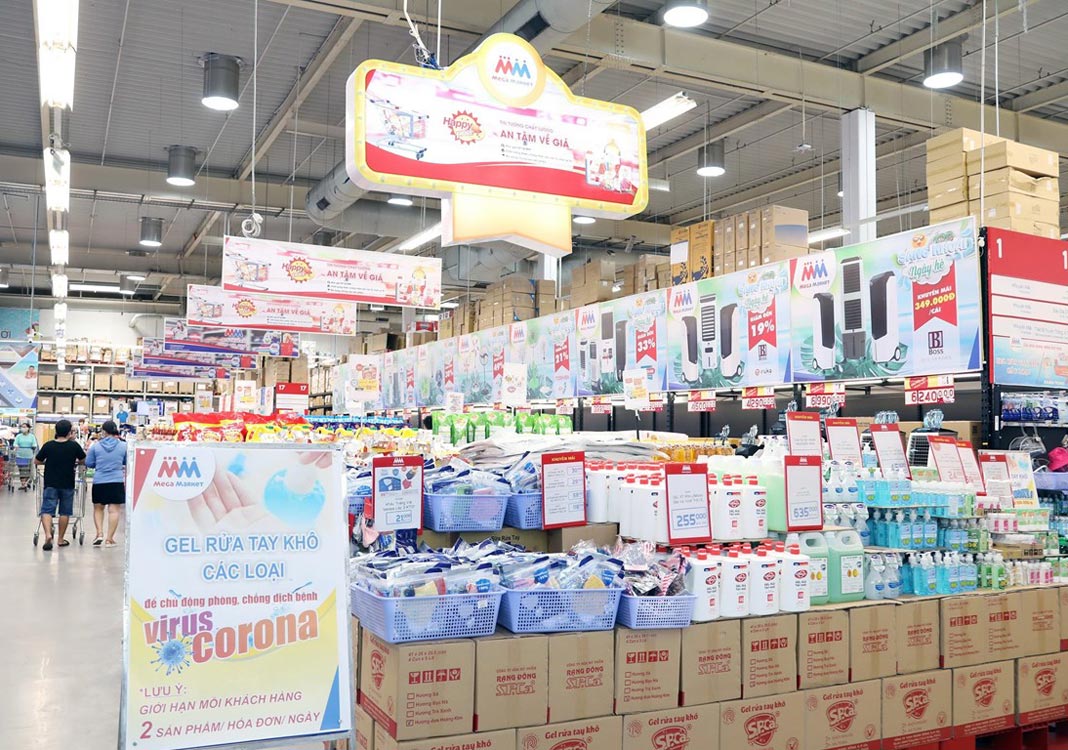
HCMC’s CPI down in May
Must read
Vietnam collects VND1.4 quadrillion in budget revenue by mid-June
News June 20, 2026HCMC – Vietnam’s state budget revenue reached VND1.425 quadrillion as of June 15, making up 56% of the full-year target, while public investment disbursement amounted to VND188.8 trillion, equivalent to 20.5% of the 2026 plan assigned by the Prime Minister.

Can Tho seeks 300 new businesses a year
Vietnam Economy June 15, 2026HCMC – Can Tho City aims to add around 300 new businesses each year through 2030 as the city seeks to expand its private sector and raise its contribution to 78-80% of gross regional domestic product (GRDP).

Vietnam PM launches campaign to drive double-digit growth through 2030
Vietnam Economy June 13, 2026HCMC – Prime Minister Le Minh Hung on June 13 launched a nationwide emulation campaign aimed at achieving sustainable double-digit economic growth between 2026 and 2030, calling on government agencies, businesses and citizens to turn the patriotic spirit into concrete action.
Latest articles
Vietnam collects VND1.4 quadrillion in budget revenue by mid-June
News June 20, 2026HCMC – Vietnam’s state budget revenue reached VND1.425 quadrillion as of June 15, making up 56% of the full-year target, while public investment disbursement amounted to VND188.8 trillion, equivalent to 20.5% of the 2026 plan assigned by the Prime Minister.
Can Tho seeks 300 new businesses a year
Vietnam Economy June 15, 2026HCMC – Can Tho City aims to add around 300 new businesses each year through 2030 as the city seeks to expand its private sector and raise its contribution to 78-80% of gross regional domestic product (GRDP).
Vietnam PM launches campaign to drive double-digit growth through 2030
Vietnam Economy June 13, 2026HCMC – Prime Minister Le Minh Hung on June 13 launched a nationwide emulation campaign aimed at achieving sustainable double-digit economic growth between 2026 and 2030, calling on government agencies, businesses and citizens to turn the patriotic spirit into concrete action.





