How can businesses in Vietnam maintain their presence in the United States market and thrive there? This article explores several ways that can help businesses navigate challenges, overcome tariff barriers, and secure their foothold in the U.S.
With over US$120 billion in export revenue generated in 2024, the U.S. market remains a vital driver of Vietnam’s economic growth. However, this market is presenting formidable challenges for Vietnamese exporters. The tightening of trade measures and the ripple effects of U.S. President
Donald Trump’s reciprocal tariffs have transformed the U.S. market into a tough arena.
Strict control over material origins
As Vietnam’s trade surplus with the U.S. amounted to an estimated US$110 billion in 2024, the Trump administration has leveraged rules of origin (ROO) as a tool to combat “masked” Chinese goods evading tariffs through Vietnam. U.S. customs now demand comprehensive certificates of origin (C/O), Form B, factory inspections, tier-2 and tier-3 supplier lists, and regional value content of 35-40%. Key Vietnamese exporting industries, including textile, garment, footwear, and electronics, are under mounting pressure as many of their materials, such as fabrics, leather, and electronic components, are sourced from China, which is subject to the highest U.S. tariffs.
Proving “pure origin” or “significant transformation” is a complex challenge for businesses in Vietnam. Chinese import invoices are often ambiguous, suppliers may refuse to disclose origin details, and obtaining C/O from the Vietnam Chamber of Commerce and Industry (VCCI) or the Ministry of Industry and Trade can take weeks if errors are found in the application.
For instance, a garment shipment may face high tariffs or customs rejection if it fails to demonstrate that its fabrics were made in Vietnam. Small and medium-sized enterprises, which constitute the majority of
Vietnamese businesses, struggle with document management and personnel shortages, exacerbating the issue. Items failing to meet the origin requirements risk being classified as having unclear origins, jeopardizing their access to the U.S. market.
To address these challenges, businesses must adapt by diversifying material sources, establishing professional documentation systems, equipping staff with C/O expertise, and increasing local content. They should explore material sources from countries with trade agreements with Vietnam and minimal tariff risks, such as Japan, South Korea and India, to reduce reliance on China.
While accessing new material sources may initially incur higher costs, this strategy ensures long-term export viability in the U.S. market. Businesses should also invest in management software to synchronize invoices, customs declarations, and production process descriptions. All information, including HS codes, quantities, and values, must be meticulously aligned to withstand snap checks. Personnel training in logistics, customs, and documentation preparation is crucial for overcoming U.S. tariffs.
Taking the initiative in production and business remains the most sustainable solution. Businesses should consider investing in local materials, such as fibers and components, to reduce dependence on imports. This requires state support, long-term business strategies, and partnerships with local material producers to establish closed, sustainable supply chains.
Optimizing operational costs
Beyond the risk of customs rejection or high tariffs, rising operational costs threaten the competitiveness of Vietnamese goods against products from other countries subject to lower tariffs. For example, delays in customs clearance due to origin issues increase warehousing costs and logistics pressures. Slow clearance affects deliveries, risking contract violations, reputational damage, or forcing businesses to opt for costly air transport.
To avoid these costs, businesses should explore operational improvements and negotiate solutions with partners.
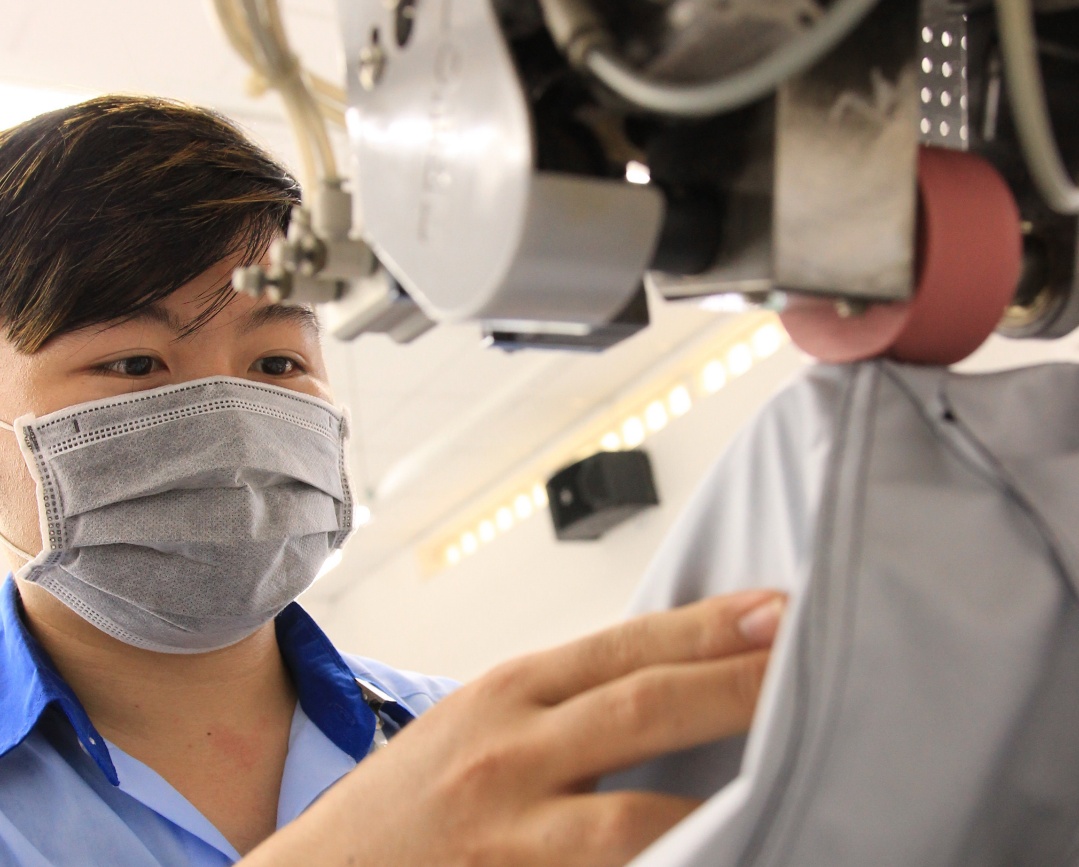
Firstly, regarding internal plans, businesses can optimize production processes by adopting technology and automation, such as high-tech woodwork production and modern textile manufacturing lines, to reduce labor costs and material waste. Investing in product quality can also enhance value, reducing reliance on price competition.
Secondly, businesses should negotiate with logistics providers, such as shipping lines, warehouse lessors, and insurers, to secure long-term contracts with preferential rates, shielding them from volatile shipping costs. Direct negotiations with U.S. importers can help share logistics costs, with businesses compensating through commitments to product quality, a factor they can control.
Finally, state support remains essential. Policies to mobilize funds, facilitate technology transfers, and incentivize investment in materials and components for key export sectors, such as textile, garment and electronics, are critical. The Government should also accelerate reforms to simplify C/O procedures and strengthen efforts to assist businesses in meeting origin requirements.
The Trump administration’s tariff policy poses significant challenges for Vietnamese businesses. However, with strategic adaptation and proactive planning, businesses can enhance their competitiveness, bolster resilience against market volatility, and secure their position in the U.S. and other global markets amid today’s VUCA (vulnerability, uncertainty, complexity, and ambiguity) environment.