The VN-Index rebounded to 1,700 points on the first trading day of December. Although leading stocks are showing signs of losing steam, capital flows appear to be shifting toward opportunities with stronger long-term fundamentals. Industrial and energy stocks, in particular, have emerged as key focal points.
Benefits from growth prospects
Despite recent storms and floods, Vietnam’s manufacturing sector has sustained positive growth momentum, with operating conditions improving for the fifth consecutive month. According to S&P Global, the Vietnam Manufacturing Purchasing Managers’ Index (PMI) stood at 53.8 in November, easing slightly from 54.5 in October but still signaling continued strengthening in business conditions across the industry.
Despite ongoing tariff challenges and trade tensions, the 20% reciprocal tariff imposed by the U.S. on Vietnamese goods remains comparatively favorable when measured against rates applied to other countries. As a result, export orders to key markets such as the U.S. and Europe are beginning to rebound, particularly in categories like electronic equipment, wooden furniture, textiles and garments, and mechanical components.
Agribank Securities Joint Stock Company (Agriseco) recently reported that Vietnam’s international trade activities have grown at an impressive rate of 17%, underscoring the country’s rising stature in the global supply chain. Looking ahead, total import-export turnover in 2025 is projected to reach US$900 billion, a development expected to drive gains for related stock groups such as exporters, logistics providers, and seaport operators as cargo volumes surge through ports.
This trend has also driven a recovery among many companies in the industrial sector, with revenues rebounding, growth accelerating, and profit margins improving as raw material costs decline and inventory turnover shortens—factors that are positively influencing their stock performance. Moreover, industrial stocks stand to benefit from increased public investment in infrastructure, as year-end typically marks the peak period of disbursement.
According to the Ministry of Finance, VND528.87 trillion in public investment capital was disbursed from the state budget between January 1 and November 27, fulfilling only 57.9% of the target set by the prime minister—well below the goal of 100%. This leaves considerable room for additional disbursements in the final month of the year, which is expected to generate a spillover effect across sectors such as construction materials, steel, cement, mechanical engineering and assembly, transportation and logistics, and supporting industries for infrastructure.
The ongoing shift in global supply chains is driving foreign direct investment (FDI) into Vietnam, creating strong tailwinds for industrial real estate, construction-related infrastructure, and logistics. The country is expected to continue attracting substantial FDI inflows into sectors such as semiconductors, electronics and mobile devices, data centers, and supporting industries.
Dominic Scriven, chairman of Dragon Capital, recently said that Vietnam’s 10% economic growth target is well-founded. With GDP of approximately US$500 billion, total social investment accounts for around 30%—equivalent to US$150 billion—comprising US$25 billion from public investment, US$25 billion from FDI, and US$100 billion from the private sector.
Opportunity for revaluation
With strong economic growth set as the target for the coming period, energy is expected to join industrial stocks as a key sector in focus. Resolution 70-NQ/TW, issued on August 20, 2025, outlines Vietnam’s strategy for ensuring national energy security through 2030, with a vision to 2045. The Politburo emphasizes that energy must take precedence and remain one step ahead, serving as the highest priority to support sustained economic expansion of more than 10% in the years ahead.
Total investment in Vietnam’s electricity sector for the coming period is projected at US$136.3 billion under the revised Power Development Plan VIII. Given the limited capacity of state capital, greater private sector participation is deemed essential, particularly following the issuance of Resolution 70-NQ/TW, Resolution 68-NQ/TW, Resolution 198/2025/QH15, and Resolution 139/NQ-CP.
Government estimates indicate that electricity production and imports in 2025 will rise by 10.65–10.73% compared to 2024. By 2026, with the National Assembly’s newly approved minimum economic growth target of 10% and the processing and manufacturing sector expected to account for 24.96% of GDP, electricity production and imports will need to expand by at least 11% over this year’s projected levels.

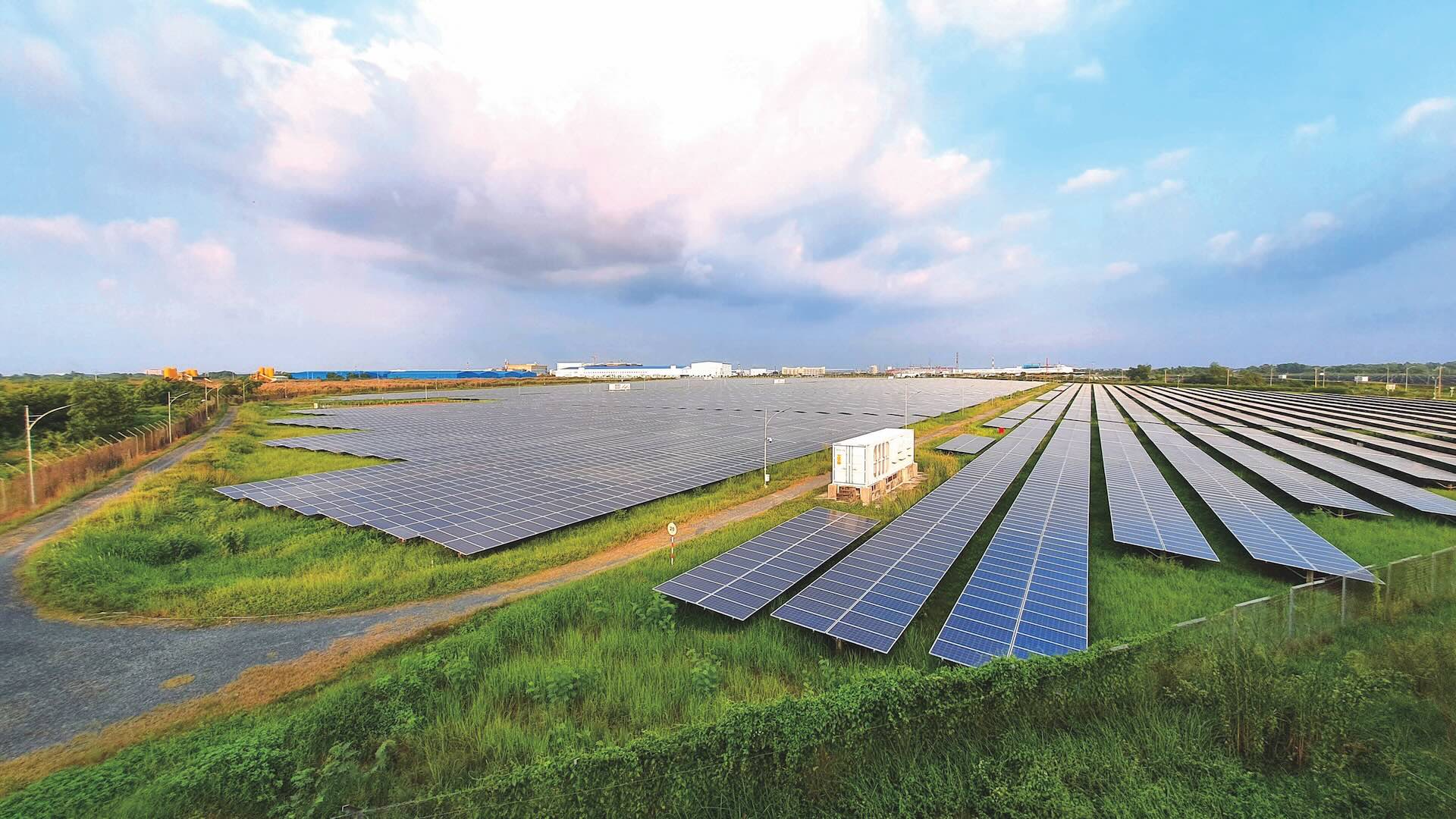
Electricity demand in Vietnam is surging in line with the expansion of industrial production, the rapid growth of data centers, accelerating urbanization, and policies aimed at sustaining high economic growth in the years ahead. Consequently, investment in the power sector has shifted back toward liquefied natural gas (LNG), solar, and wind projects.
This marks a period of significant revaluation, as many power companies are currently trading at relatively modest price-to-earnings (P/E) ratios, having previously been weighed down by high fuel costs. According to VDSC Research, coal prices have dropped sharply—15% year-on-year for domestic coal and 17% for imports from Indonesia—while domestic gas prices have fallen 4% and imported LNG has declined 14%, a rare occurrence since the era of supply chain disruptions.
International banks and organizations now require energy projects to comply with green and sustainability standards, creating significant opportunities for renewable energy companies to integrate ESG principles—a framework assessing environmental impact, social responsibility, and corporate governance. As ESG adoption becomes mandatory, Vietnam’s electricity and clean energy sector is well-positioned to attract lower-cost foreign capital. At the same time, the Government is rolling out supportive measures, including a 2% interest rate subsidy on bank loans for renewable and clean energy projects.
Last but not least, the favorable geopolitical backdrop in the Middle East and the Russia–Ukraine conflict has strengthened the outlook for oil prices. Enterprises engaged in oil and gas extraction, technical services, and gas transportation are benefiting from higher selling prices, stable output, and rising domestic demand. Reflecting these dynamics, many oil and gas stocks—such as PVD, PVS, and PVT—have already staged an early rally, signaling investor confidence in the months ahead.
For medium- and long-term investors, industrial and energy stocks present compelling opportunities aligned with the economy’s growth cycle. These sectors are not driven by speculative waves but by tangible fundamentals: production recovery, expanding exports, and the surge in technology and industrial activity that underscores energy as a strategic necessity.