Real estate stocks have made a strong recovery over the past two months, with a clear divergence emerging between commercial and industrial properties.
Different stocks in different directions
Several real estate stocks surged on June 2, the first trading day of the week, with standout gainers including Khang Dien House Trading and Investment JSC (HOSE: KDH), No Va Real Estate Investment Group JSC (HOSE: NVL), and C.E.O Group JSC (HNX: CEO). Some stocks even hit their ceiling prices, such as Phat Dat Real Estate Development Corp (HOSE: PDR) and Development Investment Construction JSC (HOSE: DIG).
Real estate stocks are once again gaining strong momentum, with Vinhomes (HOSE: VHM) leading the rally on a surge of over 100% in the past three months. NVL has also rebounded sharply, climbing more than 80% from its early April low. Dat Xanh Group (HOSE: DXG) has advanced over 40% in the past two months. Other stocks such as KDH, CEO and PDR, though slower to start, have also recorded notable gains in recent sessions.
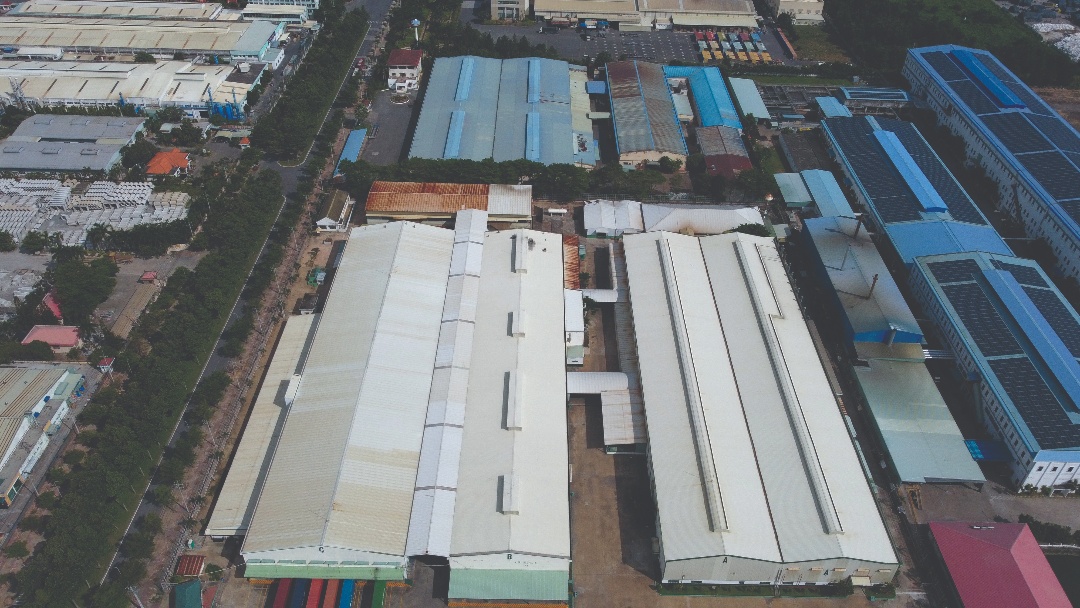
In contrast to commercial real estate stocks, those issued by industrial park developers have advanced at a much slower pace though following the market's general recovery trend since mid-April. For example, BCM of Investment and Industrial Development Joint Stock Corporation has gained about 15% during this period, while PHR of Phuoc Hoa Rubber Joint Stock Company and SIP of Saigon VRG Investment Corporation have each risen by 25%. Meanwhile, KBC of Kinh Bac City Development Holding Corporation has posted a slightly stronger increase of over 30%.
Following U.S. President Donald Trump's announcement of steep tariffs on imports from major trading partners, including Vietnam, exporters have taken a significant hit. Analysts warn that foreign direct investment (FDI) could also be affected, as businesses seek alternative markets with lower tariff burdens. As a result, the industrial real estate sector has been hit hard, with several industrial park developers experiencing sharp stock price declines during the early April downturn and many still struggling to recover.
Recently, major FDI enterprises in Vietnam have expanded their operations to other countries, aiming to diversify supply chains and enhance flexibility in global production amid escalating geopolitical tensions and trade war risks. Alongside Vietnam, nations such as China, Japan, South Korea,
Thailand, and, more recently, India have become key locations for global technology giants to set up shop.
Given that Vietnam is among countries potentially subject to steeping tariffs, at least until trade negotiations with the U.S. yield favorable outcomes, many companies have proactively developed strategies for supply chain expansion and restructuring. Some are considering relocating high-tariff product lines to countries with lower rates, while continuing to manufacture low-duty items in Vietnam to optimize costs and maintain competitiveness.
An FDI exodus remains unlikely
If the 46% reciprocal tariff on imports from Vietnam remains unchanged, textile, garment, and footwear manufacturers such as Nike may have no choice but to shift production to other countries like
Bangladesh, India and Mexico, which benefit from their proximity to the U.S., analysts say. However, in a recent statement, Trump noted that the U.S. is not focused on domestic sneaker and T-shirt production, emphasizing that textile goods like shirts and socks can easily be manufactured elsewhere. This provides reason to believe that a potential trade agreement between the U.S. and Vietnam could come soon, with the textile and garment sector likely subject to a lower tariff.
For high-tech industries such as electronics, phones and computers, the situation is more complex. President Trump said his tariff policy was aimed at boosting the domestic manufacturing of tanks and technology products like chips and computers, not sneakers and T-shirts. As a result, the U.S. is working to attract high-tech businesses back home. However, high labor costs remain a significant obstacle to this ambition.
Instead of relocating to the U.S., companies like LG, Intel and Samsung are exploring options to shift part of their production to low-tax countries such as India, Thailand and Indonesia to mitigate tariff risks. Analysts note that, beyond tariffs, factors like labor costs, shipping costs, logistics, infrastructure, and free trade agreements play a crucial role in shaping multinational investment trends. Additionally, political stability, open-market policy and enhanced ESG (environmental, social, and governance) regulations are increasingly influencing investor considerations.
Vietnam continues to offer more competitive labor costs than many regional peers, including Thailand, Indonesia and Malaysia. On the trade front, the country stands out with 17 free trade agreements (FTAs), the highest number in ASEAN, providing a significant edge in attracting investment and promoting exports. In recent years, these FTAs have enabled manufacturers based in Vietnam to access major global markets more easily through preferential tariffs.
Vietnam still offers a favorable investment environment, supported by pro-FDI policies, political stability, and a strategic geographic location. Its extensive coastline, equipped with deep-water ports, enhances maritime transport and logistics capabilities. At the same time, the Government is accelerating infrastructure and renewable energy development to further improve investment conditions. These advantages position Vietnam as a compelling destination for global investors.
In response to the new U.S. tariff policy, several major corporations, including Apple, Foxconn, Luxshare and Goertek, have expanded their operations in Vietnam, reaffirming long-term strategies and recognizing the country’s growing importance in the global electronics supply chain. Notably, Foxconn and Apple’s partners Luxshare and Goertek are planning additional investments of US$300 million in their facilities in Bac Giang Province.
According to a report published on April 16 by the Vietnam Association of Foreign Investment Enterprises (VAFIE), Apple has completed the relocation of 11 audiovisual equipment factories to Vietnam and has shown no sign of withdrawing due to the potential high tariff, thanks to its sustained commitment to this market. Apple has now increased the percentage of iPads and Apple Watches manufactured in Vietnam to 25%, with plans to begin MacBook production in the country by late this year, aligning with its 2022 strategic vision.