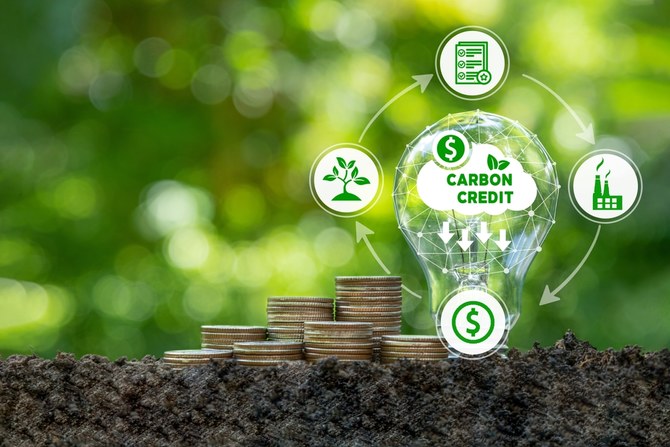
HANOI – A newly released circular provides the essential technical foundation for Vietnam’s domestic carbon market, which is scheduled for a pilot phase throughout 2026 and 2027.
The green criteria outlined in Decision 21/2025/QD-TTg are established within the broader context of international efforts to develop green classification systems—such as the EU Taxonomy Regulation and the Korea Green Taxonomy. These instruments are regarded as foundational tools for enhancing transparency in sustainable capital flows and preventing “greenwashing.”
As Vietnam accelerates its shift toward a green economy, businesses nationwide are stepping up to align growth with environmental responsibility. This transition reflects the country’s commitment to global sustainability goals and its ambition to build a resilient, future-ready economy.
HCMC – An international conference took place in Xuan Huong – Da Lat Ward, Lam Dong Province, on September 5 to discuss access to global green capital and ways to promote sustainable and inclusive finance in Vietnam.
The event, titled “Unlocking Global Green Financing to Drive Sustainable Development and Financial Inclusion in Vietnam”, brought together government officials, international investors, development finance institutions, financial organizations, and business representatives.
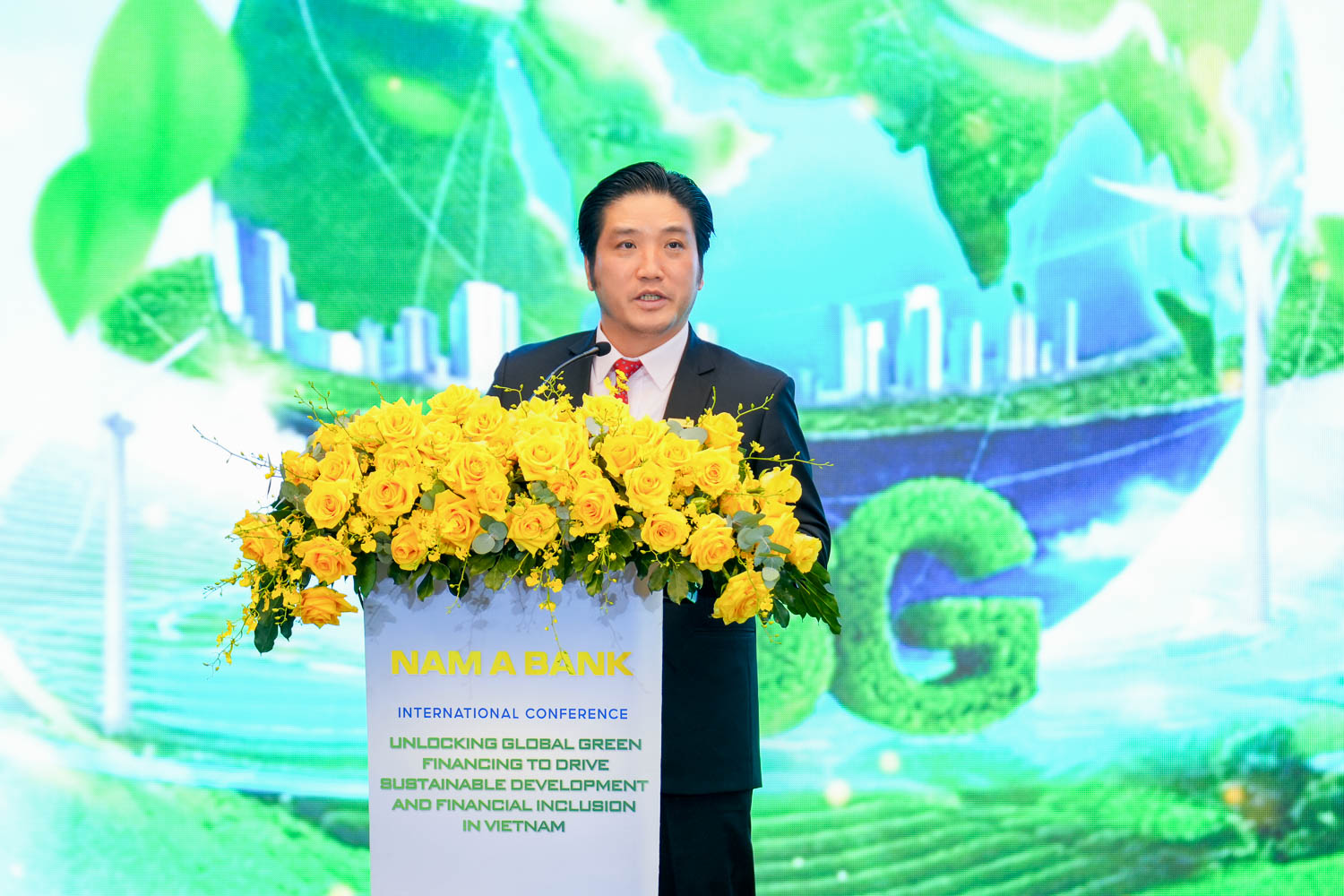
Tran Khai Hoan, Acting CEO of Nam A Bank, said the conference aims not only to share international expertise but also to connect and mobilize green and inclusive finance for Vietnam’s sustainable development.
“Sustainable growth is no longer a choice but a prerequisite, as climate change, energy crises, supply chain disruptions, and social inequality pose unprecedented challenges to businesses and financial systems,” said Tran Khai Hoan, Acting CEO of Nam A Bank, at the event - PHOTO: COURTESY OF NAM A BANK.
The conference featured three sessions focusing on international green finance, sustainable development, and private sector access to green capital. Speakers included representatives from the International Finance Corporation (IFC), Asian Development Bank (ADB), BlueOrchard, responsAbility, IDG, GGGI, FiinRatings, KPMG, and EY.
The conference provided a platform for knowledge exchange and investment opportunities, and helped connect Vietnamese companies with global financial institutions. It was organized at Tea Resort Prenn in Xuan Huong – Da Lat Ward, Lam Dong Province, a venue certified as a green building.
Nam A Bank, the organizer of the event, said it is committed to becoming a model of sustainable banking in Vietnam’s private sector. The bank applies international governance standards such as IFRS, Basel III, and ESMS, and pledged to support the government and international partners in advancing sustainable growth and financial inclusion.
Globally, green and inclusive finance has become a driver of sustainable development, strongly supported by governments and international institutions. This is reflected in the Paris Agreement and the United Nations Sustainable Development Goals. Inclusive finance is creating opportunities for all sectors of the economy, especially the private sector, to access capital and improve competitiveness.
Vietnam has pledged to reach net-zero emissions by 2050. The World Bank estimates the country will need to mobilize about 6.8% of its GDP annually, or US$368 billion, to meet that goal.
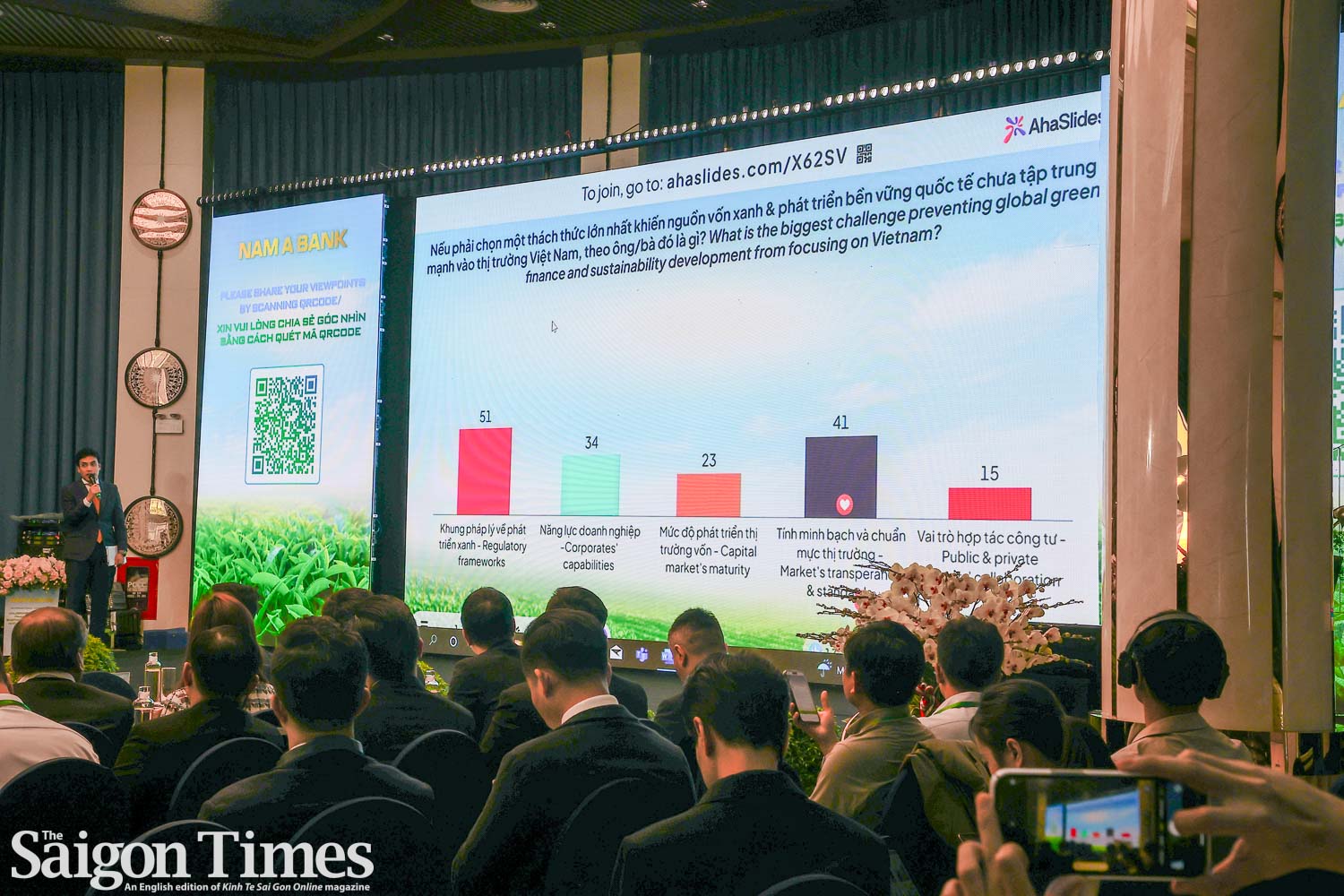
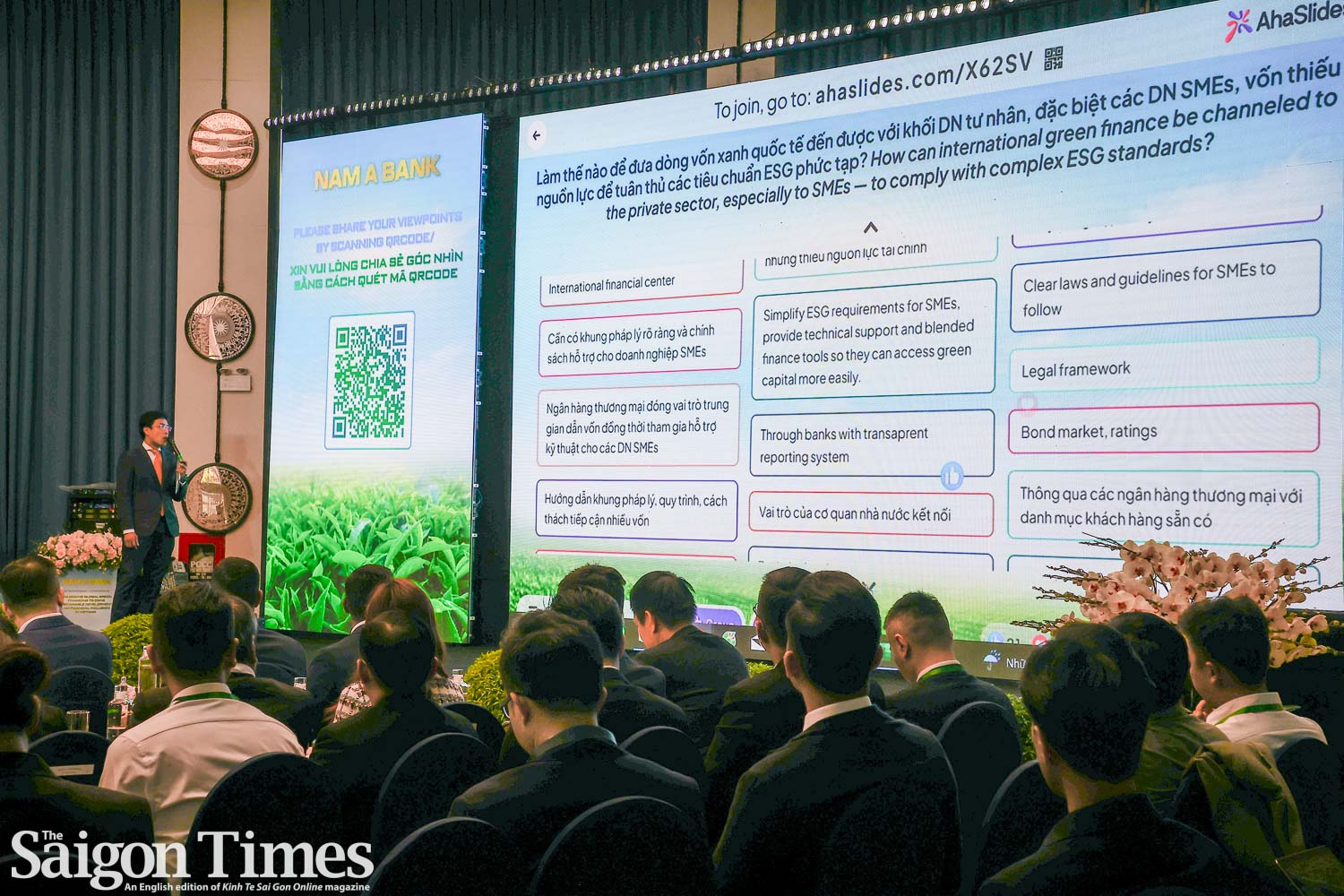
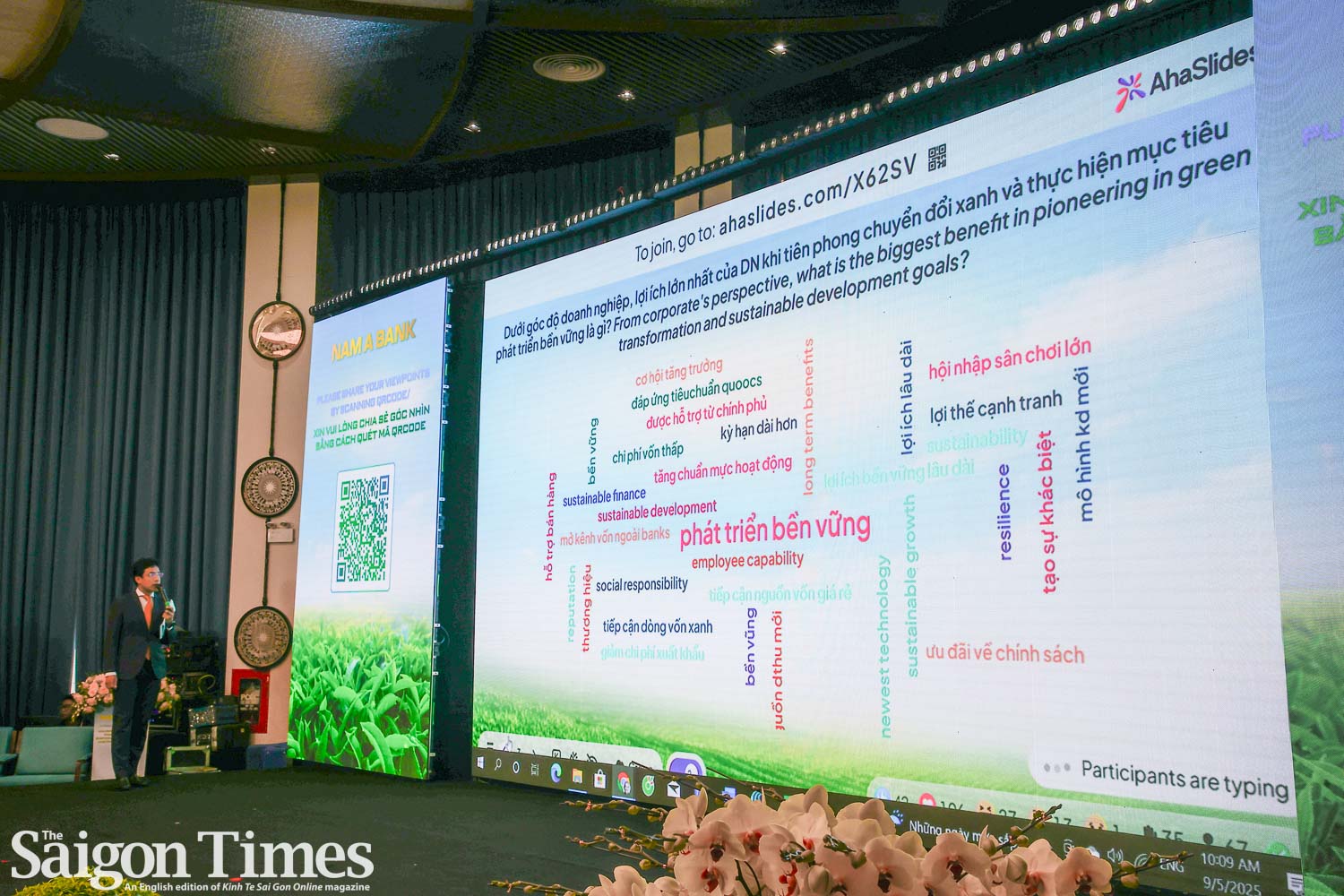
An overview of the eventParticipants take part in a live poll showing that regulatory frameworks are the biggest challenge to attracting global sustainable investmentParticipants discuss ways to channel international green finance to Vietnam’s private sector, especially SMEsConference attendees share views on the long-term benefits of green transformation and sustainable development for businesses
HANOI – A newly released circular provides the essential technical foundation for Vietnam’s domestic carbon market, which is scheduled for a pilot phase throughout 2026 and 2027.
The green criteria outlined in Decision 21/2025/QD-TTg are established within the broader context of international efforts to develop green classification systems—such as the EU Taxonomy Regulation and the Korea Green Taxonomy. These instruments are regarded as foundational tools for enhancing transparency in sustainable capital flows and preventing “greenwashing.”
As Vietnam accelerates its shift toward a green economy, businesses nationwide are stepping up to align growth with environmental responsibility. This transition reflects the country’s commitment to global sustainability goals and its ambition to build a resilient, future-ready economy.