“I first began reading The Saigon Times during my earlier posting at the Consulate-General of Japan in Ho Chi Minh City, from 1994 to 1998. Those were exciting times, with Vietnam opening up under the Doi Moi reforms and many Japanese companies were establishing their presence in southern Vietnam. As an officer responsible for economic affairs at the Consulate-General in those days, I found the up-to-date information The Saigon Times provided on Vietnam’s economy truly invaluable — and I am sure the Japanese business community here shared that sentiment.
There is a question that has occupied philosophers across cultures and centuries: what does it mean to live in a world where everything changes, and nothing lasts?
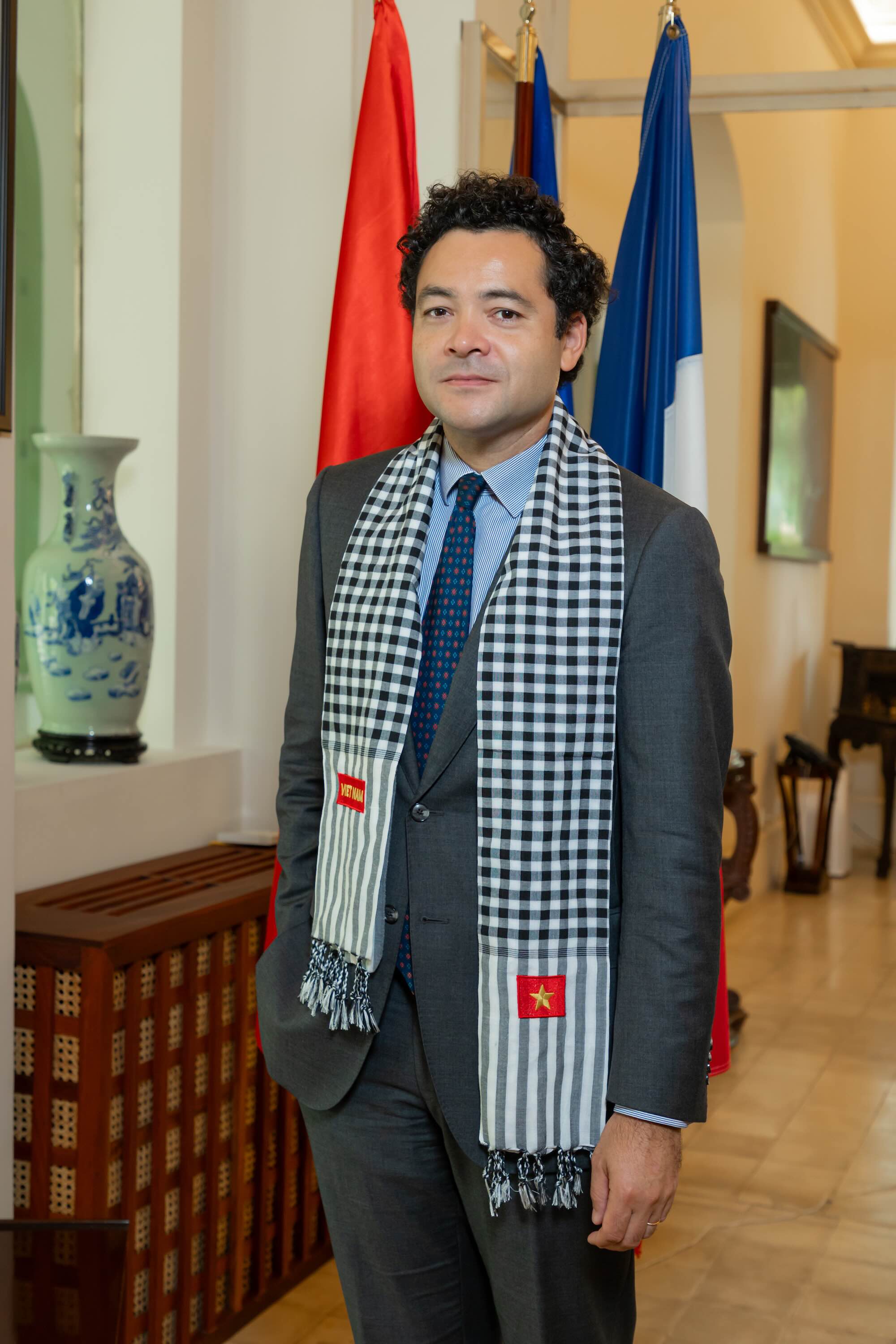
"The Saigon Times has been a trusted source of information for the French Consulate for many years. Its English edition enables expats like me to stay well informed about business, economic and social developments in Vietnam. It has also been one of the reliable sources we use for our daily news round-ups and updates, helping us keep track of what is happening both locally and nationally.
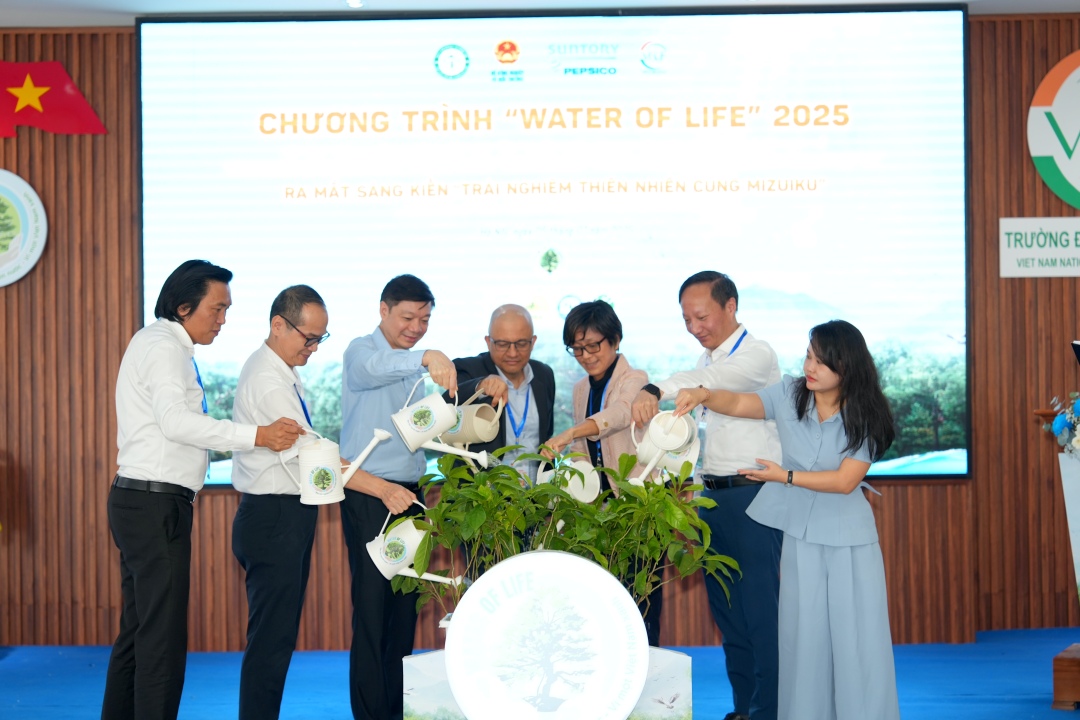
The 10-year journey of “Mizuiku – I Love Clean Water,” an educational initiative about water stewardship, shows that for Suntory PepsiCo Vietnam, contributing to society is more than just a corporate responsibility — it is an investment in sustainability
One morning, at a primary school in the Mekong Delta, the early sunlight shines on the brick courtyard still wet from last night’s rain. Children chatter excitedly as they play with droplets of water, their laughter blending with the teacher’s voice: “Water is a precious resource—use it wisely!” After class, the students go home knowing to turn off the tap when washing their hands and to remind adults not to throw trash into canals and ditches.
Those seemingly minor changes tell a much larger story.
Over the past decade, the “Mizuiku – I Love Clean Water” program, launched by Suntory PepsiCo Vietnam (a strategic alliance between Japan’s Suntory Group and America’s PepsiCo), has reached more than one million students, raising their awareness of water conservation. More than 16,000 teachers have been trained to become “inspirational ambassadors.” Additionally, nearly 200 clean water facilities have been built or renovated, improving access to safe water for approximately 5 million people.
This is more than a typical corporate social responsibility campaign — it is a long-term, comprehensive approach to sustainability. By “investing in awareness,” the program leaves a lasting impact on water resources, representing a proactive investment in society’s future and the preservation of a vital natural resource.
From small beginnings to widespread change
Over the past two decades, the concept of Corporate Social Responsibility (CSR) has undergone a profound transformation. From charity efforts like giving scholarships, building wells, or planting trees—small acts that provide quick relief—businesses have shifted to developing strong, comprehensive strategies. CSR is no longer just a minor gesture; it now evolves and transforms into Sustainability strategy—creating positive environmental and social benefits throughout the entire business operation, deeply aligned with the company’s main values.
When issues like clean water, climate, education, and sustainable consumption become deeply intertwined with a company’s long-term growth, the line between “doing good for society” and “doing right for business” begins to converge. This convergence marks a strategic approach to sustainable development across the entire society. In Vietnam, Mizuiku stands out as a model program making a meaningful impact on that journey toward sustainability.
“Mizu” means water in Japanese, and “iku” means education. Originating in Japan in 2004, the program was developed by Suntory as an initiative to teach children the value of water—the lifeblood of all livelihoods. Vietnam became the first country outside Japan to implement this model, affirming Suntory PepsiCo’s commitment—as a beverage company deeply connected to water—to the preservation and sustainable development of this vital resource.
What sets Mizuiku apart is its holistic approach. The program not only brings clean water to schools but also fosters sustainable water usage behaviors. Through strategic collaboration with the Ministry of Education and Training, Mizuiku’s content has been integrated into the official primary school curriculum and scaled nationwide.
Beyond classroom instruction, Mizuiku has recently expanded through public-private partnership with the Ministry of Agriculture and Environment, taking learning outdoors—into forests and streams—where children engage in hands-on experiences. Mizuiku stands as a powerful example of a successful public-private partnership (PPP) in education and environmental stewardship, harnessing the strength of multi-sector collaboration.
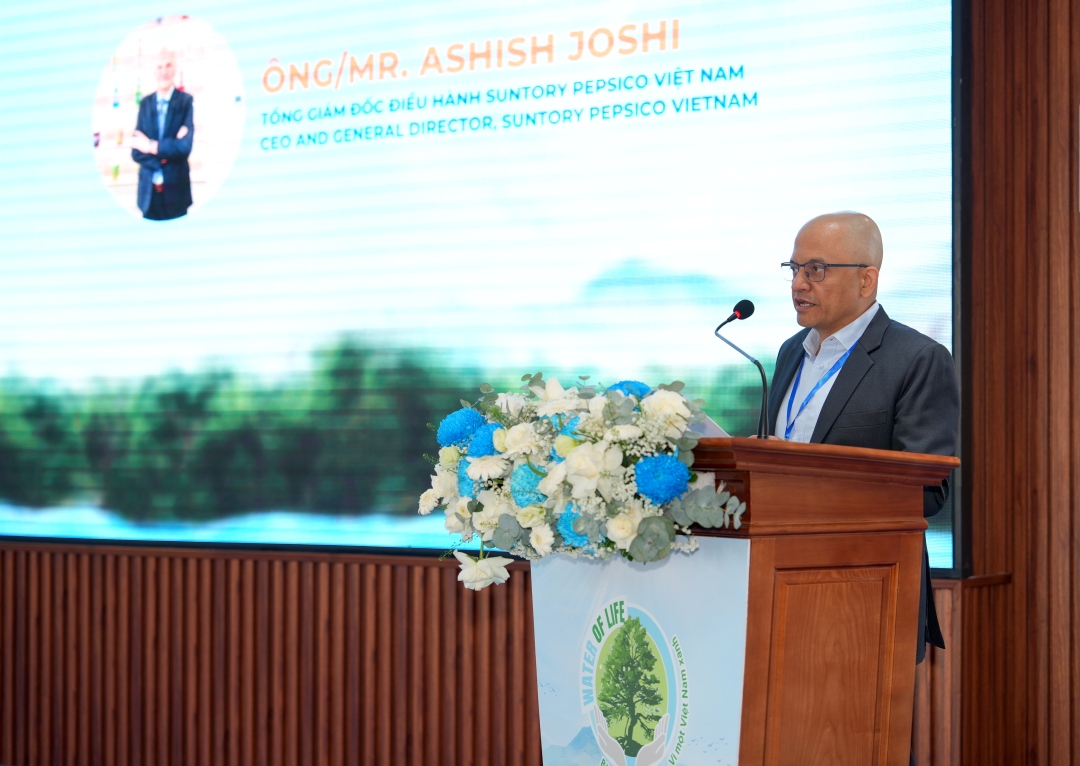
Ashish Joshi, CEO and General Director of Suntory PepsiCo Vietnam, shared that the company aims for both breadth and depth of impact, expanding the program’s scale while making learning more engaging through real-world experiences.
Ashish Joshi, CEO and General Director of Suntory PepsiCo Vietnam
“I had the chance to attend one of the first sessions ‘Nature Expedition with Mizuiku’ a few months ago, and it was truly inspiring. Children were not just learning about water, but experiencing nature directly in the forest, developing a genuine appreciation for the environment,” Ashish Joshi said.
That philosophy has long been embraced by Suntory in Japan.
“Let me share with you an example from Japan’s unique approach to education. In our elementary schools, starting from the fourth grade, we introduce lessons that help children understand the connection between forests and clean water,” said Manabu Seki, Deputy Chief Sustainability Officer at Suntory Holdings.
After a decade of implementation, Mizuiku’s impact has extended far beyond the scope of a school-based educational initiative.
Pham Hong Luong, deputy director of the Forestry Department under the Ministry of Agriculture and Environment, shared the collaborative goals with Suntory PepsiCo Vietnam: restoring forests, protecting water sources, and moving toward carbon offset. The partnership also seeks to promote environmental education and sustainable livelihoods for communities dependent on forests.
“We planted 35 hectares of forest in Bac Kan, Nghe An, and Ca Mau in 2024, and plan to expand by another 60 hectares in 2025,” Luong said, adding the project goes beyond planting basic forest trees—it promotes the cultivation of native species and medicinal plants under the forest canopy, not only to protect water sources but also to improve livelihoods through short-term gains that support long-term sustainability.
The program is also expanding into outdoor education at national parks. The pilot phase from 2024 to 2025 focuses on three locations, with plans to scale up to 35 national parks and 180 conservation areas across the country. Each trip becomes a “lesson in the forest,” where specially trained guides share their knowledge about conservation and climate change.
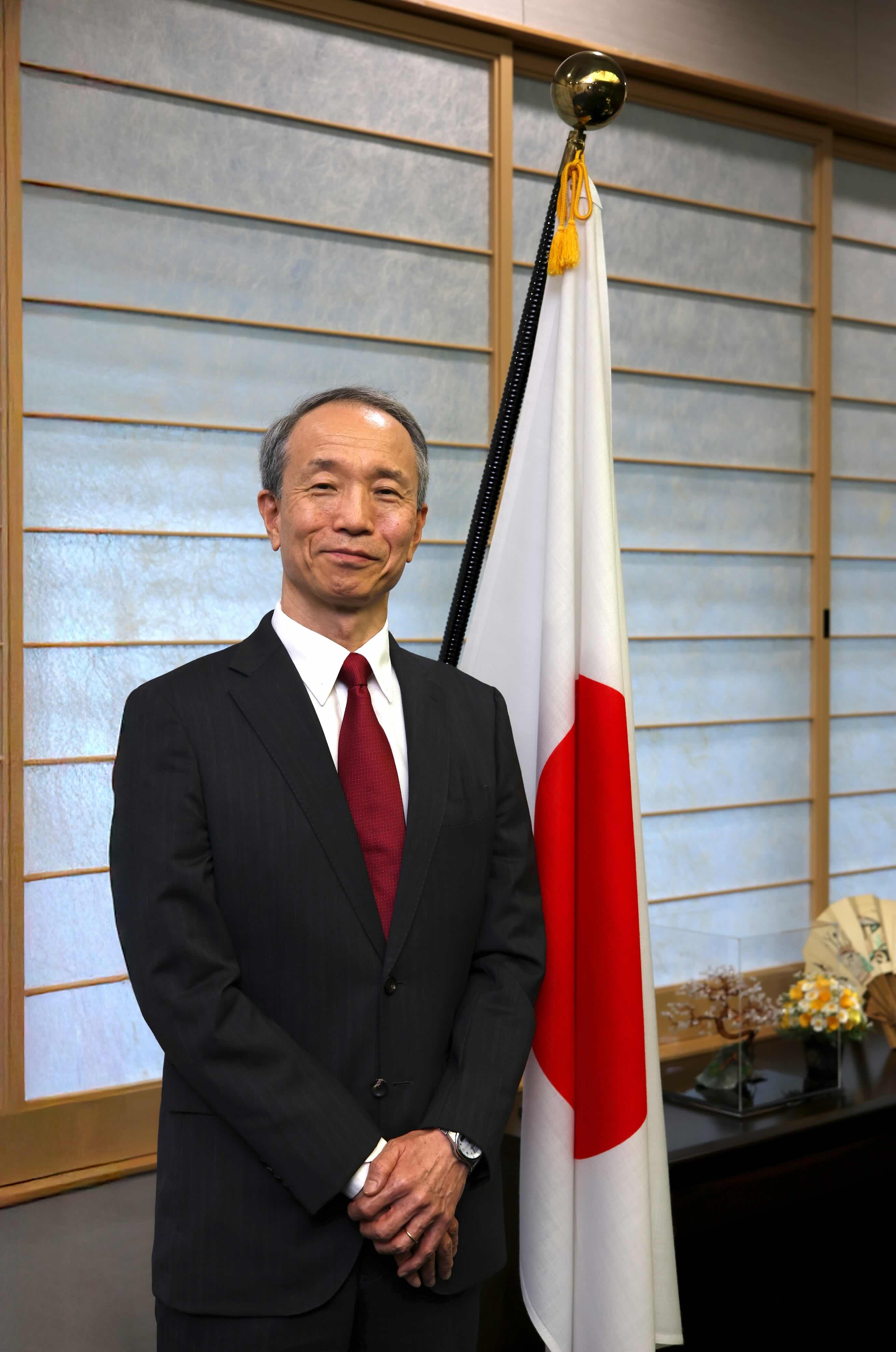
Japanese Ambassador Naoki Ito described Mizuiku as “a symbol of Japan–Vietnam cooperation in sustainable development,” expressing his hope that the program will grow into a platform for wider global collaboration in protecting water and the environment.
Sustainability becomes strategy
Mizuiku is not separate from Suntory PepsiCo’s long-term development strategy—it is a core component of its sustainable development.
“When we invest in water education and conservation, we are not only contributing to society but also protecting the future of our business. In fact, if you think about it, the investment we make today is relatively small compared to the long-term return: the assurance that clean, reliable water will still be here many decades from now. That is absolutely critical for our growth as a company,” said Ashish Joshi.
The philosophy of “Growing for Good” serves as the guiding principle behind all of Suntory’s activities. And it is far more than just a slogan. In Japan, the company regards forest conservation as a foundational element of its business.
“That’s why, when we look at forest conservation, we do not see it as an ROI calculation. We see it as the very foundation of our business. Without healthy forests, there is no clean water. Without clean water, there is no Suntory,” Manabu Seki said.
It is the consistency that has enabled Suntory PepsiCo to build a “purpose-driven brand”—where business growth goes hand in hand with positive social impact.
According to the Edelman Trust Barometer 2024, as many as 59% of global consumers are willing to pay a premium for brands that “bring good to the world,” and 62% say they would spend more on brands that have earned their trust—even when the products are nearly identical. Trust—not just the product itself—is becoming the most valuable asset a business can own.
Applying WHO’s estimate—that every dollar invested in clean water and sanitation yields US$4–US$8 in social benefits through reduced healthcare costs and increased productivity—the social value generated by Mizuiku far exceeds the program’s investment. This reflects the economic logic of next-generation sustainability: giving-back is a social asset with long-term returns.
Investing in awareness – investing in the future
From humble classrooms in the lowlands to the regenerating forests of the highlands, Mizuiku’s journey is proving that investing in awareness is the most rewarding investment of all.
From a broader perspective, this stands as a testament to how businesses can generate sustainable value for both the living environment of communities and the operational environment of enterprises—through social impact. When every responsible action is measured, sustained, and reinvested, its positive effects not only ripple through society but also become the bedrock of long-term, resilient growth.
“With Mizuiku, we also invest in the future – by educating children about the importance of water and nature,” said the deputy chief sustainability officer at Suntory Holdings.
“I first began reading The Saigon Times during my earlier posting at the Consulate-General of Japan in Ho Chi Minh City, from 1994 to 1998. Those were exciting times, with Vietnam opening up under the Doi Moi reforms and many Japanese companies were establishing their presence in southern Vietnam. As an officer responsible for economic affairs at the Consulate-General in those days, I found the up-to-date information The Saigon Times provided on Vietnam’s economy truly invaluable — and I am sure the Japanese business community here shared that sentiment.
There is a question that has occupied philosophers across cultures and centuries: what does it mean to live in a world where everything changes, and nothing lasts?
"The Saigon Times has been a trusted source of information for the French Consulate for many years. Its English edition enables expats like me to stay well informed about business, economic and social developments in Vietnam. It has also been one of the reliable sources we use for our daily news round-ups and updates, helping us keep track of what is happening both locally and nationally.

 The program is also expanding into outdoor education at national parks. The pilot phase from 2024 to 2025 focuses on three locations, with plans to scale up to 35 national parks and 180 conservation areas across the country. Each trip becomes a “lesson in the forest,” where specially trained guides share their knowledge about conservation and climate change.
Japanese Ambassador Naoki Ito described Mizuiku as “a symbol of Japan–Vietnam cooperation in sustainable development,” expressing his hope that the program will grow into a platform for wider global collaboration in protecting water and the environment.
Sustainability becomes strategy
Mizuiku is not separate from Suntory PepsiCo’s long-term development strategy—it is a core component of its sustainable development.
“When we invest in water education and conservation, we are not only contributing to society but also protecting the future of our business. In fact, if you think about it, the investment we make today is relatively small compared to the long-term return: the assurance that clean, reliable water will still be here many decades from now. That is absolutely critical for our growth as a company,” said Ashish Joshi.
The philosophy of “Growing for Good” serves as the guiding principle behind all of Suntory’s activities. And it is far more than just a slogan. In Japan, the company regards forest conservation as a foundational element of its business.
“That’s why, when we look at forest conservation, we do not see it as an ROI calculation. We see it as the very foundation of our business. Without healthy forests, there is no clean water. Without clean water, there is no Suntory,” Manabu Seki said.
It is the consistency that has enabled Suntory PepsiCo to build a “purpose-driven brand”—where business growth goes hand in hand with positive social impact.
According to the Edelman Trust Barometer 2024, as many as 59% of global consumers are willing to pay a premium for brands that “bring good to the world,” and 62% say they would spend more on brands that have earned their trust—even when the products are nearly identical. Trust—not just the product itself—is becoming the most valuable asset a business can own.
Applying WHO’s estimate—that every dollar invested in clean water and sanitation yields US$4–US$8 in social benefits through reduced healthcare costs and increased productivity—the social value generated by Mizuiku far exceeds the program’s investment. This reflects the economic logic of next-generation sustainability: giving-back is a social asset with long-term returns.
Investing in awareness – investing in the future
From humble classrooms in the lowlands to the regenerating forests of the highlands, Mizuiku’s journey is proving that investing in awareness is the most rewarding investment of all.
From a broader perspective, this stands as a testament to how businesses can generate sustainable value for both the living environment of communities and the operational environment of enterprises—through social impact. When every responsible action is measured, sustained, and reinvested, its positive effects not only ripple through society but also become the bedrock of long-term, resilient growth.
“With Mizuiku, we also invest in the future – by educating children about the importance of water and nature,” said the deputy chief sustainability officer at Suntory Holdings.