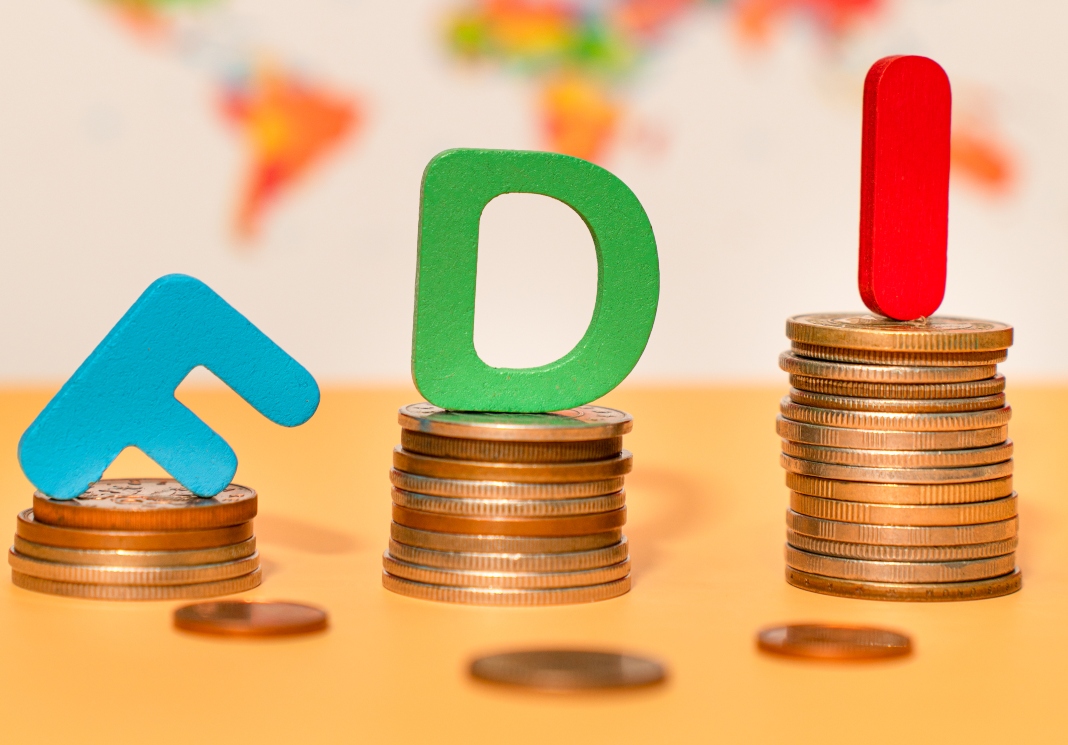
After declining in the first few months of the year, the inflow of foreign direct investment (FDI) showed a turnaround in July. What are the key factors behind the rebound of foreign funds, especially FDI, and will this trend continue in the coming time?
Turnaround
Fresh foreign investment approvals in Vietnam in the year to July 20, comprising fresh FDI, additional capital injected into operational projects, and portfolio investment, had amounted to US$16.24 billion, up 4.5% year-on-year. As such, after declining steadily in the first six months, with the amount updated to end-June still falling 4.3% year-on-year, the inflow of foreign capital made a sharp turnaround in July.
However, the shrinking inflow of foreign capital in the year’s first half – contracting by a sharp 38% at one point – is largely attributed to a steep fall in additional funds into active FDI projects. This year through July has seen the additional funds into active FDI projects shrink by 42.5% to US$4.16 billion. However, the number of operational FDI projects injected with additional capital increased by 27.1% to 736, meaning the average additional capital for each project was far lower than that in previous years.
As FDI generating countries abruptly tightened their monetary policies over the past year by hiking interest rates, many multinational corporations have refrained from seeking credit to expand their projects overseas, as such, FDI projects in Vietnam have also felt the pinch. Most recently, the U.S. Federal Reserve at their Federal Open Market Committee meeting in July decided to further hike their federal funds rate by 0.25 percentage point to a 25-year high of 5.25%-5.5%, while the European Central Bank (ECB) also decided to hike rates for the ninth consecutive time by 0.25 point to 3.75%, which is the highest rate since 2000.
In addition, concerns about Vietnam’s macroeconomic uncertainties, interest rate and forex rate volatilities since late 2022 to the first quarter this year, the lack of new orders for domestic production, narrowing global trade and supply chain disruptions, geopolitical tensions, and the risk of energy crunch have also impacted foreign investors’ strategies and business expansions in Vietnam.
Another negative factor is the global minimum corporate tax policy initiated by OECD and to be implemented in 2024. This policy requires multinational corporations (MNCs) with global revenue starting from 750 million euros and a profit margin of more than 10% to pay a minimum tax of 15%. Meanwhile, Vietnam has relied on using tax incentives to attract FDI, with the average corporate income tax on FDI enterprises at 12.3%, or even as low as between 2.75% and 5.95% to woo giant MNCs.
Recent statistics show that over 1,000 FDI projects in Vietnam belong to MNCs that are subject to the global minimum tax, including over 70 FDI projects that will be subject to the new tax right in 2024. This will prompt such MNCs to rethink their business expansion in Vietnam, a point already taken into consideration by Vietnam’s Foreign Investment Agency. This agency assesses that many MNCs are taking a cautious approach in planning any business expansion in Vietnam due to concerns over the new tax.
Fresh FDI as a highlight
While the amount of additional capital pledged for active projects has taken a nosedive, the fresh FDI and portfolio investment have steadily increased, especially since the start of the second quarter. Specifically, the value of mergers and acquisitions capital, or portfolio investment, in the year to end-July totaled US$4.14 billion, rising 60.7% year-on-year, while fresh FDI in the period jumped 75.5% in the number of projects and 38.6% in value to US$7.94 billion, year-on-year.
The fact that the number of fresh FDI projects increased at a faster pace than the value indicates medium- and small-sized foreign firms have had strong confidence in Vietnam’s business environment. Data also show projects valued at less than US$1 million made up 69.4% of all new FDI projects, and their combined capital accounted for only 2.7% of the total fresh capital pledged in the first seven months of this year.
The change in the FDI structure is seen stemming from the global minimum tax, as major corporations with revenues above the taxable threshold are reviewing their strategies and weighing new investment destinations, while small-sized companies continue to boost their outbound investment, with Vietnam being considered a safe destination that holds high potential owing to multiple free trade agreements and positive impacts from major changes to global supply chains in recent years.
FDI enterprises active in Vietnam that are subject to the global minimum tax will have to pay the balance in their home countries if they pay a corporate tax lower than 15%. Therefore, Vietnam has lately dug deep into the possible impacts from the global minimum tax to firstly take an upper hand in collecting the tax that MNCs should otherwise have to pay in the countries where they are headquartered, and secondly to use such resources to create new incentives so as to retain those MNCs and woo new ones.
According to some economic experts, such incentives may relate to land tax, land rent terms, financial support for research and development activities, housing projects for workers at MNCs, and other financial subsidies to compensate for a higher corporate tax.
If these incentives are realized in a synchronous way in the coming time coupled with a better macroeconomy characterized by a stable forex market and lower interest rates, and accommodative monetary and fiscal policies, it is expected the FDI inflow would recover and grow strongly in the coming time, especially at a time when central banks in major economies tend to wind up their tightening policies.
In addition, with Vietnam further partaking in global supply chains and a better business environment, and the stronger diversification of the FDI flow across the world that can turn the country into an intermediary goods exchange center, it is highly likely that foreign investors will continue to see Vietnam as a destination of choice.