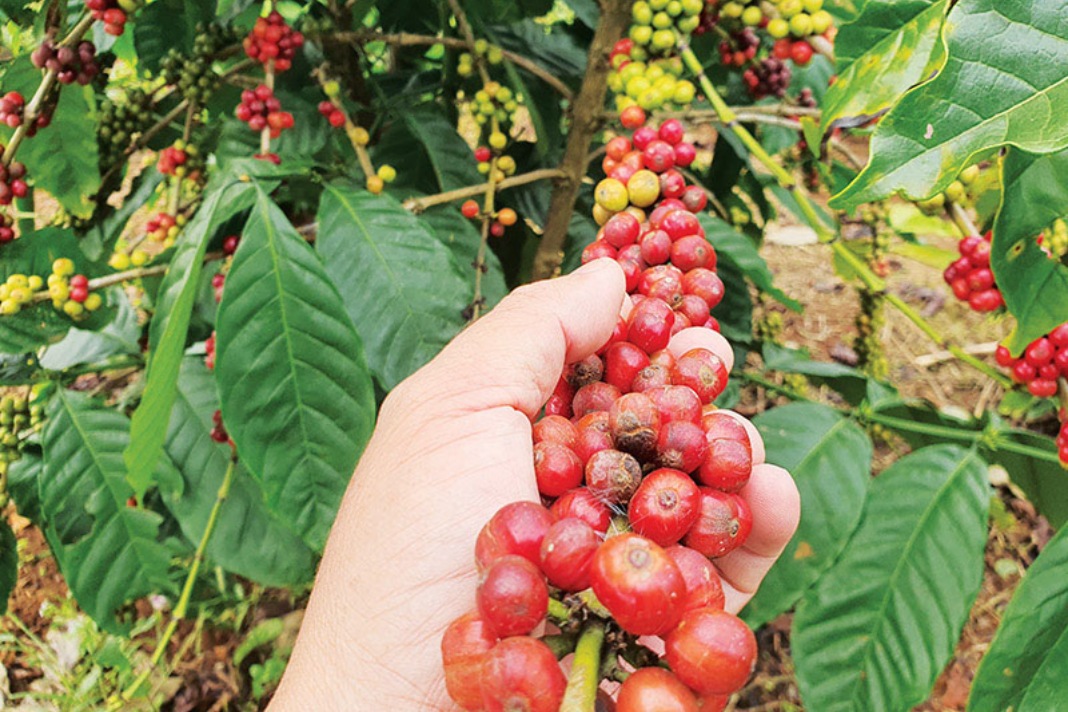
Concerns over a potential coffee shortage due to the EU Deforestation Regulation (EUDR) will impact future coffee prices and export markets. This regulation, which prohibits the circulation of agricultural products linked to deforestation, will take effect on January 1, 2025.
The domestic raw coffee price appears to be stabilizing. In the month leading up to August 18, domestic prices hovered around VND115 million per ton, regardless of fluctuations in futures prices. Why is it stable?
Volatile future coffee prices
Over the last 10 trading sessions on the London robusta coffee market, a primary reference point for Vietnamese coffee traders, futures prices have been highly volatile, fluctuating daily between US$150 and US$300 per ton. These fluctuations, with swings of several hundred U.S. dollars by the close, have put traders in a difficult position, making them hesitant to buy or sell.
The Covid-19 pandemic disrupted global supply chains and had strong impact on the market, but these effects are no longer a primary concern. However, freight costs remain over 200% higher than pre-pandemic levels. To ensure a smooth flow of goods, both importers and exporters have reluctantly accepted these exorbitant shipping costs.
The market has adapted to the increased risks, such as ship attacks along the East-West route, including the Red Sea. As a result, traders have opted for safer, albeit longer and more expensive, shipping routes, accepting higher freight rates and longer delivery time to maintain a steady flow of goods. Coffee from Vietnam and Indonesia continues to arrive regularly in Europe and the United States, the world’s two largest coffee consumers.
Recent coffee futures price volatility can be attributed to reports of extremely cold weather in Brazil, the world's largest coffee supplier, which initially raised concerns about potential crop damage. However, as the market found that Brazil's winter was milder than expected, prices began to stabilize.
Despite this correction, robusta coffee futures continue to edge up. On August 16, the price for September 2024 contracts rose to a historic high of US$4,691 per ton. Similarly, November 2024 futures followed suit, reaching US$4,485 per ton on the same day before closing at US$4,452 per ton, compared to the peak of US$4,498 per ton on July 11, 2024.
Europe imports about four million tons of coffee annually, with Vietnam supplying around 40% of its coffee exports to the European market a year. According to Eurostat, the statistical office of the European Union, Europe imported 652,000 tons of coffee from Vietnam last year, accounting for 24% of its global coffee imports.
With the EUDR’s implementation date approaching, many international traders are looking to secure raw coffee beans for delivery to Europe by October 2024, ahead of the date of the regulation coming into force. Traders anticipate that the EUDR will lead to a coffee shortage in the European market, prompting them to quickly source supplies from the most affordable origins for storage within the EU. As a result, coffee prices in the EU may rise sharply in the foreseeable future, even if prices in coffee-producing countries do not experience a corresponding increase.
Market to stabilize
It is not entirely accurate to attribute the rising future coffee prices solely to a coffee shortage, nor is it entirely correct to blame a shortage on crop failures.
In reality, Brazil and Indonesia have abundant coffee supplies and are willing to accept lower prices to export their beans to Europe before the EU Deforestation Regulation takes effect. For example, on August 14, the coffee price in Brazil was around US$3,980 per ton, while in Vietnam, it averaged US$5,980 per ton, which was US$2,000 higher than in Brazil.

The coffee export price, calculated based on the difference between the quoted price on the London Coffee Exchange and the price at the port of delivery, has been declining steadily. However, Vietnam has been making coffee deliveries under existing contracts, with few new contracts being signed. Many coffee purchasing agents are struggling to sell their stock. Coffee farmers are asking for a price of VND15 million per ton, but agents are only offering VND13 million per ton.
Some industry insiders warn that if coffee purchasers, farmers and exporters are not proactive in preparing the necessary certification documents required by the EU—such as origin traceability documents—they might find themselves unable to sell their stock at the beginning of the new crop season, even if their coffee is of good quality.
The financial and commodity markets are highly attentive to the U.S. Federal Reserve’s potential interest rate cut decisions, which could follow some economic indicators prompting an easing of monetary policy.
From this perspective, the domestic coffee market is also expected to fluctuate but move toward greater stability. Importers, facing the EU’s stringent requirements, will need to be more cautious in selecting suppliers and planning their purchases. They will not be able to buy coffee, no matter how low the price, if sellers cannot meet the EU’s regulation.