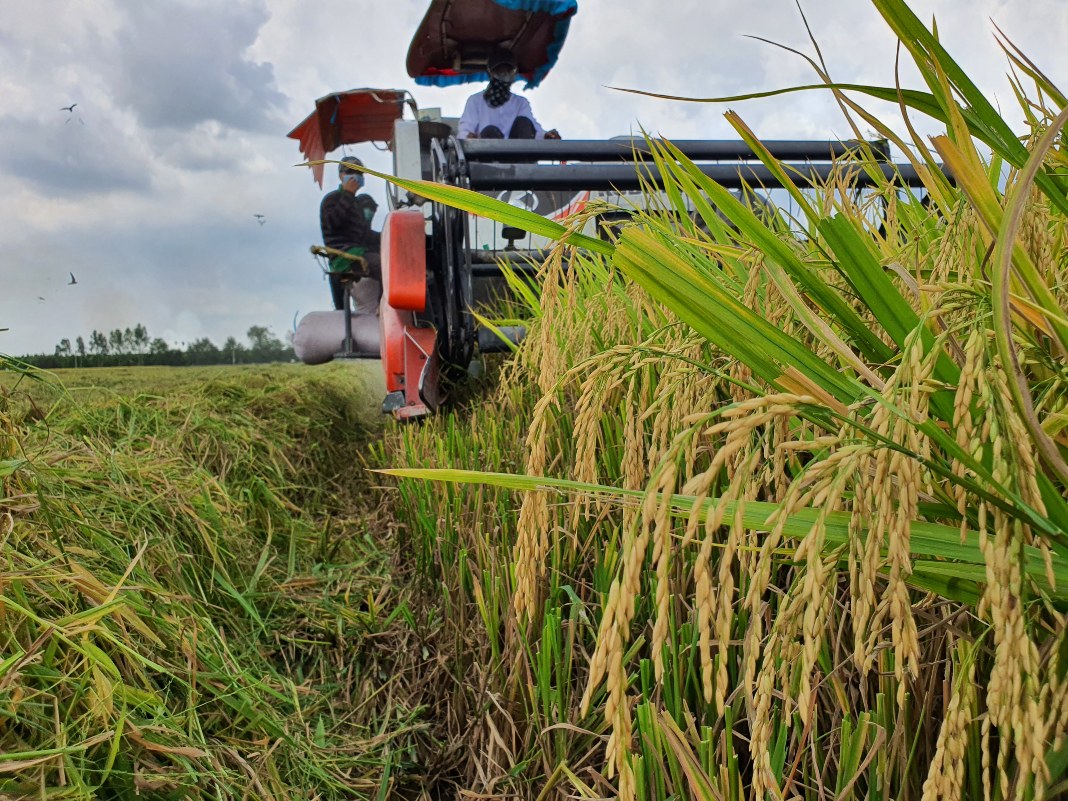
In an interview with The Saigon Times, Duong Van Chin, former vice director of the Mekong Delta Rice Institute, emphasized the need for Vietnam to focus on developing the high-grade long-grain white rice segment
The Saigon Times: At the seminar “Solutions to enhance the efficiency of Vietnam’s rice chain” held in Can Tho City on November 3, one paradox was mentioned: rice export prices are rising while rice exporters are incurring losses and hesitating to sign new export contracts. What is your take on this?
Duong Van Chin: I believe there are two key issues that need clarification. Firstly, even though export rice prices have increased, is this increase justified based on the quality of the rice? For a long time, state-owned food companies have focused on finding customers and have competed through low prices. Consequently, they have accepted low-price contracts to supply rice to the international market, often buying rice from farmers at lower prices to ensure profitability.
This situation has now evolved. There are two main types of rice that dominate the global market: high-grade fragrant white rice, such as India’s Basmati and Thailand’s Hom Mali, priced at US$1,000-1,200 per ton, and long-grain white rice from Thailand and India, priced at US$400-450 per ton. Vietnamese rice falls in the middle, with long-grain white rice of higher quality, and some even possess a fragrance. However, as the global market doesn’t categorize Vietnamese rice as fragrant rice, Vietnam has been forced to sell its rice at the price of ordinary long-grain white rice, resulting in significant losses. Now is the time for Vietnamese long-grain white rice to regain its true value, which should be US$600-650 per ton.
Secondly, rice exporters who complain about losses must acknowledge their role in this issue. They purchase high-grade long-grain white rice from Vietnam, such as Jasmine 85, Dai Thom 8, RVT, and OM 18, but then sell them at the price of ordinary long-grain white rice from other countries. Even though they have acquired good-quality rice, stored and processed it, they also need to understand how to market the rice. It’s crucial to highlight that this rice is not the ordinary long-grain white rice found in India and Thailand but falls in between high-grade fragrant white rice and ordinary long-grain white rice, a unique category that is exclusive to Vietnam.
In the face of an unstable global food market influenced by various factors such as climate change, conflicts, and embargoes, Vietnam possesses several advantages. What steps do you think should be taken to strengthen the position of Vietnamese rice?
First and foremost, we must make every effort to develop the high-grade long-grain white rice segment, with some varieties possessing a fragrance that is characteristic of Vietnam. We should maintain a stable selling price of US$600 per ton or higher, on par with high-grade long-grain 4% broken white rice from the U.S., regardless of geopolitical issues and rice export policies of India and Thailand. Only by doing so can Vietnam secure the position in the global market that its rice deserves a position it should have occupied for a long time.
In addition to this effort, Vietnam should focus on building the brand for its high-grade fragrant white rice, starting with the two varieties that have been recognized as the world’s best rice: Loc Troi 28 (in 2018) and ST25 (in 2019). The target should be to sell these varieties for approximately US$1,000 per ton.
Vietnamese rice should exude pride and command a higher standing in the global market. We need to convey the message that consumers are justified in paying US$600 for a ton of Vietnamese rice. For many consumers, low prices are no longer their primary concern. As their incomes rise, their rice consumption decreases, and they prefer to consume meat, milk, and eggs. The cost of rice in a meal is relatively low, so they are willing to pay a higher price for better quality rice.
Instead of striving to export 7-8 million tons of rice annually at an average price of US$400-450 per ton, we should aim to export only 4-5 million tons each year at a price of US$600-650 per ton. Although the total export revenue may be lower, the profit margin will be higher.
Adequate resources
To achieve the target outlined above, there must be a transformation in Vietnam’s rice production chain. What recommendations do you have in this regard?
First, the Government should encourage food businesses to invest in rice-growing areas to the greatest extent possible. These businesses would enter into rice purchase contracts with cooperatives and rice farmers, establish the production process, collaborate with farmers to ensure compliance with the process, and oversee rice output to ensure it meets both general food safety standards and specific requirements of the target markets. Currently, very few businesses independently develop their own rice-growing areas. Most businesses purchase rice from traders and intermediaries and then conduct milling and polishing before exporting. This approach is not sustainable.
Second, the Government should promote farmer participation in cooperatives since it is challenging for businesses to enter into separate rice purchase contracts with thousands of individual farmers. An essential principle is that businesses and farmers share both profits and risks, with profits being shared when rice prices are high and risks being shared when prices fall. Such cooperation can be sustainable and enduring.
Third, farmers must incorporate science and technology into their production practices to reduce costs. In this regard, the Government, trade associations, and businesses must provide support to farmers. To realize significant profits from rice cultivation, farmers must be able to reduce production costs.
Fourth, the current trend is to cultivate rice with an emphasis on climate change adaptation and greenhouse gas emission reduction. If farmers can adopt these technological advancements, they can generate additional income per hectare from selling carbon credits alone.
These technological advancements are already available. For instance, farmers can collect straw to sell to mushroom farms or animal feed producers instead of burning it in the fields, employ deep placement of fertilizers to reduce nitrous oxide emissions that contribute to greenhouse effects, and implement alternate wetting and drying irrigation practices to save water and prevent rice plant lodging.
 As a scientist, what policy support do you believe is necessary to help farmers prosper from rice cultivation and establish a brand for Vietnamese rice in the international market?
To be honest, it is critically important to allocate sufficient financial resources to support scientific and technological research and applications in agriculture, including the rice trade. In the rice trade, it’s important to prioritize investments, such as research to develop new rice varieties capable of producing high-grade long-grain white rice and high-grade fragrant white rice. Additionally, businesses need interest rate support for investing in facilities that enhance the value of Vietnamese rice.
For instance, consider the quality of rice during the winter-spring crop, which is typically superior due to ample sunshine and lower production costs. If businesses take out loans to build silos for storing rice from the winter-spring crop and then mill the rice for sale during the summer-fall and fall-winter crops when rice prices typically rise, they should receive support. There are numerous ways in which government agencies can assist scientists, businesses, and farmers in developing a sustainable and effective rice production chain.
Professor, Doctor Vo Tong Xuan,
PRESIDENT EMERITUS of Nam Can Tho University
For many years, the organization of Vietnam’s rice production and export chain has seen limited improvement. Most businesses, aside from a few that cultivate rice on their own and collaborate directly with farmers, prioritize securing export contracts. After securing these contracts, they then look to purchase rice in the domestic market, which is a reverse process.
Furthermore, farmers either receive insufficient guidance or have yet to improve their farming techniques, resulting in excessive spending on materials such as seeds, fertilizers, and pesticides. However, the prices of these materials are determined by the global market because domestic production cannot meet demand. Rice must pass through intermediaries from farmers to businesses, thus adding additional costs. Therefore, even though global rice prices may be high, businesses may not make profit.