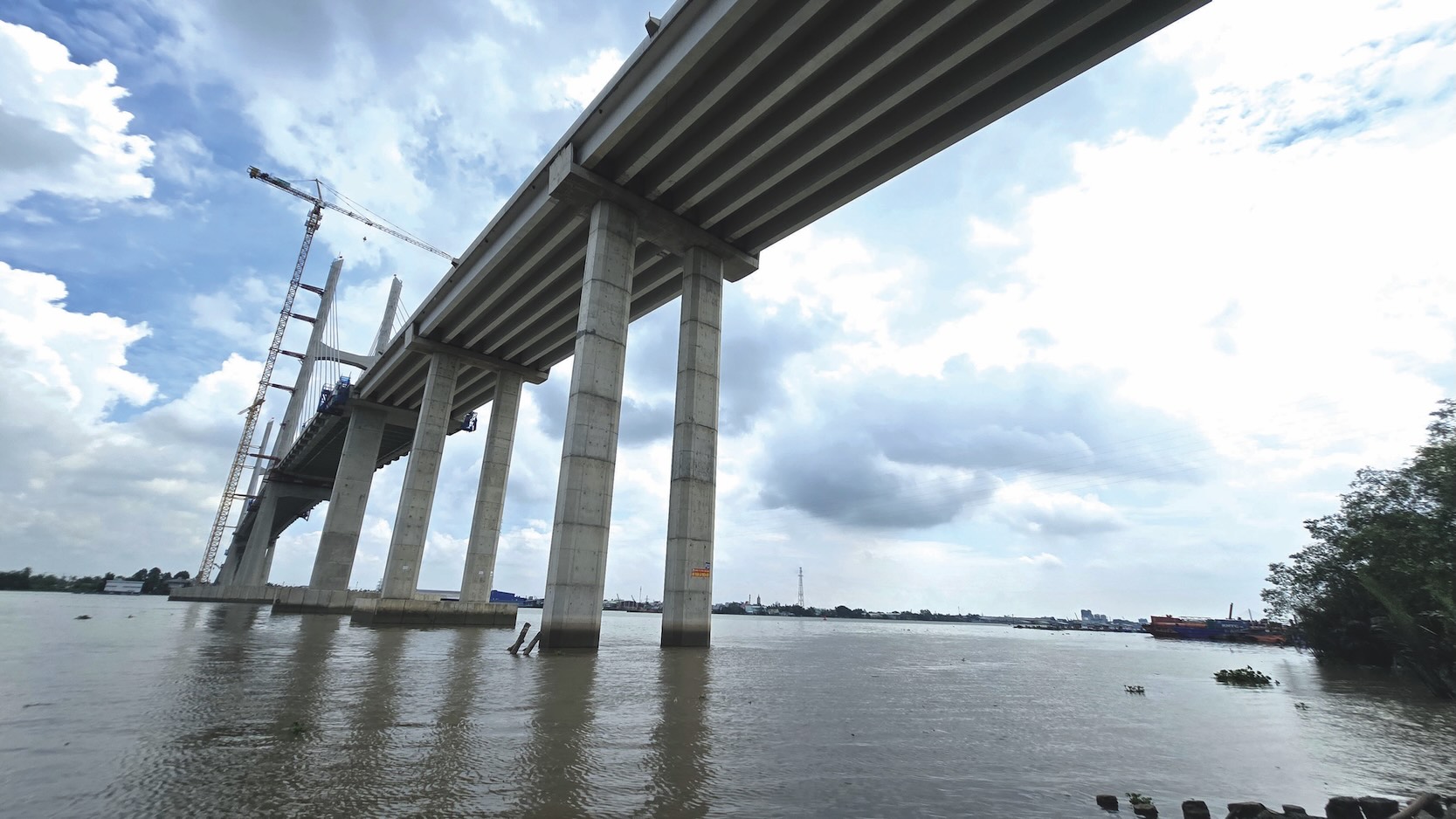
Nearly 44% of public investment funds were disbursed in the first seven months—a positive sign amid the country’s ongoing efforts to restructure and streamline its administrative apparatus. Several localities have made notable progress, and some ministries and sectors have delivered outstanding performance.
However, despite these encouraging developments, a substantial portion of funds remains idle. Procedural hurdles persist, and many units have yet to be fully integrated into the system. These challenges underscore the significant pressure to meet disbursement targets by year-end.
According to data from the Ministry of Finance, by the end of July 2025, total public investment disbursements had reached over VND338.3 trillion—equivalent to 43.9% of the target set by the prime minister. This represents an increase of more than 10% compared to the same period last year. The improvement is particularly noteworthy given the substantial workload involved in reorganizing the administrative apparatus and reviewing planning and capital sources.
Notably, disbursement of local State budgets reached 57.5%, a significant rise from 33.3% in the same period last year. This sharp increase reflects greater proactivity and flexibility among localities in managing budgets and regulating public investment. Several ministries and sectors have also exceeded the average disbursement rate. Of particular importance is the progress in national target programs, which have historically lagged in disbursement. This year, however, they have made a breakthrough, achieving a disbursement rate of 52.5%.
The improved progress in public investment disbursement this year reflects the Government’s more resolute management efforts, along with the proactive measures taken by ministries, sectors, and localities to address longstanding obstacles. Additionally, technical adjustments in calculating the disbursement rate—such as excluding newly allocated capital that has yet to be disbursed—have helped ensure the figures more accurately reflect actual performance.

Nevertheless, these positive signs alone are not sufficient to guarantee full-year success. As of the end of July 2025, more than VND62 trillion—equivalent to over 7% of the Government’s target—had yet to be allocated. Of this, unallocated funds from the central State budget accounted for VND61.167 trillion, a substantial figure that significantly undermines the potential for effective disbursement in the remaining months of the year.
More worryingly, data from the Ministry of Finance reveals that 30 ministries and sectors, along with 11 localities, have disbursement rates below the national average. This highlights a significant disparity in capital absorption capacity. The uneven performance underscores that, while mechanisms and directives may be unified, effective execution still hinges on the competence of officials, proactive coordination, and the transparency and efficiency of administrative procedures.
A closer look at the reasons cited by the Ministry of Finance reveals that the “bottlenecks” hindering public investment disbursement are recurring issues from previous years that remain unresolved. Chief among them is site clearance—a critical but persistently sluggish phase. Determining land origin, calculating compensation, and executing site handovers continue to be complex tasks, particularly in newly merged localities where differing land prices coexist.
In addition, rising costs—especially for filling earth and construction sand—have inflated capital requirements and necessitated adjustments to cost estimates. These changes have delayed project approvals and revisions to investment plans. Equally concerning is the overlapping and confusion in planning. Delays in approving or modifying detailed plans and red boundary lines have prevented many projects from being implemented on schedule.
Another contributing factor is the lack of sufficient budget revenue in several localities—such as Hung Yen, Can Tho, and Lai Chau—particularly from land-related sources. As a result, these areas are unable to arrange counterpart funding for registered projects, despite having plans in place at the beginning of the year.
For projects funded by official development assistance (ODA), challenges stem from complex procedures and processes, prolonged negotiations over loan agreements, and delays in completing bidding or site clearance. Additionally, the transition to a two-level government structure has required adjustments to project scale and investment targets. In many cases, deployment has been stalled altogether, pending reviews to align with the new organizational structure.
As pressure mounts to meet the full-year economic growth target, public investment remains one of the most critical drivers expected to accelerate disbursement in the remaining months. The Government has reaffirmed its commitment to achieving full disbursement in line with the Government’s target of VND884.585 trillion, aiming to contribute to an overall growth rate of 8.3–8.5% for the year.
The pressure to reach the year-end disbursement target remains intense. In a bid to accelerate public investment, the Government has submitted a proposal to the National Assembly’s Standing Committee to reallocate funds from units with low demand to those with a stronger capacity for disbursement. The methodology for assessing disbursement rates has also been revised to exclude newly allocated capital that has not yet been spent, offering a more accurate reflection of actual progress.
In parallel, key solutions are being prioritized, including the simplification of site clearance procedures and the strengthening of accountability at the commune level—where many infrastructure projects are directly implemented. These measures are expected to play a pivotal role in boosting disbursement in the final stretch of the year.
While public investment disbursement has seen notable improvement, much remains to be done to ensure capital is used effectively. For public funds to truly serve as a catalyst for economic growth, continued efforts are needed to advance administrative reform, strengthen management capacity, and foster greater coordination across all levels and sectors. Above all, it is the resolve in leadership and the clarity of executional responsibility that will determine the real impact of public investment—not just on paper, but through tangible works and projects that deliver meaningful benefits to the country and its people.