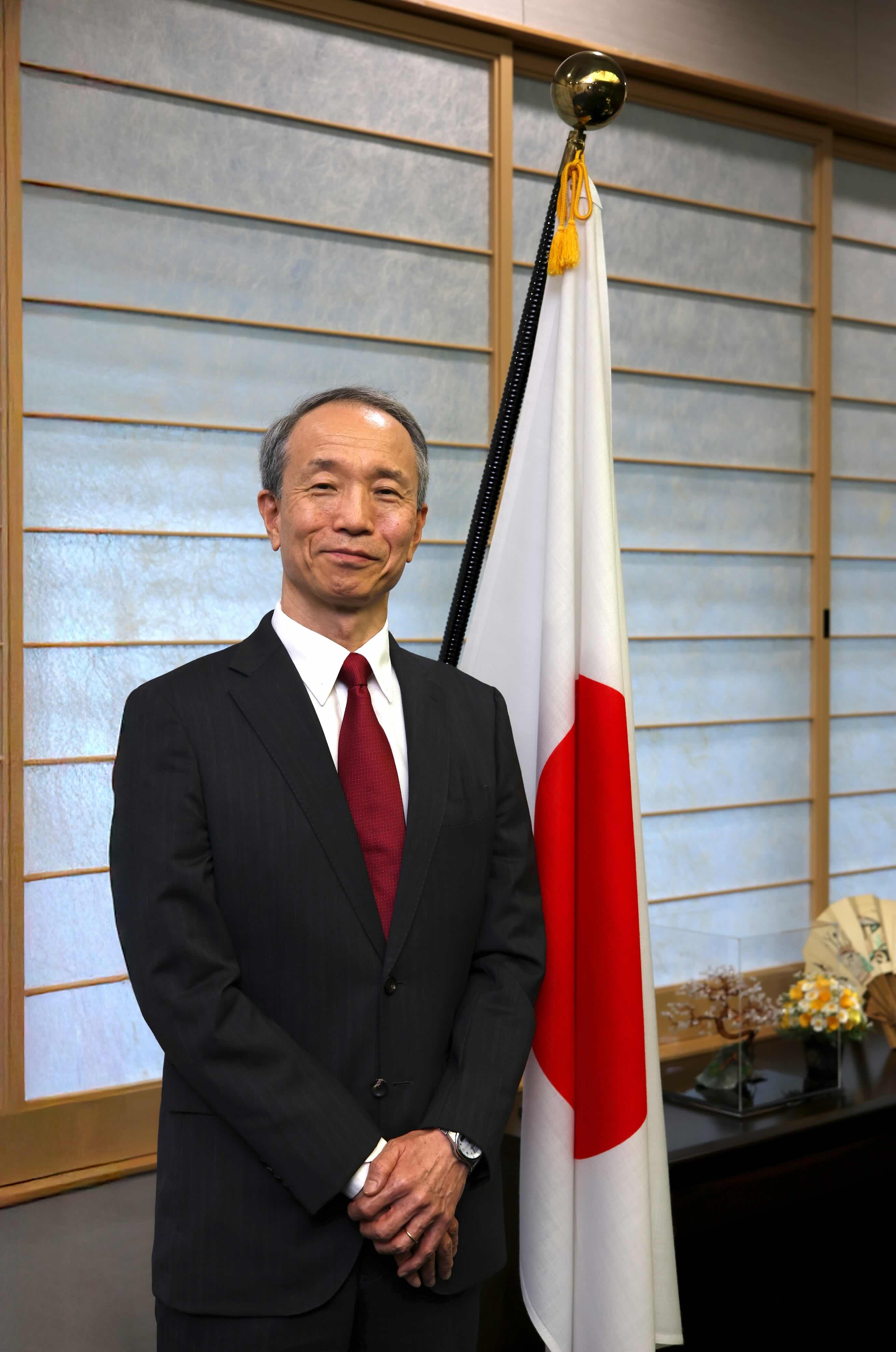
“It is necessary to introduce a real estate tax that fits Vietnam’s conditions and prevents speculation without impeding the ability of those needing to own homes, thereby contributing to establishing a sustainable and efficient real estate market,” said Professor Dang Hung Vo, former Deputy Minister of Natural Resources and Environment, in an interview with The Saigon Times.
How should real estate be taxed?
The Saigon Times: Recently, the Ministry of Construction and the Ministry of Finance proposed levying a tax on individuals owning multiple properties to stabilize the market and curbing real estate price hikes. What do you think of this proposal? In your opinion, is it time for Vietnam to slap a tax on those who own multiple properties?
Professor Dang Hung Vo: Since 2003, the Party Central Committee has adopted three resolutions on land policy and law reform, seeking to address real estate tax reform, including imposing a higher tax on unused properties and on speculation by owners of multiple properties, aiming to establish a stable and sustainable real estate market.
Resolution 26-NQ/TW in 2003 clearly stated the need to regulate incomes of organizations and individuals transferring land use rights or buying and selling landed properties. It proposed replacing the land transfer tax with an income tax on land transfers and applying a progressive tax rate to those earning high income from such transfers. However, due to the inability to accurately establish individual income from real estate transfers, this tax is still applied as the old land transfer tax. This shows that reforms with a low level of feasibility are essentially not reforms.
Resolution 19-NQ/TW in 2012 directed research on a real estate tax that includes land, housing, and other landed assets. Those who use large land areas, own multiple homes, or leave land unused would pay a high tax.
Resolution 18-NQ/TW in 2022 called for a higher tax on individuals using large land areas, owning multiple homes, speculating on land, or delaying land use. Tax reductions or exemptions should apply to certain essential uses, such as rice cultivation. This resolution clearly defines the task of tax reform, emphasizing that it’s not just about raising taxes. Over the past 20 years, tax reform related to real estate has been a significant policy direction, but thorough research on a suitable real estate tax for Vietnam, the implementation roadmap, and measures to ensure feasibility are still lacking. Recently, the ministries have reiterated this task, but with only superficial perspectives, lacking the depth of thorough research.
Reforming real estate taxation under Vietnam’s current circumstances is extremely tough, especially when wages are too low for many to own a home, the wealth gap is significant, and much of wealth accumulation is through holding real estate for price increases. Real estate prices have risen sharply, around 20% per year. Establishing a suitable tax roadmap is a very difficult but crucial task. Without it, addressing social housing issues and channeling investment from the public into production and services will remain unattainable.
Compared globally, revenue from property tax (mainly real estate tax) in Vietnam accounts for only 0.034% of GDP, much lower than G7 countries (1-4% of GDP) and OECD countries (1.856% of GDP on average). Even in former socialist countries, property tax accounted for 0.2-1% of GDP.
The ratio of average house price to average annual income in Vietnam has reached 30, while in G7 countries, it is only 2-4, and in developing countries, it is 10-15. A ratio of 30 means that if a worker saves a quarter of their income annually, it would take 120 years to buy a home, or 60 years for a couple. Current artificial price inflation probably means this ratio is even higher.
From a macroeconomic perspective, real estate belongs to the capital market, not the commodity market. If real estate prices continue to double every 10 years, as they have recently, surplus funds in society will only flow into real estate, rather than into other capital channels or direct investment in production and business. Speculation will drive real estate prices higher, making life difficult for homebuyers, negatively impacting urban infrastructure and urbanization quality, and leading to unused land, “ghost towns,” and stalled projects.
Therefore, developing and implementing a real estate tax suitable for Vietnam’s conditions is a difficult but critical task for creating a stable and healthy real estate market. It is related to national economic development and social housing policies. Equally important is ensuring that the reformed tax is feasible and effective in practice.
How should a real estate tax be designed to be suitable for Vietnam? The proposal to tax individuals on their second home and beyond is under discussion, but many have disputed this approach.
- The tax should fit Vietnam’s economic and social conditions and should be carefully based on data from the real estate market. For example, with the proposal to tax the second property, what if the first home, which is registered as a residence, is worth hundreds of billions of dong, while the second or third property is a modest house? Is that reasonable?
The term “second property” comes from Singapore, where the state provides significant housing support, and home values are relatively similar. There, one can purchase several homes through state projects, but a higher tax rate applies to the second and subsequent purchases. If we apply the tax based on “the number of houses” here, it may be ineffective and create loopholes.
Globally, real estate tax is often based on either floor area, property value, or a combination of both. Vietnam should base its tax approach on these principles rather than simply copying foreign formats. According to international practices, Vietnam should consider either taxing based on real estate area or value. Additionally, it could set a low or even zero tax on the average housing area per person in society. Only when the area exceeds this average should a higher tax apply, calculated by multiplying the tax rate by the property value.
Such adjustments, along with specific measures, are necessary to ensure that the housing market grows sustainably, allowing people, especially those with low income, to own a home. This approach would help steer the real estate market in the right, sustainable, and effective direction.
Necessary conditions for effective implementation
Regarding a real estate tax that functions as a property tax, what conditions does Vietnam need to prepare for to effectively implement it?
- Having an appropriate tax is just a necessary condition, but the sufficient condition is its successful implementation in practice. For Vietnam, this is a challenge because our current real estate management capacity is still relatively underdeveloped.
First, we must establish a real estate management infrastructure that links administrative units at the provincial level to track the number of properties which an individual owns. This would prevent underreporting or inaccurate reporting to avoid tax liability. Vietnam already has an electronic identification system, which can be utilized to monitor land ownership through this system.
Second, we need to manage income effectively. Currently, income from salaries is well-controlled, but we are still unable to fully grasp non-salary income, irregular income, and informal income sources. In cases where the income management system is not yet complete, supplementary measures are necessary, such as requiring individuals to explain the source of funds used to purchase real estate. This would prevent people from transferring ownership to others in various ways to avoid or reduce taxes.
Third, we should seek a consensus in society for the need for transparency regarding individual real estate ownership, laying the foundation for an appropriate oversight mechanism. This is a major challenge in balancing the right to privacy regarding assets and the need for transparency to combat corruption, including the public’s right to monitor. Gradually, we need to shift the mindset from ensuring privacy about assets to mandatory transparency, especially regarding real estate, along with requiring explanations of the origin of funds used to purchase or develop properties.
Concerning land policy, HCMC recently delayed implementing a new land price list due to opposing opinions that it would send land prices soaring sharply, impacting the public. This suggests that even with a suitable policy and compatible implementation infrastructure, it’s still insufficient. What’s your view?
- Any policy implemented in practice must follow a proper roadmap. Particularly with financial policy, careful consideration of the implementation timeline is crucial; the economy should not be subjected to shock therapy. Developed economies have gone through these stages, and this can serve as a lesson for Vietnam.
All financial policy reforms need a suitable roadmap. For example, aligning the land price list with market transaction prices has caused land prices to rise too quickly, making it difficult for both businesses and the public to accept. The principle that the land price list must align with market values is unchangeable. To prevent the market from unexpected shocks, the Government should adopt policy measures to lower land prices for projects that require incentives, such as key investment projects or social welfare projects.

We all know that if land costs, which are part of the input for any investment or business process, are high, they will raise the prices of goods produced, reducing the economy’s competitiveness. In such cases, imported goods will prevail over domestically produced goods. Therefore, what needs to be done is to apply a real estate tax policy with a suitable roadmap to bring land prices down. At the same time, during this roadmap, the Government should decide to cut land prices for projects requiring investment incentives. The practice of setting land prices lower than the market, as done in the past, should not continue. Everything must ensure transparency in management, and we must avoid confusing concepts.
Thus, determining the roadmap for reforming financial policy, including real estate tax, is the most important task. It requires synchronizing the tax policy, upgrading management infrastructure, and changing the mindset about privacy rights concerning assets.