Vietnam’s plastics industry is facing a growing battle between virgin and recycled plastics. Recycled resin currently accounts for around 10% to 15% of plastic materials used in domestic manufacturing, higher than the global average of under 10%.
Vietnam has emerged as one of Southeast Asia’s lead ing plastics manufacturing hubs, accounting for 2.3% of global plastics trade value. At the same time, the country is also the world’s fourth-largest generator of plastic waste, underscoring the vast potential for growth in the plastic recy-
cling industry.
Closed-loop for recycled plastic pellets
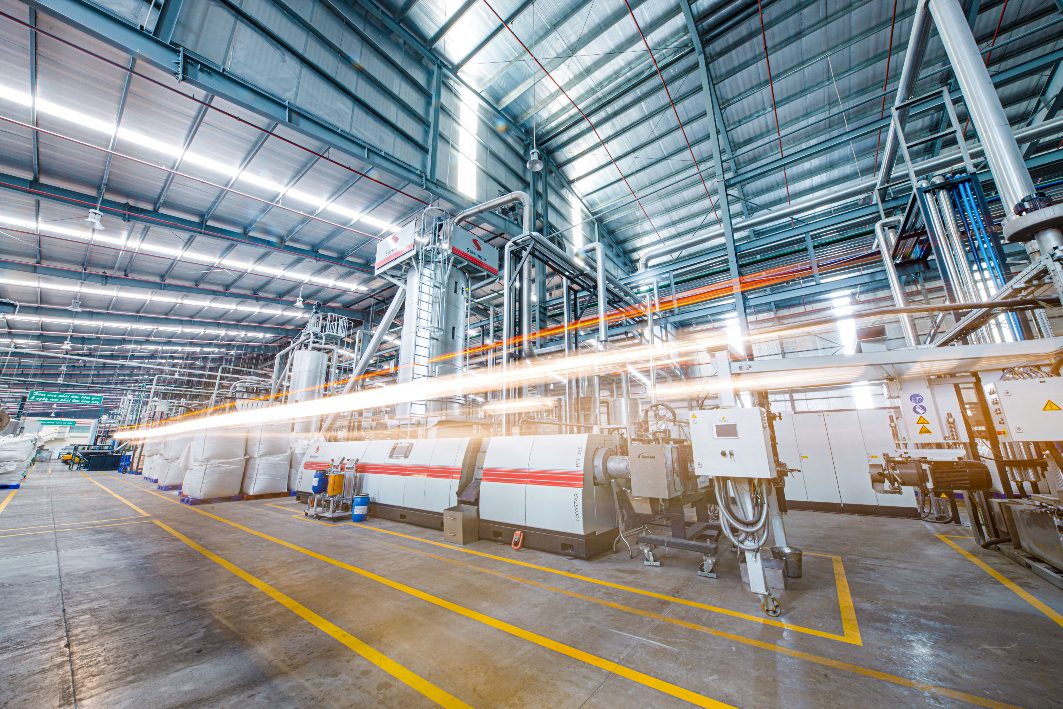
At its plant in Long Hau Industrial Park in Tay Ninh Province, Airspeed Manufacturing Vietnam produces high-precision molds and injec-
tion-molded components. The facility operates an in-house post-industrial
recycling (PIR) system that collects, sorts, crushes, and reprocesses plas-
tic waste and defective materials generated during production back into the manufacturing cycle.
Plastic engineers say that plastics tend to become more brittle after each heat-processing cycle due to the breakdown of polymer bonds. To maintain product quality and safety, manufacturers using internal PIR systems often limit recycled content to 10% to 20% and recycle materials only 3-5 times on average.
Airspeed Vietnam, however, has raised the share of recycled plastic
content to between 30% and 70%, depending on the product, while extending the recycling loop to as many as 10 cycles. Bui Duc Tho, CEO at Airspeed Vietnam, said the achievement stems from the company’s ability to tightly control technical variables throughout production, backed by what he described as a “zero compromise” quality inspec- tion system. “Every product must pass strict inspections covering dimensions, mechanical strength, en-
vironmental indicators, and visual appearance before shipment,” Tho
told The Saigon Times.
A subsidiary of a U.S.-based parent group, Airspeed Vietnam currently
operates three factories in Tay Ninh Province that manufacture plastic
and metal components, electronic cables and connectors, and precision plastic molds. Strong product quality, combined with lower production costs compared with its facilities in China, Malaysia, and other countries,
has prompted the parent group to shift more manufacturing capacity
to Vietnam. A fourth factory is now being planned.
Packaging and engineering plastics manufacturers in Vietnam are in-
creasingly investing in mini pelletizing systems integrated directly into production lines to recover and reuse nearly all plastic scrap generated dur-
ing manufacturing. Plastic production typically results in material losses of
around 3% to 10%, including waste from injection nozzles, runners, film
edges, excess joints and defective products. Maximizing the reuse of
this industrial scrap has become a key target for many manufacturers.
Unlike recycled plastics derived from post-consumer waste, PIR plastics
offer higher purity, greater tensile strength, and greater transparency, as
they are not contaminated by mixed colors, odors, or other impurities.
PIR plastics gain momentum
Airspeed Vietnam is among the companies leading the push for closed-loop recycling at the factory level. Beyond internal PIR systems, the market for collecting and processing industrial plastic scrap through external PIR services is also rapidly becoming more professionalized.
Northern industrial parks in Bac Ninh have emerged as major hubs for
high-quality PIR feedstock, thanks to the concentration of foreign electron-
ics and automotive manufacturers.
Unlike mixed post-consumer plastic waste, industrial scrap generated at
these factories is already well-sorted during production, including materi-
als such as ABS, PC, and nylon from electronic components, or PP and PE
from industrial packaging. Cleaner input materials enable recycling
firms to produce recycled resin with physical properties close to those of
virgin plastics.
In southern Vietnam, the former provinces of Dong Nai and Binh
Duong, together with HCMC before the administrative merger, account
for more than 60% of the country’s industrial plastic recycling market, driven by their well-established packaging and household goods manufac-
turing industries.
The growing adoption of PIR plastics is also being fueled by rising pressure to decarbonize global supply chains. Local suppliers to major electronics firms such as Samsung and LG, as well as international textile and footwear brands, are increasingly required to incorporate a certain proportion of PIR plastics in
packaging and components to obtain Global Recycled Standard (GRS) cer-
tification. Tho said PIR plastics can also help manufacturers cut the cost
of goods sold, as the materials are easier to process than post-consum-
er plastic waste, requiring neither intensive cleaning nor complicated
deodorization.
By output volume and production value, packaging plastics account for
35% of Vietnam’s plastics industry, followed by construction plastics at
25%, household plastics at 22%, and engineering and high-tech plastics at 18%. A plastics industry report released by FPT Securities in December 2025 said the sector had been
benefiting from stable global oil and gas prices, lower resin costs and a favorable short to medium-term outlook, particularly for construction plastics. However, the Middle East conflict has sharply reversed market conditions since early March 2026.
 Potential for plastic recycling
Post-consumer recycled plastics, or PCR plastics, are better known in Vietnam as plastic waste recycling. Yet public understanding of the sector, shaped largely by media coverage over the years, still falls far short of capturing the full scale of the country’s recycling industry.
As of 2025-2026, Vietnam had more than 2,500 collection, sorting and recycling facilities for plastic waste, according to data from LoopNet Asia. The system combines long-standing informal recycling networks with a growing number of modern industrial operators.
About 15 traditional recycling craft villages, many dating back to the 1980s, remain concentrated in northern Vietnam, while most largescale recycling facilities are clustered in the south. Villages such as Minh Khai in Hung Yen Province and Trieu Khuc in Hanoi have long been dubbed “plastic waste hubs” due to their largely informal operations, outdated technologies, and high energy consumption. These villages still handle around 30% of Vietnam’s low-end recycling market. Still, they are also widely associated with pollution in nearby waterways such as the To Lich, Nhue, and Cau Bay rivers. In contrast, more than 62% of recycling facilities are located in southern Vietnam, particularly around HCMC, where strong industrial activity and dense manufacturing networks have fostered the rise of major recyclers, including Duy Tan Recycling, An Phat Bioplastics, and VietCycle.
A striking imbalance is taking shape in Vietnam’s plastic recycling sector. Data from LoopNet Asia shows that just 7.4% of large recyclers generate nearly 90% of the country’s PCR plastic output. However, these industrial players still depend heavily on fragmented supply chains made up of thousands of small collectors and informal waste pickers. The disconnect has left more than 90% of recyclers focused solely on producing recycled plastic pellets, while downstream manufacturing of higher-value-added recycled products remains largely undeveloped.
Logistics costs remain a major burden for Vietnam’s recycling industry, accounting for 25% to 35% of raw material purchasing costs. The lack of an integrated data network has weakened transport coordination and interregional sourcing, driving up input costs and eroding the competitiveness of Vietnam’s PCR recycled plastic pellets.
A growing number of large and reputable companies are entering Vietnam’s recycled plastics supply chain. However, recycled plastic resin still costs around 30% to 40% more than virgin plastic. Industry players say that to meet food-grade safety standards set by regulators such as the U.S. Food and Drug Administration and the European Food Safety Authority, recyclers must import advanced processing lines from Western suppliers. The recycling process itself involves multiple stringent stages, including sorting, high-pressure washing, sterilization, heating, deodorization, melting and optical separation. High depreciation costs for imported equipment, combined with heavy energy consumption, have significantly increased production costs.
“Most plastic recycling plants in Southeast Asia are facing the same situation,” said DTR, a trade specialist at a Middle Eastern plastics group with an office in HCMC. The view aligns with a report published by U.S. consulting firm Bain & Company in March 2025, which said plastic waste recycling in Southeast Asia remains constrained by high collection and sorting costs, often equivalent to 1.5 to 2 times the purchase price of plastic waste.
The consultancy also noted that major ASEAN markets such as Indonesia, Thailand and Vietnam currently collect only 8% to 25% of plastic waste for recycling, even in large urban areas.
A resource for the future
There are no official estimates for the size of Vietnam’s industrial PIR plastics recycling market. However, customs data and industry associations show that Vietnam imports between US$10 billion and US$11 billion worth of virgin plastic resin annually, while production losses are estimated at 3% to 10%. Based on these figures, the country’s PIR recycling sector could generate between more than US$300 million and US$1 billion a year, as recovery rates can reach nearly 100%. The industry is considered highly promising thanks to its low processing costs, as the plastic waste is clean and free from organic impurities, dirt, colorants, and odors, allowing recyclers to achieve exceptionally high profit margins.
Meanwhile, the PCR plastics sector is facing a major challenge. Vietnam is currently the world’s fourth-largest producer of plastic waste, generating around 3.9 million tons annually, according to the World Bank. The institution estimates the country could forfeit up to US$2.9 billion in recoverable material value if plastic waste is not properly collected and recycled. Globally, plastic recycling rates remain below 10% on average, according to the United Nations Environment Program (UNEP).
In Vietnam, recycling rates range from 10% to 33% depending on the type of plastic, according to data from LoopNet Asia. PET plastics, commonly used in water and soft drink bottles, and PE plastics, such as plastic bags and wrapping films, record the highest collection and recycling rates due to strong market demand. In contrast, single-use and low-value plastics, including expanded polystyrene foam boxes, thin plastic packaging and sachets used for condiments or shampoo, remain difficult to recycle economically.
In terms of cleanliness and immediate reusability, post-industrial recycled (PIR) plastics currently have far greater value than PCR plastics. Amid soaring raw material prices, recycled industrial plastics have become the most practical “lifeline” for manufacturers, helping them weather market volatility and reduce dependence on geopolitical instability in the Middle East. However, in the long term, PCR is expected to become the next major investment focus for Vietnam’s plastics industry, driven by both market potential and growing environmental pressures.
Ultimately, as one plastics industry expert put it, the sector is now caught in a growing rivalry between virgin plastics and recycled plastics.
Potential for plastic recycling
Post-consumer recycled plastics, or PCR plastics, are better known in Vietnam as plastic waste recycling. Yet public understanding of the sector, shaped largely by media coverage over the years, still falls far short of capturing the full scale of the country’s recycling industry.
As of 2025-2026, Vietnam had more than 2,500 collection, sorting and recycling facilities for plastic waste, according to data from LoopNet Asia. The system combines long-standing informal recycling networks with a growing number of modern industrial operators.
About 15 traditional recycling craft villages, many dating back to the 1980s, remain concentrated in northern Vietnam, while most largescale recycling facilities are clustered in the south. Villages such as Minh Khai in Hung Yen Province and Trieu Khuc in Hanoi have long been dubbed “plastic waste hubs” due to their largely informal operations, outdated technologies, and high energy consumption. These villages still handle around 30% of Vietnam’s low-end recycling market. Still, they are also widely associated with pollution in nearby waterways such as the To Lich, Nhue, and Cau Bay rivers. In contrast, more than 62% of recycling facilities are located in southern Vietnam, particularly around HCMC, where strong industrial activity and dense manufacturing networks have fostered the rise of major recyclers, including Duy Tan Recycling, An Phat Bioplastics, and VietCycle.
A striking imbalance is taking shape in Vietnam’s plastic recycling sector. Data from LoopNet Asia shows that just 7.4% of large recyclers generate nearly 90% of the country’s PCR plastic output. However, these industrial players still depend heavily on fragmented supply chains made up of thousands of small collectors and informal waste pickers. The disconnect has left more than 90% of recyclers focused solely on producing recycled plastic pellets, while downstream manufacturing of higher-value-added recycled products remains largely undeveloped.
Logistics costs remain a major burden for Vietnam’s recycling industry, accounting for 25% to 35% of raw material purchasing costs. The lack of an integrated data network has weakened transport coordination and interregional sourcing, driving up input costs and eroding the competitiveness of Vietnam’s PCR recycled plastic pellets.
A growing number of large and reputable companies are entering Vietnam’s recycled plastics supply chain. However, recycled plastic resin still costs around 30% to 40% more than virgin plastic. Industry players say that to meet food-grade safety standards set by regulators such as the U.S. Food and Drug Administration and the European Food Safety Authority, recyclers must import advanced processing lines from Western suppliers. The recycling process itself involves multiple stringent stages, including sorting, high-pressure washing, sterilization, heating, deodorization, melting and optical separation. High depreciation costs for imported equipment, combined with heavy energy consumption, have significantly increased production costs.
“Most plastic recycling plants in Southeast Asia are facing the same situation,” said DTR, a trade specialist at a Middle Eastern plastics group with an office in HCMC. The view aligns with a report published by U.S. consulting firm Bain & Company in March 2025, which said plastic waste recycling in Southeast Asia remains constrained by high collection and sorting costs, often equivalent to 1.5 to 2 times the purchase price of plastic waste.
The consultancy also noted that major ASEAN markets such as Indonesia, Thailand and Vietnam currently collect only 8% to 25% of plastic waste for recycling, even in large urban areas.
A resource for the future
There are no official estimates for the size of Vietnam’s industrial PIR plastics recycling market. However, customs data and industry associations show that Vietnam imports between US$10 billion and US$11 billion worth of virgin plastic resin annually, while production losses are estimated at 3% to 10%. Based on these figures, the country’s PIR recycling sector could generate between more than US$300 million and US$1 billion a year, as recovery rates can reach nearly 100%. The industry is considered highly promising thanks to its low processing costs, as the plastic waste is clean and free from organic impurities, dirt, colorants, and odors, allowing recyclers to achieve exceptionally high profit margins.
Meanwhile, the PCR plastics sector is facing a major challenge. Vietnam is currently the world’s fourth-largest producer of plastic waste, generating around 3.9 million tons annually, according to the World Bank. The institution estimates the country could forfeit up to US$2.9 billion in recoverable material value if plastic waste is not properly collected and recycled. Globally, plastic recycling rates remain below 10% on average, according to the United Nations Environment Program (UNEP).
In Vietnam, recycling rates range from 10% to 33% depending on the type of plastic, according to data from LoopNet Asia. PET plastics, commonly used in water and soft drink bottles, and PE plastics, such as plastic bags and wrapping films, record the highest collection and recycling rates due to strong market demand. In contrast, single-use and low-value plastics, including expanded polystyrene foam boxes, thin plastic packaging and sachets used for condiments or shampoo, remain difficult to recycle economically.
In terms of cleanliness and immediate reusability, post-industrial recycled (PIR) plastics currently have far greater value than PCR plastics. Amid soaring raw material prices, recycled industrial plastics have become the most practical “lifeline” for manufacturers, helping them weather market volatility and reduce dependence on geopolitical instability in the Middle East. However, in the long term, PCR is expected to become the next major investment focus for Vietnam’s plastics industry, driven by both market potential and growing environmental pressures.
Ultimately, as one plastics industry expert put it, the sector is now caught in a growing rivalry between virgin plastics and recycled plastics.