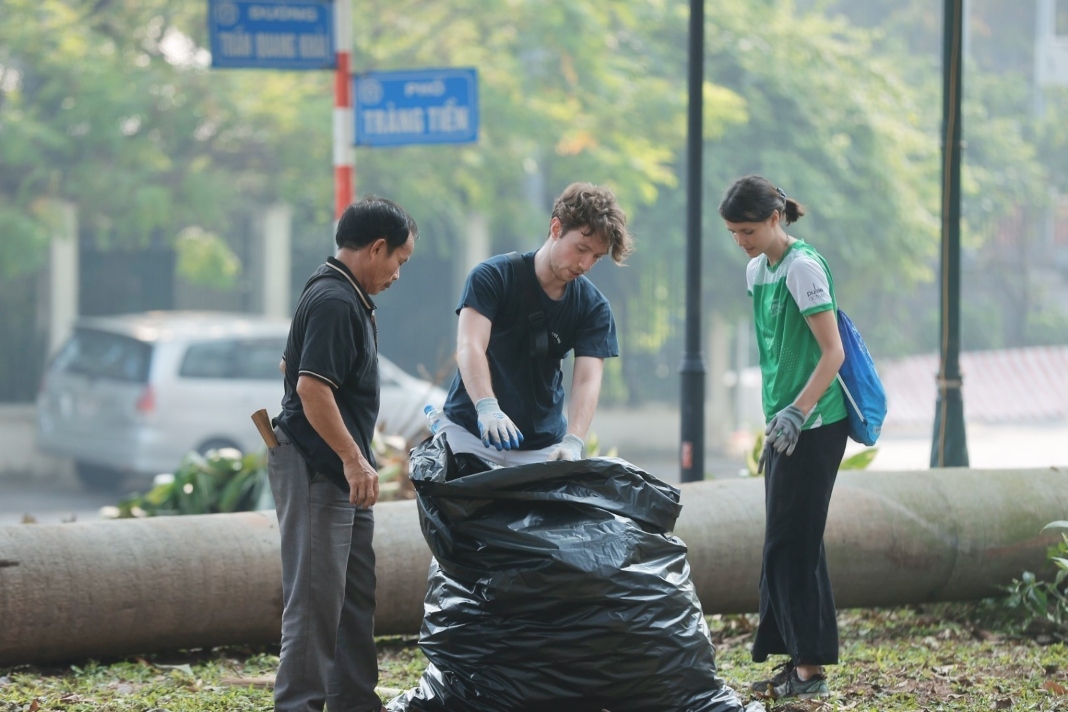
Typhoon Yagi left a trail of destruction in northern Vietnam but the affected communities are showing remarkable resilience as they are working to rebuild their homes and restore their lives.
For the 35 families of Lang Nu, life will never be the same. On September 10, a massive landslide swallowed the remote village in the upland province of Lao Cai. With 52 villagers confirmed dead and 14 others missing as of September 15, the once-thriving village with 128 residents is no longer existent.
The tragic loss of Lang Nu and other areas in the northern upland is a sobering reminder of nature’s immense power. Typhoon Yagi, the most powerful storm to hit Vietnam in 30 years, along with widespread flooding and landslides, has claimed several hundred lives, displaced thousands of people, and caused tremendous damage to infrastructure and the economy.
In the aftermath of Yagi, rescue teams have been working tirelessly to search for the missing, while local governments have been rushing to provide shelter and support for those displaced by the disaster.
A unified response
Vietnam has quickly mobilized all possible resources to coordinate rescue efforts, provide emergency aid, and implement comprehensive recovery plans in the wake of Yagi. On September 13, top officials from the Party, the National Assembly, and the Government visited the hardest-hit provinces, pledging to prioritize rescue efforts and deliver immediate relief aid to affected communities.
“Saving lives is our top priority,” said Party General Secretary and President To Lam.
Nearly 500,000 military, police and other personnel and 6,600 vehicles have been deployed to cope with the aftermath of the storm.
In recent weeks, the armed forces have played a crucial role in the disaster response. Troops have been actively involved in search and rescue operations, evacuating 374,000 people and saving 870 others across the country. They have also delivered 100 tons of rice to disaster-stricken areas, addressing urgent food shortages and providing much-needed relief.
Major retailers like Saigon Co.op, Central Retail, MM Mega Market and AEON Vietnam have joined hands to ramp up supplies and logistics operations from the central and southern regions to provide essential goods to the northern provinces and cities impacted by the devastating typhoon. Flooded and isolated communities have received critical supplies, including instant noodles, energy bars, and drinking water, from businesses and local governments, ensuring access to basic necessities for affected communities.
During a government meeting on September 15, the Ministry of Transport reported that transportation services are gradually being restored following the typhoon. While airports and seaports are back to normal operation, some railway lines and inland waterways remain disrupted. Roads, especially those in northern provinces, are facing varying degrees of damage, with over 4,177 locations of road damage found.
The Ministry of Industry and Trade has also made significant progress in restoring the power grid. All 500kV power lines have been repaired, and a large portion of 220kV and 110kV lines have been restored. Power plants have resumed operations, supplying electricity to over 5.4 million customers, or 88% of those affected by the storm.
The typhoon also caused extensive damage to communications infrastructure, with more than 6,285 base transceiver stations (BTS) down due to power outages. Telecom companies have reactivated 4,012 stations while efforts are ongoing to repair the remaining 2,273.
A post-disaster recovery plan
As of the morning of September 16, typhoon Yagi and ensuing flooding have left 292 people dead, and 38 others missing, according to the Department of Dike Management and Disaster Prevention. The storm took a devastating toll on infrastructure and agriculture, while its environmental impacts, such as deforestation and pollution, pose long-term threats to Vietnam’s development.
The Ministry of Planning and Investment has proposed financial assistance to rebuild homes and livelihoods, particularly for vulnerable households. This support will be allocated based on the extent of the damage caused by the disaster.
To accelerate economic recovery, the Government is offering tax breaks, fee reductions, loan payment delays, and new low-interest loans to impacted businesses. Key sectors like agriculture, fisheries, and tourism are set to benefit from these measures.
The Government has proposed streamlining construction permits and expediting procurement processes for emergency repairs. This approach is aimed at reducing downtime for affected industries, allowing businesses to begin repairs before obtaining formal permits.
In a televised address on September 15, Prime Minister Pham Minh Chinh described the nation’s resilience, cultural heritage, and spirit of mutual aid as key to riding out this tragedy.
He praised the critical role of the military and the police in supporting relief efforts across 26 provinces and cities in northern Vietnam. Vietnam’s collective response has demonstrated the people’s unity and determination in overcoming even the most difficult circumstances, he noted.
A friend in need is a friend indeed
In the wake of typhoon Yagi, the international community has extended much-needed support to Vietnam. Their contributions are crucial in alleviating the sufferings of the affected communities and speeding up the recovery process.
The UK government has allocated one million pounds (VND32 billion) in emergency supplies, cash assistance, and critical services. South Korea pledged US$2 million (VND49 billion) in humanitarian aid and Australia contributed three million Australian dollars in emergency relief. The U.S. also committed US$1 million (VND24.5 billion) to support Vietnam’s recovery effort.
Essential aid from ASEAN and UNICEF, including household items and sanitation supplies, has helped meet the immediate needs of affected communities. Switzerland has pledged one million Swiss francs (around VND29 billion) along with expert support, while Argentina and France have both expressed solidarity and offered aid.
Thongloun Sisoulith, Party General Secretary and President of Laos, along with his spouse and other Lao officials, made donations to the Typhoon Relief Fund of the Vietnam Fatherland Front Committee in HCMC on September 12. Additionally, Gautam Adani, chairman of Adani Group, donated US$1 million, further exemplifying global support for Vietnam.
Domestically, the Central Committee of the Vietnam Fatherland Front’s call for assistance had raised VND1,094 billion from organizations and individuals across the country as of September 15.
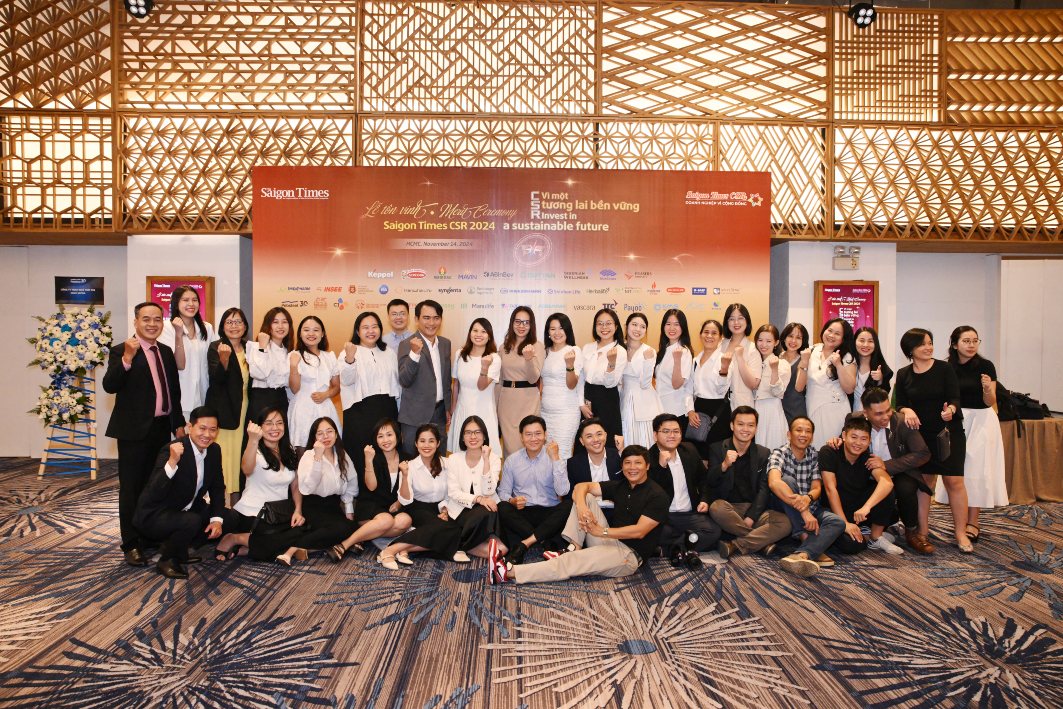
The Saigon Times Group has launched the “Saigon Times – Great Circle – Helping Students Get Back to School Post Storm” program, calling for contributions from its staff, readers and business partners. The program aims to bring school children back to school and support the recovery of schools affected by the storm and flooding.
An action call
The devastation caused by Yagi and subsequent flooding is a stark reminder of the growing threat posed by climate change. Its increasing impacts invite a comprehensive response to address both mitigation and adaptation efforts.
In northern Vietnam, communities like Lang Nu Village are beginning to recover from the storm’s destruction. The local government is committed to supporting reconstruction and providing new homes for displaced residents, with plans to complete these efforts by the end of the year, as mandated by the prime minister.
For now, the spirit of humanity and solidarity can make a tangible difference to the lives of those affected. Whether through donations, volunteering, or advocacy, community support is essential in rebuilding homes, restoring livelihoods, and keeping hopes alive.
As Vietnam works to control inflation and maintain a GDP growth target of 7%, the focus on recovery and resilience remains vital. The collective strength of the people will continue to drive these efforts, just as it has throughout history.