
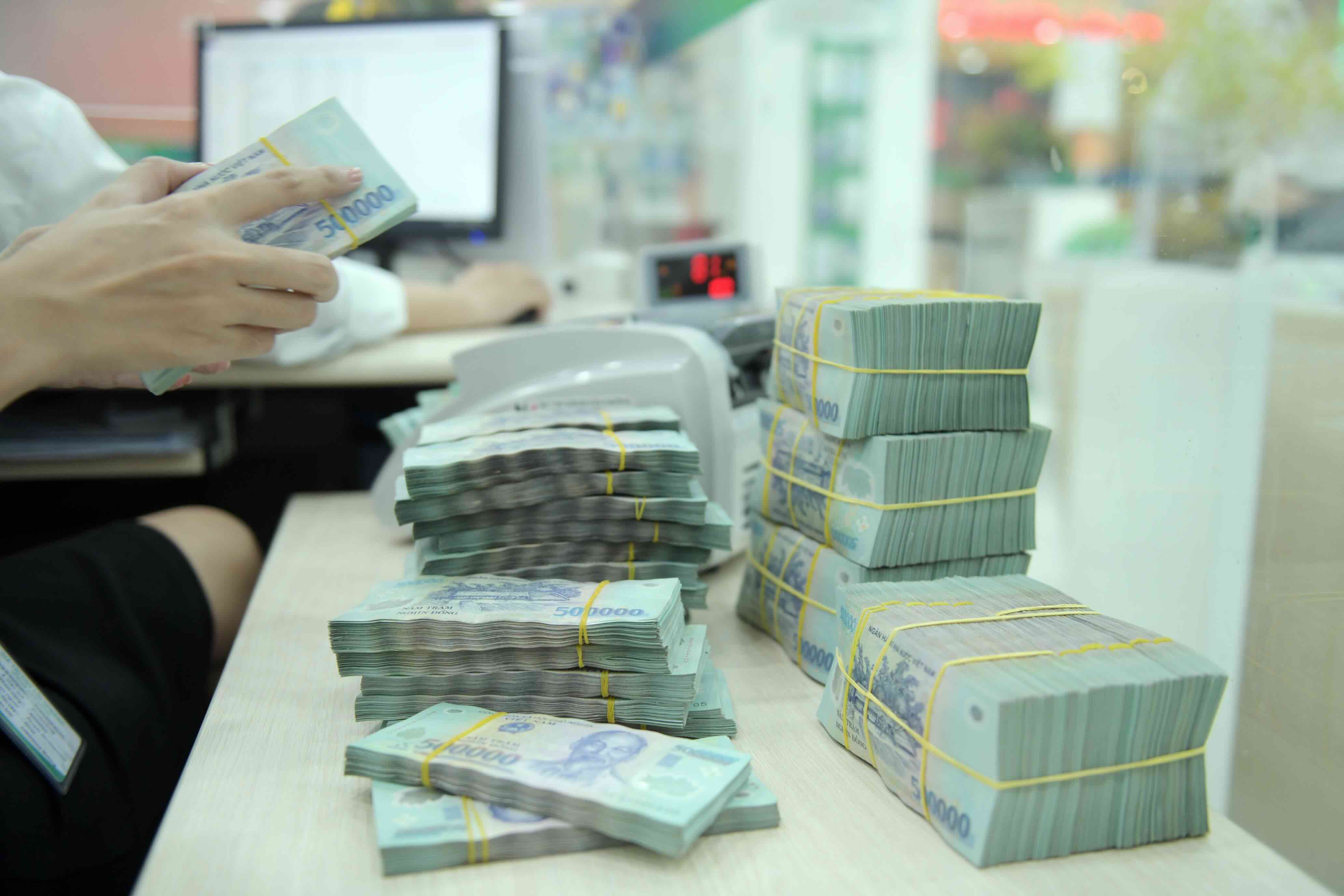



The Government has set an ambitious GDP growth target of 8% or higher in 2025 to create a strong foundation for growth in the coming years. Given that economic growth in Vietnam relies heavily on credit, maintaining low lending rates is seen as a crucial factor in supporting businesses and households. However, with the huge pressures from the high growth target, exchange rate volatility and rising bad debt, is there still room for more lending rate cuts?
Interest rate pressures According to the State Bank of Vietnam (SBV), credit growth in 2024 reached 15.08%, while the average lending rate fell by 1.72 percentage points compared to 2023. Meanwhile, capital mobilization grew by over 9.1%, with deposit rates rising by an average of 0.71 percentage point. When factoring in capital raised through bond issues—totaling over VND302 trillion—total capital mobilization by credit institutions increased by only 11.5%. This widening gap between credit growth and capital mobilization raises concerns about renewed interest rate hikes. For 2025, the SBV has set a credit growth target of 16%, subject to adjustments based on market developments. However, in the first two months of the year, pressure from economic expansion and exchange rate risks led several banks to increase deposit rates. In response, on February 24, the Government directed the SBV to strengthen oversight and inspection of credit institutions suspected of engaging in unhealthy interest rate hikes. Immediately following this directive, many banks announced deposit rate reductions in early March, with cuts ranging from 0.1 to 0.7 percentage point per annum. These reductions were primarily implemented by private banks, while state-owned banks made minimal adjustments, having already maintained stable interest rates to support economic growth. Is there still room for lending rate cuts? While the Government remains committed to controlling interest rates to support businesses and households, further reductions in lending rates in 2025 face significant challenges. One key factor is the influence of external monetary policies, particularly those of the U.S. Federal Reserve (Fed). In 2024, the Fed ended its rate-hike cycle but has been slower than expected in implementing cuts. Current projections suggest only one or two rate reductions this year, with U.S. interest rates expected to decline to 3.75–4% by year-end. This prolonged period of high U.S. interest rates piles pressure on the exchange rate between the U.S. dollar and the Vietnamese dong, complicating domestic monetary policy adjustments. While the bad debt ratio has shown signs of improvement, it remains elevated, posing another major hurdle. According to the SBV, the total bad debt on commercial banks’ balance sheets exceeded VND733.9 trillion as of December 31, 2024, a 3.4% increase against the previous year. Compounding the issue, the new Law on Credit Institutions does not fully replace the provisions of Resolution 42/2017/QH14, which had granted banks greater legal authority to seize and liquidate collateral assets. This legislative gap has slowed the settlement of bad debts, forcing banks to increase provisions, ultimately limiting their ability to reduce lending rates. Another constraint on interest rate reductions is the slower growth of mobilized capital. Although outstanding mobilized capital reached a record high, its growth rate in Market 1 (the market between banks and individuals or businesses) slowed to just over 9.1% in 2024, down from 12.5% in 2023. At the same time, many banks have been under pressure to balance terms and have turned to bond issues as an alternative funding source, with outstanding bonds totaling over VND302 trillion in 2024. If liquidity pressure rises alongside stronger credit growth, banks will find it difficult to continue lowering lending rates without eroding profitability. Coordinated measures needed for lending rate reduction Lowering lending rates and preventing a rebound will require a coordinated effort from both regulators and financial institutions. First, the SBV must continue implementing flexible monetary policy, utilizing tools such as open market operations (OMO) to ensure adequate liquidity and prevent capital shortages in the banking system. Second, targeted credit packages should be introduced, particularly for key industries such as manufacturing, processing, and small and medium-sized enterprises (SMEs). Guarantee mechanisms should be established to mitigate risks for banks, enabling them to maintain lower interest rates. Third, the early enforcement of Resolution 42/2017/QH14—granting banks the authority to seize and liquidate collateral assets—will be crucial for addressing bad debts. At the same time, the SBV must enhance supervision and encourage credit institutions to strengthen risk management. Fourth, to stabilize interest rates in the long term, Vietnam should further develop its non-banking financial market, reducing corporate dependence on bank loans. Expanding capital markets and diversifying financing options will help ease pressure on the banking system. Finally, credit institutions should be willing to accept a lower net interest margin (NIM) to support economic recovery. By assisting businesses and individuals in resuming production and operations, banks will contribute to sustainable growth.
Although the Government and the SBV are working to maintain low interest rates, further cuts in 2025 will not be straightforward. Inflation, exchange rate volatility, bad debt concerns, and liquidity constraints remain significant challenges. A balanced and flexible monetary policy, combined with structural reforms, will be essential. Meanwhile, businesses must optimize capital usage, and banks should enhance operational efficiency to ensure credit flows into productive sectors, fostering long-term economic growth.
Finally, credit institutions should be willing to accept a lower net interest margin (NIM) to support economic recovery. By assisting businesses and individuals in resuming production and operations, banks will contribute to sustainable growth.
Although the Government and the SBV are working to maintain low interest rates, further cuts in 2025 will not be straightforward. Inflation, exchange rate volatility, bad debt concerns, and liquidity constraints remain significant challenges. A balanced and flexible monetary policy, combined with structural reforms, will be essential. Meanwhile, businesses must optimize capital usage, and banks should enhance operational efficiency to ensure credit flows into productive sectors, fostering long-term economic growth.
Although the Government and the SBV are
working to maintain low interest rates, further
cuts in 2025 will not be straightforward.
Inflation, exchange rate volatility, bad debt
concerns, and liquidity constraints remain
significant challenges. A balanced and flexible
monetary policy, combined with structural
reforms, will be essential.