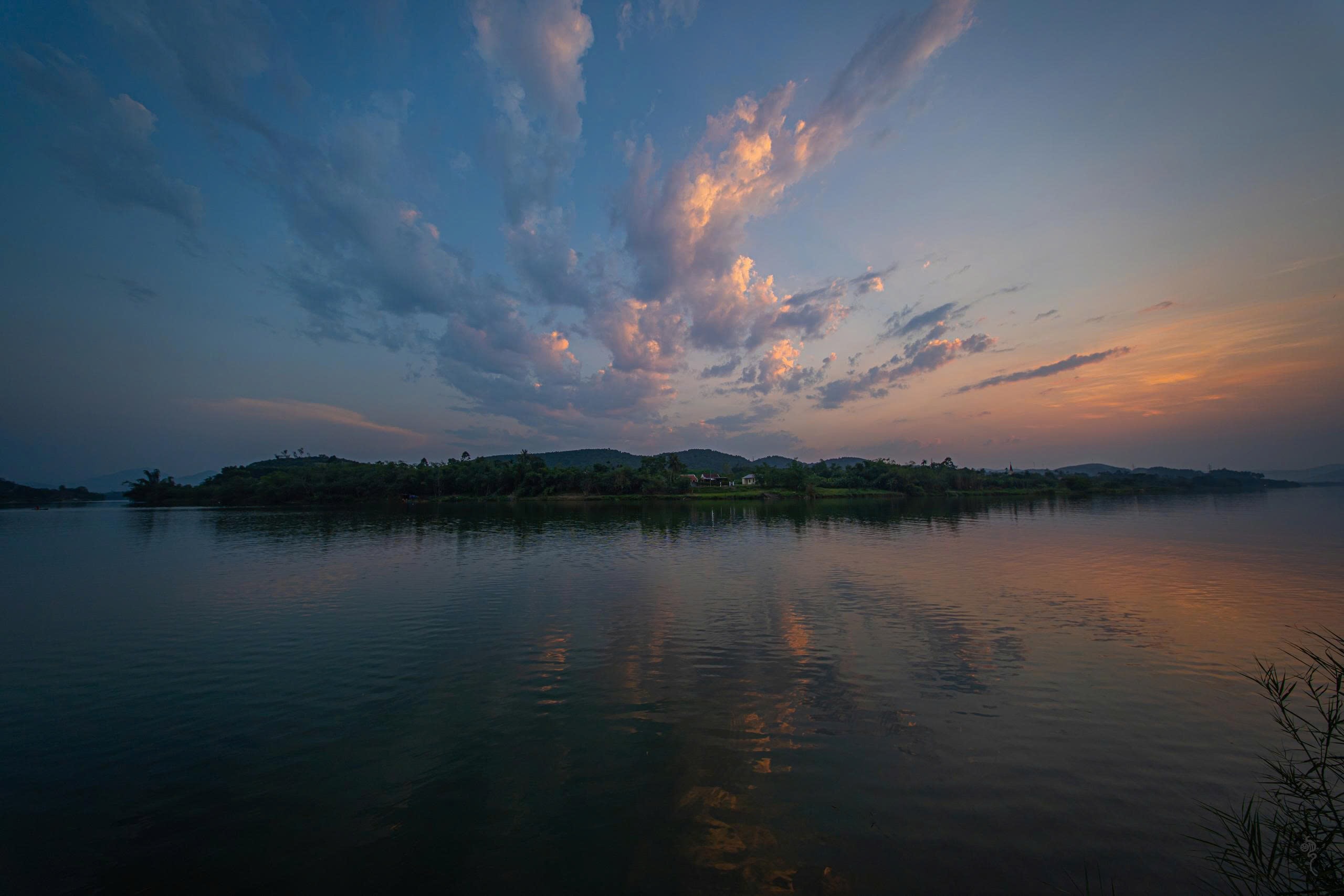
Located on the outskirts of the central city of Hue, Long Ho Village in Kim Tra Ward offers a glimpse into a community where tradition and history remain deeply rooted.
The beach morning glory (Ipomoea pes-caprae) is a hardy vine that colors wild coastlines with bell-shaped, pastel-purple flowers at sunrise.
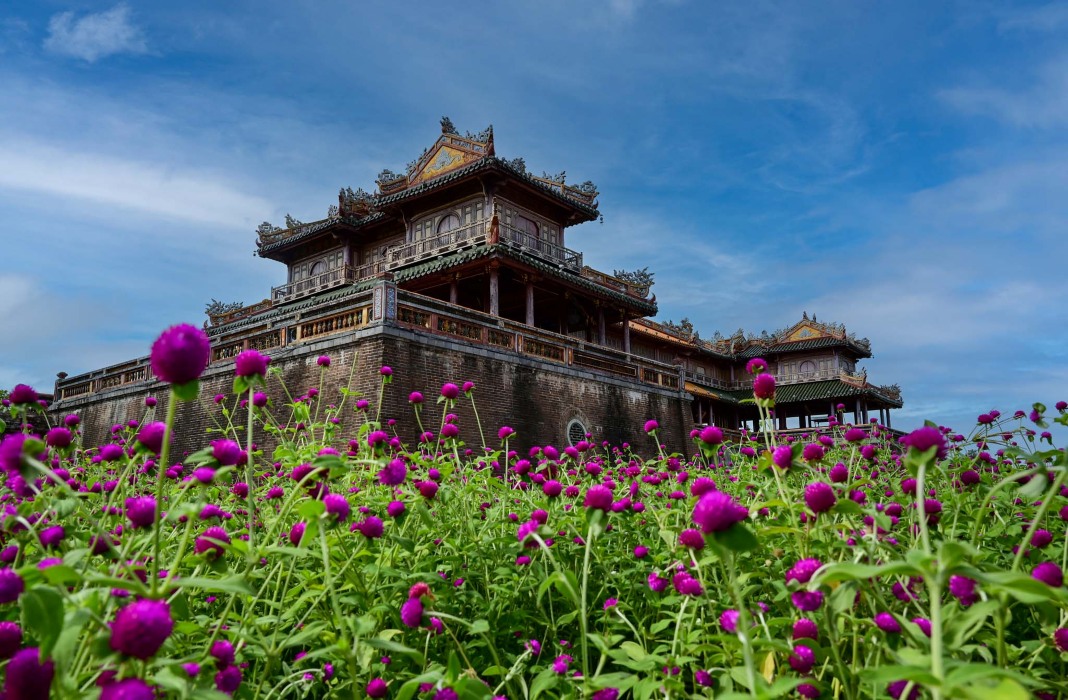
Ngu Phung Pavilion, located atop the Ngo Mon (Noon Gate) in the heart of Hue’s imperial citadel, stands as a defining example of Nguyen Dynasty architecture and a symbol of royal power.
The two-tiered pavilion features nine curved rooftops, their yellow and blue glazed tiles evoking the elegance of a phoenix’s tail. The structure takes its name, meaning “Five Phoenixes,” from the mythical birds adorning the roof, long associated with the emperor’s supreme authority.
The Five-Phoenix Pavilion, an iconic architectural masterpiece of the Hue Imperial Citadel, stands majestically against the blue sky, further enhanced by vibrant clusters of purple flowers in the foreground - PHOTO: HOANG HAI
Once a focal point of imperial life, the pavilion served as the setting for state ceremonies and military parades. Its elevated position above the fortress-like Noon Gate provided both a commanding view and a ceremonial backdrop, with the base’s five gates leading into the royal compound.
Located on the outskirts of the central city of Hue, Long Ho Village in Kim Tra Ward offers a glimpse into a community where tradition and history remain deeply rooted.