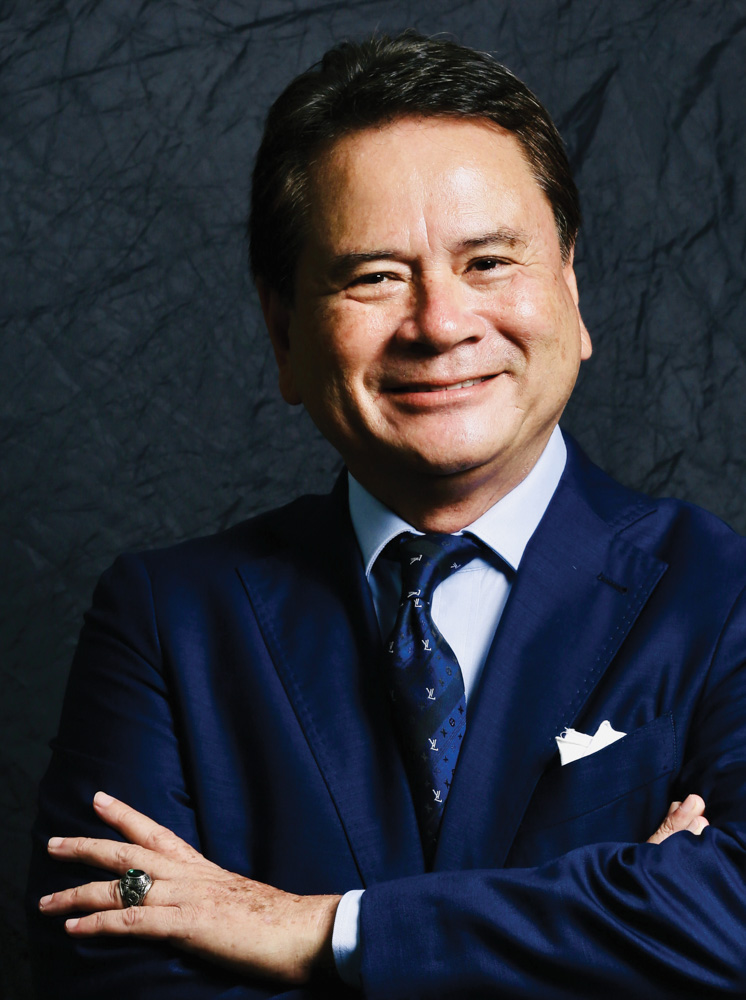
During a talk with The Saigon Times, economic expert Tran Si Chuong (*) emphasized the pivotal role of corporate culture in shaping the image of Vietnamese businesses in the global arena, influencing the national brand, and ultimately impacting labor productivity. Chuong underlines the need to establish a corporate culture aligned with global standards as there is not a distinct Vietnamese corporate culture.
The rule for corporate culture The Saigon Times: Let’s delve into the concept of culture and corporate culture. Tran Si Chuong: Culture can be categorized into two main types: public culture and private culture. Public culture represents the shared way of life that individuals within an organization or activity are expected to adhere to collectively. Private culture, on the other hand, is influenced by the specific characteristics of a particular group or locality and is relevant only to that specific group or place. In today’s era of global integration, it is imperative that our interactions and business practices align with public culture. This principle holds true universally. Within a professional environment, regardless of whether one is American, Indian, or Vietnamese, there are common expectations. These expectations include punctuality in the workplace and the ability to deliver clear and comprehensible presentations during meetings. It is essential to recognize that asserting one’s “uniqueness” as an excuse for deviations from established norms is not valid. Corporate culture is founded on international and global standards that individuals must comply with to attain a certain level of professionalism. However, the challenge we currently face is the lack of awareness and the absence of a common set of cultural standards when collaborating with foreign partners, owing to the diverse situations encountered. This lack of clarity regarding the rules of engagement places us at a disadvantage in varying circumstances. Without a clear understanding of the rules, we risk non-compliance. In international competitions, there exists a single rule that everyone must adhere to; failure to do so results in penalties. Could you elaborate on the current state of corporate culture? The fundamental rule governing corporate culture is quite straightforward and can be summarized in two key aspects. Firstly, it is imperative to abide by the law to ensure that neither you nor your partner faces legal risks, as your legal obligations may have an impact on your partner. This is the foremost and most crucial aspect. Secondly, your ability to deliver on your promises is equally important and involves two facets. The first aspect is your sincerity; you must genuinely intend to fulfill your commitments. The second aspect is your capacity and whether the business environment in which you operate allows you to fulfill your promises. To be candid, if you were to inquire with foreign chambers of commerce in Vietnam regarding their assessment of the credibility of Vietnamese businesses and entrepreneurs, their response would likely indicate a lack of high trust. When engaging with local businesses, foreign investors often find it challenging to predict whether their local partners will follow through on their commitments. Foreign investors frequently opt for the simplest approach when conducting business in Vietnam, which typically involves subcontracting or labor outsourcing. There are two primary reasons for this preference. Firstly, foreign investors believe that workers are more likely to be dedicated to their work when they are compensated at a minimal cost (salary). They also have lower expectations regarding the skills of these workers. Secondly, workers operating within a system may be less inclined to engage in activities that contravene the law, thereby increasing their predictability. However, when it comes to Vietnamese business owners, foreign investors tend to exhibit less trust and predictability. Why do Vietnamese businesses and entrepreneurs often struggle to establish high credibility with their foreign partners? I firmly believe that American, French, Italian, Japanese, or Singaporean businesses and entrepreneurs are not inherently more virtuous than their Vietnamese counterparts. In the realm of business, their intentions are essentially the same: to successfully execute projects and maintain long-term relationships. However, the challenging business environment in Vietnam presents numerous risks that hinder Vietnamese businesses and entrepreneurs from fulfilling their commitments. At times, Vietnamese businesses overpromise in an attempt to secure high-value partnerships, even if they lack the capacity to deliver on these promises. This willingness to overcommit carries a significant risk. Due to the multitude of risks within the Vietnamese business environment, local investors often shy away from making bold, long-term investments. If they lack the confidence to make long-term investments, it would be difficult to foster a culture of commitment and contribution. It is important to emphasize that we are not discussing ethics but rather the commitment to deliver, which is integral in building trust. Trust represents the core and decisive value in the business world. Building the ecosystem for corporate culture Trust in business is closely intertwined with trust in society as a whole, and the process of trust-building is interconnected. What is your view? Trust in business is undeniably intertwined with trust within society at large, and the establishment of trust follows a broader societal pattern. In the domain of economic development and politics, the concept of “social capital” plays a pivotal role. A country may lack a favorable geographical location and abundant natural resources, yet still achieve significant development if it possesses strong social capital. On the contrary, a nation with abundant resources may struggle to progress if it lacks social capital. Social capital serves as an internal factor that profoundly influences a nation’s success in development. But what exactly is social capital? It is rooted in trust among individuals and between individuals and the societal system. For instance, consider the five Asian economic “dragons” – Japan, South Korea, Singapore, Hong Kong, and Taiwan. These economies essentially began from scratch due to their historical circumstances. However, their success can be attributed to social capital, which is shaped by traditional cultural values and legislative systems. Vietnam, despite high expectations, has not experienced rapid development due to its relatively low social capital. Acknowledging this reality is crucial. To illustrate the significance of trust in business, consider the local context. Within Vietnam, there is little mutual trust in business transactions, which hampers delegation and assignment. Most major Vietnamese companies hesitate to establish effective management systems because they lack trust in delegating operational responsibilities to professionals. Creating social capital involves various factors, one of which is the sincerity of business owners. Sincerity must extend beyond foreign partners to encompass their families, employees, business associates, investors, and the broader community. By demonstrating sincerity, they can cultivate societal trust within the country, enabling them to build the capacity to engage with the global community. When venturing into the global arena, they must earn trust from others to receive commensurate value in return. Trust is the cornerstone and ultimate determinant of success in business and society alike. Building a strong corporate culture is not solely dependent on the sincere efforts of the business owner, it also hinges on the business environment, that is on the State and management authorities? Achieving and maintaining a corporate culture in line with global standards necessitates a commitment to sincerity and the ability to deliver on promises, all while taking into account the prevailing local business environment. This environment plays a critical role in determining whether businesses can actually translate their commitments into reality. Every business, regardless of its location or nature, operates within an ecosystem. This ecosystem can be likened to soil for a plant. Even if you have the best seed and provide ample water and fertilization, a good seed won’t thrive in poor soil. The quality of the soil, or in this case, the business environment, is paramount. It can either support or hinder a business’s growth.
The State plays a pivotal role in this context. As previously mentioned, local investors often lack trust in the domestic ecosystem. That’s why they hesitate to make substantial investments and are reluctant to commit fully to business partnerships, even when their capacity allows for it.
Due to uncertainty about how much they can trust local businesses, foreign investors tend to err on the side of caution, opting for the lowest level of trust and the lowest possible risk. Even domestic entrepreneurs lack confidence in the business environment, which deters them from engaging in business activities. Many have chosen to transfer substantial sums of money overseas, a situation that is deeply regrettable. While the State is actively encouraging foreign investment, the outflow of capital from local investors is a matter of genuine concern. Retaining the investments of local entrepreneurs within the country is arguably more valuable than money brought in by foreign investors.
Among the many issues plaguing national development, why are you so focused on corporate culture?
If we consider politics, the economy, society, and culture as the pillars of a country’s development, culture emerges as the core factor, the ultimate determinant. A well-structured management system ensures discipline, while a sound strategy provides direction and the ability to achieve goals. However, without a strong culture as the bedrock, even the best management and strategy would falter.
I am motivated to paint a constructive yet clear picture to highlight the need for building social capital and trust within each enterprise and the broader business community in Vietnam. This, in turn, can help establish a robust national brand for Vietnam, fostering hopes for a prosperous and strong nation.
Every business, regardless of its location or nature, operates within an ecosystem. This ecosystem can be likened to soil for a plant. Even if you have the best seed and provide ample water and fertilization, a good seed won’t thrive in poor soil. The quality of the soil, or in this case, the business environment, is paramount. It can either support or hinder a business’s growth.
The State plays a pivotal role in this context. As previously mentioned, local investors often lack trust in the domestic ecosystem. That’s why they hesitate to make substantial investments and are reluctant to commit fully to business partnerships, even when their capacity allows for it.
Due to uncertainty about how much they can trust local businesses, foreign investors tend to err on the side of caution, opting for the lowest level of trust and the lowest possible risk. Even domestic entrepreneurs lack confidence in the business environment, which deters them from engaging in business activities. Many have chosen to transfer substantial sums of money overseas, a situation that is deeply regrettable. While the State is actively encouraging foreign investment, the outflow of capital from local investors is a matter of genuine concern. Retaining the investments of local entrepreneurs within the country is arguably more valuable than money brought in by foreign investors.
Among the many issues plaguing national development, why are you so focused on corporate culture?
If we consider politics, the economy, society, and culture as the pillars of a country’s development, culture emerges as the core factor, the ultimate determinant. A well-structured management system ensures discipline, while a sound strategy provides direction and the ability to achieve goals. However, without a strong culture as the bedrock, even the best management and strategy would falter.
I am motivated to paint a constructive yet clear picture to highlight the need for building social capital and trust within each enterprise and the broader business community in Vietnam. This, in turn, can help establish a robust national brand for Vietnam, fostering hopes for a prosperous and strong nation.
Reported by Quoc Hoc
(*) Tran Si Chuong is a consultant for business development strategy and management and senior partner at 3Horizons (UK)