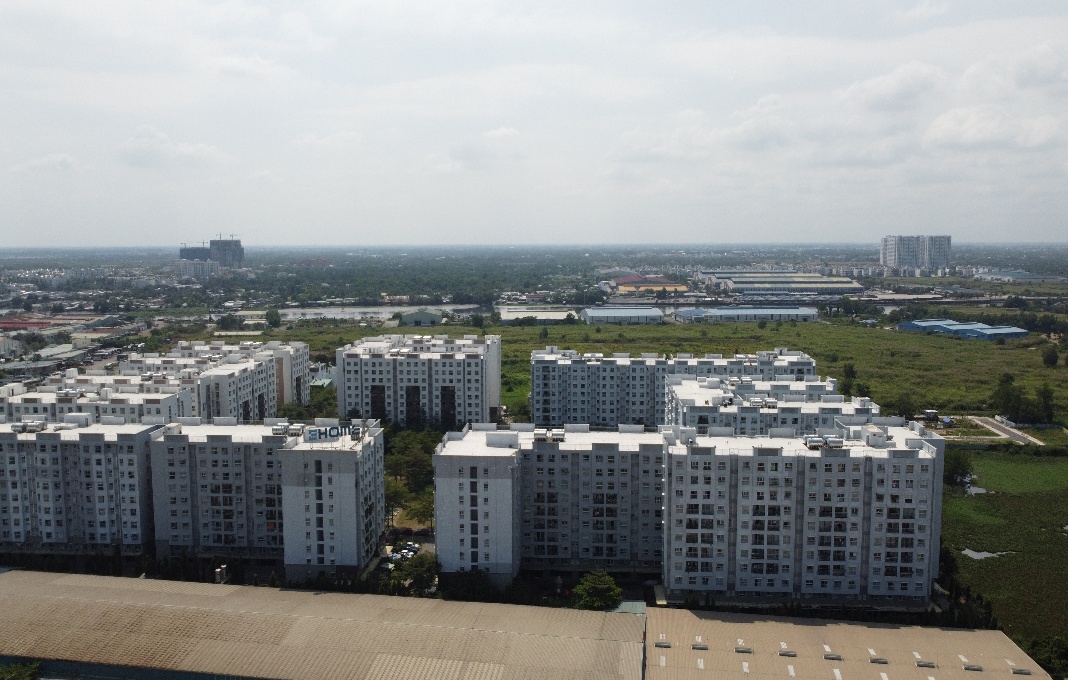
In urban areas, the need for housing often goes hand in hand with the necessity for car parking spaces. The allocation of parking spaces within condominiums has become a complex issue, frequently giving rise to disputes. This article delves into the realm of the “basement dispute” and examines whether the recently approved amendments to the Housing Law by the National Assembly can offer a solution.
In today’s world, many affluent families opt for high-rise apartments over landed homes. Most of these families also own cars, which are essential for various aspects of their lives, from daily commutes to family activities. They require not only a well-appointed apartment but also a dedicated parking space within their condominiums.
However, acquiring a parking space is not a straightforward matter. Parking spaces within condominiums serve as essential amenities for apartment dwellers, but they are also a lucrative source of revenue for condo developers. Disputes over car parking spaces between developers and residents have become increasingly common. These disputes encompass issues related to parking space ownership, location, lease or purchase costs, and lease durations. What are the shortcomings in the current legal framework that have given rise to such disputes?
Some shortcomings in the current law
Firstly, there is ambiguity concerning the ownership of car parking spaces in condominiums. According to point b in Clause 1 of Article 101 of the 2014 Housing Law, car parking spaces can belong to the “management right” but not the “ownership right” of the developer. However, Clause 4 in Article 8 of Circular 02/2016/TT-BXD issued by the Ministry of Construction stipulates that car parking spaces can pertain to both the “ownership and management” rights of the developer. This contradiction between Circular 02/2016, a sub-law document, and the Housing Law raises questions about the extension of rights for the developer. The inconsistency in these legal documents can lead to confusion and difficulties in implementation.
In practice, there have been cases where developers have used parking spaces in condominiums as collateral for bank loans, sold them to condo residents, or obtained certificates for them from the Department of Natural Resources and Environment. A specific case, Law 51/2021/AL, determined that developers can indeed claim ownership of car parking spaces in condominiums. Developers often assert their ownership rights and may not be willing to negotiate on sale or lease prices. These disputes have caused frustration for condo residents and have even resulted in legal action. Therefore, it is crucial to consider whether the 2014 Housing Law should explicitly recognize developer ownership of car parking spaces in condominiums to protect their rights and provide clarity.
Additionally, if the car parking space falls under the management right of the developer, the cost of construction cannot be included in the apartment’s price (Article 101.1.b of the 2014 Housing Law). However, the price calculation remains known only to the developer, leaving condo residents with limited information. Typically, developers do not make substantial investments in car park basements and only recoup the capital through parking services over many years. Moreover, apartment sale contracts issued before Decree 02/2022/ND-CP came into effect do not clearly state whether the apartment price includes the cost of parking space construction. This lack of transparency has led apartment dwellers to believe that developers have included the construction cost but have not disclosed it, resulting in heightened disagreements between developers and residents.
Lastly, the current regulation stipulates that car parking spaces cannot be under the ownership of apartment buyers or the management right of the developer (Article 101.1.a of the 2014 Housing Law). However, the land law has progressively extended the rights of land users. This raises questions about whether the current regulation, which only recognizes the ownership of car parking spaces by apartment buyers or the management right of the developer, is in line with the rights of land users and the essence of the law.
Another critical issue regarding car parking spaces in condominiums is the lack of transparency regarding the purchase/lease price and the allocation of parking spaces. Apartment dwellers often do not receive this information upfront, and in some cases, the details are unilaterally changed by the developer’s decision, leading to numerous disputes. Cases in point include Five Star Garden in Thanh Xuan District, Hanoi, Him Lam Cho Lon in District 6, HCMC, and the EverRich Infinity in District 5, HCMC.
It was not until the issuance of Decree 02/2022/ND-CP that Form 1, which stipulates that developers must include information about car parking spaces in the appendix of the apartment sale contract, became available. If developers do not use this specific form, the signed contract is deemed invalid and cannot serve as the basis for granting ownership certificates. However, Decree 02/2022/ND-CP is a sub-law document, and its validity is tied to the old housing law, the 2014 Housing Law. Therefore, it remains unclear whether its regulations still apply following the approval of the new Housing Law in November 2023.
In theory, the principle of prioritizing car parking spaces for apartment dwellers is enshrined in Article 101.1.b of the 2014 Housing Law and Article 8 of Circular 02/2016/TT-BXD. However, in practice, some developers intentionally construct a limited number of car parking spaces, creating an imbalance in supply and demand that drives up the prices for parking space sales and leases. These prices set by developers remain fixed, regardless of whether apartment buyers can afford them or not. Negotiations between developers and apartment dwellers are often overlooked or ignored. The principle of giving priority to apartment dwellers in purchasing or leasing car parking spaces appears to be in place but is, in reality, unworkable. When no more apartment dwellers are interested in purchasing the car parking spaces, developers have the freedom to sell these spaces to non-residents at their preferred prices.
The 2023 Housing Law: new relevant points
On November 27, 2023, the National Assembly approved the 2023 Housing Law, set to take effect from January 1, 2025. The revised law, specifically Article 144, introduces several significant changes compared to Article 101 of the 2014 Housing Law, focusing on car parking spaces in condominiums.
Firstly, developers are now mandated to publicly disclose the construction costs of car parking spaces. This requirement aims to enhance transparency and prevent disputes between developers and apartment buyers, as those responsible for the costs are the owners of the parking spaces.
Secondly, developers must clearly state the terms of car parking space purchase or lease in the apartment sale contract or through a separate agreement. This provision intends to eliminate the possibility of verbal agreements between developers and apartment buyers, ensuring clear documentation.
Thirdly, developers are obligated to provide apartment owners with detailed drawings and specific car parking space assignments based on approved documents. This step is crucial for apartment owners to define their parking areas accurately and to avoid information discrepancies between developers and owners.
Fourthly, the role of the State is reinforced in determining the maximum price for car parking services in condominiums. Currently, the highest monthly parking fees for cars with up to nine seats in HCMC and Hanoi are VND5 million and VND4 million, respectively. This approach reflects the government’s commitment to respecting the freedom of agreement between parties and allowing the market to self-regulate.

Lastly, the management and operation of car parking spaces will follow the regulations for apartment management and use. This integration streamlines the management and operation process, offering a consolidated approach. The Ministry of Construction is expected to provide further details in later sub-law documents, as Article 144 retains certain ambiguities from Article 101 of the 2014 Housing Law.
These include the “management right” of developers, limitations on common ownership of car parking spaces for apartment dwellers, and the principle of priority for apartment owners. Additionally, it remains to be seen whether information about car parking spaces in condominiums will be explicitly included in apartment sale/lease-purchase contracts once the 2023 Housing Law takes effect.
Point b in Clause 1 of Article 101 of the 2014 Housing Law outlines the following provisions regarding car parking spaces for apartment owners:Individuals who purchase an apartment or buy/lease other areas within the condominium have the option to buy or lease car parking spaces.If they choose not to buy or lease the parking space, it remains under the management of the developer.Importantly, the developer is not allowed to include the construction cost of the parking space in the sale or lease-purchase price of the apartment.The allocation of car parking spaces in the condominium must adhere to the principle of giving priority to apartment owners before considering spaces for public parking.