The year 2025 drew to a close with significant reform milestones. Against a backdrop of global turbulence driven by geopolitical conflicts and trade fragmentation, Vietnam remained steadfast in pursuing foundational reforms, strengthening internal capacity, and restructuring its development space—thereby laying the groundwork for acceleration in 2026.
The year 2025 unfolded amid sharp international volatility, marked by rising trade protectionism, prolonged geopolitical conflicts, and continued disruptions to global supply chains. These factors disrupted logistics, pushed up transportation costs, and deepened fragmentation in international trade. In response, multinational corporations accelerated the restructuring of their supply chains, prioritizing stable and reliable destinations.
Domestically, climate change and natural disasters—particularly storms and floods—continued to affect production, infrastructure, and livelihoods. This context underscored the need to maintain macroeconomic stability, intensify reforms, and enhance the economy’s resilience and self-reliance.
Reform milestones in 2025
Amid widespread uncertainty, 2025 stood out for Vietnam’s deep and strategic reform efforts. Rather than relying on short-term, reactive measures, Vietnam consistently pursued foundational reforms, focusing on institutional improvement, restructuring the development space, and strengthening the economy’s endogenous capacity.
On the external front, Vietnam adhered to an independent, self-reliant, flexible foreign policy while proactively integrating into the global economy. In the face of rising trade protectionism, the establishment and upgrading of comprehensive strategic partnerships helped Vietnam expand international cooperation and reinforce confidence amid the repositioning of global supply chains. As a result, Vietnam continued to attract high-quality foreign direct investment, particularly in technology, clean energy, and advanced manufacturing.
Domestically, institutional reform was accelerated through a series of foundational policy decisions. The merger of provincial-level administrative units and the consolidation of a two-tier local government model were not only aimed at streamlining the apparatus and reducing operating costs, but—more importantly—at expanding development space, addressing resource fragmentation, and improving the effectiveness of regional coordination. This represents a long-term step toward enhancing institutional productivity and national governance capacity.
At the same time, a series of major resolutions on private sector development, international economic integration, legal system improvement, science and technology development, innovation, healthcare, and education were issued and swiftly institutionalized. The coherence and consistency of policy orientation created a synergistic effect, allowing reforms to move beyond isolated measures and become systematic action programs.
A key milestone in economic reform was the clear affirmation of the private sector as a central driving force of the economy. Regulatory reform shifted from ex ante controls to ex post supervision, facilitating business entry and expansion. In parallel, tax policy for household businesses was reformed by abolishing lump-sum taxation and moving toward self-declaration, enhancing transparency and fairness while helping curb counterfeit and substandard goods. Combined with corporate income tax exemptions for the first three years and support in credit access, premises, and technology, these reforms encouraged household businesses to transition into formal enterprises and fostered innovative startups.
In public investment, implementation methods were renewed to emphasize transparency, clear accountability, and a focus on key projects with strong spillover effects, leading to a marked improvement in disbursement progress. Numerous large-scale projects were launched, and urban development projects based on the transit-oriented development (TOD) model—concentrating growth around public transport hubs—were rolled out. Alongside this, public–private partnership (PPP) mechanisms and infrastructure-focused credit packages were promoted, both stimulating private sector participation and reducing transaction costs while enhancing the economy’s total factor productivity.
The real estate market also saw gradual resolution of legal bottlenecks, helping to unblock capital flows, restart projects, and generate positive spillovers to construction, materials, and related services. More importantly, this process contributed to stabilizing market sentiment, restoring legal discipline, and laying the foundation for healthier and more sustainable long-term market operations.
Macroeconomic management in 2025 continued to demonstrate flexibility and proactiveness. Monetary policy was administered with selectively expanded credit, prioritizing production, business activities, and high value-added sectors. The exchange rate was managed flexibly to support growth while maintaining macroeconomic stability and financial market confidence.
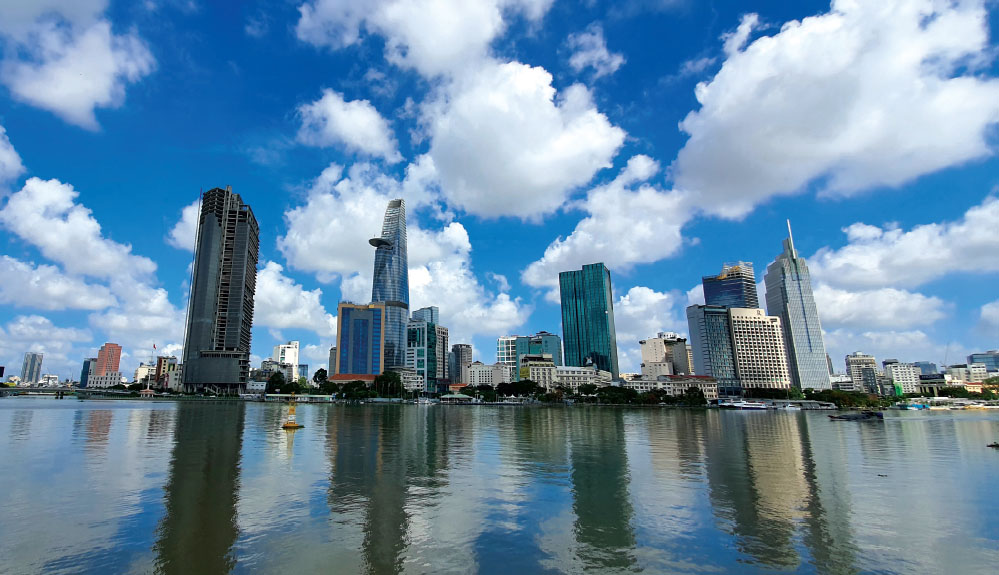
Another long-term strategic hallmark of 2025 was the orientation to develop HCMC and Hanoi into global cities. Granting special mechanisms with a higher degree of autonomy in finance, budgeting, and investment has opened up new institutional space, enabling the two economic locomotives to strengthen their roles as financial centers, innovation hubs, and international connectors, thereby laying the groundwork for new growth drivers from 2026 onward.
Alongside economic reforms, key social policies continued to be implemented decisively. Programs for social housing development and the eradication of temporary and dilapidated housing not only improved living conditions for the population but also helped stimulate aggregate demand and support economic growth.
These comprehensive reforms in 2025 enabled Vietnam to maintain macroeconomic stability, keep inflation under control, stabilize the exchange rate, and reinforce market confidence. Growth of around 8% reflected effective economic management amid numerous challenges, affirming reform as the central driving force and laying the foundation for a period of higher and more sustainable growth ahead.
Creating momentum for acceleration in 2026
Entering 2026, the global economy continues to face significant uncertainty due to trade fragmentation, intensifying technological competition, and unpredictable policy adjustments by major powers. In this context, development advantages increasingly favor countries with strong institutions, effectively reorganized development space, and reinforced endogenous economic capacity.

Vietnam steps into 2026 on a reform foundation consolidated in 2025. The state management apparatus has become more streamlined, while regional development space has become more cohesive following the reorganization of provincial-level administrative units. This is expected to reduce compliance costs, improve the investment environment, and allow businesses to focus more on production and innovation. High-quality investment capital continues to flow into technology and advanced manufacturing, contributing to higher productivity and competitiveness. Against this backdrop, the National Assembly’s approval of a 10% growth target for 2026 reflects strong determination to place the economy on a fast-growth trajectory that is increasingly quality-driven.
Nevertheless, structural challenges remain: labor productivity, workforce quality, and innovation capacity are still limited; supporting industries are developing slowly, with low localization rates; digital infrastructure remains uneven; pressures on transport, logistics, energy, and urban space are mounting; and risks persist in the real estate market as well as in policy implementation discipline.
In this context, raising localization rates and increasing domestic value added has become an urgent requirement. New-generation free trade agreements and expanded comprehensive strategic partnerships offer greater access to high-standard markets, enabling Vietnamese goods to integrate more deeply into global value chains.
The year 2026 also opens up clear prospects for digital transformation across the entire economy. Interconnecting shared data platforms and national databases enhances governance efficiency, improves forecasting capacity, and significantly reduces administrative costs for businesses. As artificial intelligence, big data analytics, and digital platforms are more deeply applied in production, logistics, finance, and trade, overall economic productivity can be raised in a sustainable manner, laying the foundations for a growth model based on knowledge and innovation.
At the same time, transport and logistics infrastructure continues to serve as a key growth driver. Interregional expressways, the North–South corridor, and urban ring roads are being accelerated, helping to reduce costs and expand development space. Upgrading the Cai Mep–Thi Vai and Lach Huyen ports, along with the deployment of free trade zones, strengthens Vietnam’s position as an important logistics hub amid the restructuring of global supply chains.
Notably, the orientation to develop HCMC and Hanoi into global cities, together with the implementation of special mechanisms approved by the National Assembly, opens up new room to attract international financial flows, high-quality human resources, and high value-added goods and services. As these two cities gradually meet international standards in institutions, infrastructure, finance, human capital, and quality of life, Vietnam has the opportunity to elevate its standing and become a more attractive destination within the global economic network.
The operation of the HCMC International Financial Center from 2026 represents a strategic milestone in upgrading Vietnam’s growth model. With an international-standard legal framework and a competitive institutional environment, Vietnam has the opportunity to expand cross-border capital mobilization channels, attract global financial institutions, and support enterprises in accessing long-term capital at reasonable costs. This will serve as a pillar for developing strategic infrastructure, high-end services, and enhancing Vietnam’s regional financial position.
In parallel, the real estate market is expected to recover more clearly as legal bottlenecks are resolved, helping to unblock capital flows, improve liquidity, and restore market confidence. Linked to the HCMC International Financial Center, real estate and infrastructure will gain access to longer-term, more transparent capital channels, reducing reliance on bank credit and laying the foundation for higher-quality growth.
Thanks to the convergence of reforms, digital transformation, infrastructure development, real estate recovery, and capital market expansion, Vietnam’s economic outlook for 2026 is assessed positively. The 10% growth target is expected to spur innovation, usher in a phase of growth driven by productivity and internal strengths, and lay the groundwork for sustainable development and the country’s progress toward high-income status.