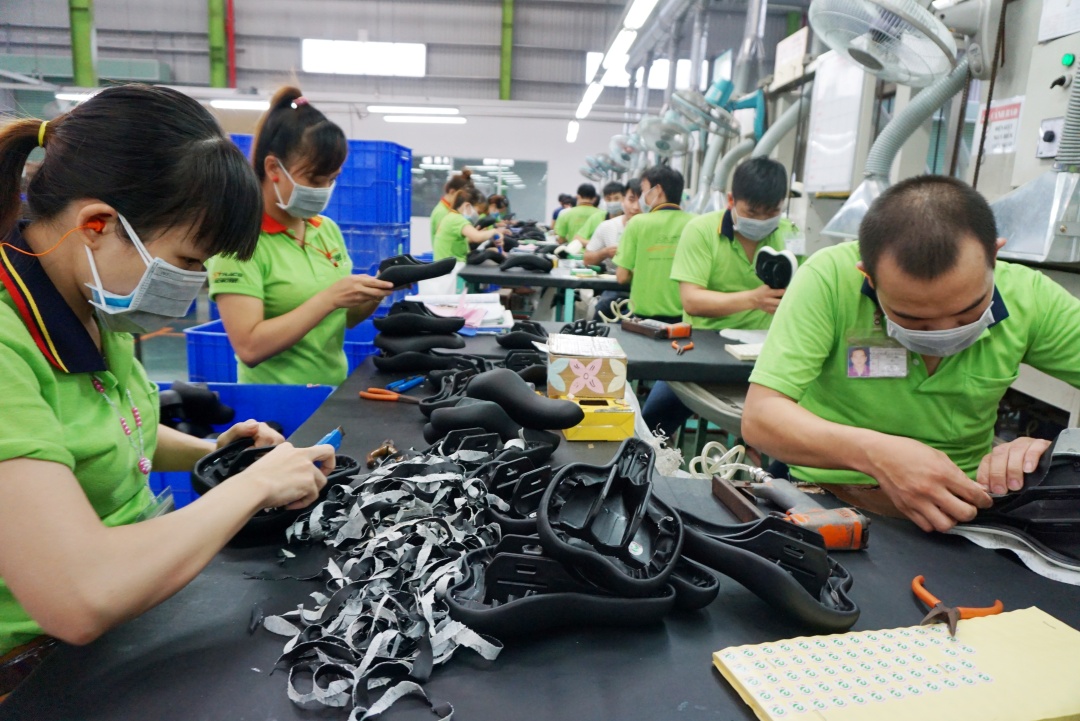
Factories keep expanding but lack workers. Though labor is abundant, skills are weak and commitment low. The issue of surplus yet poorly skilled manpower is not new and factories struggling to find suitable staff is even older.
In early 2025, northern Vietnam’s industrial zones saw a paradox: factories multiplied, production lines were set up, yet workers were scarce. Within six months, three major FDI manufacturers hired about 8,000 unskilled laborers. The scramble for manpower became a race not only between companies and workers, but also among recruiters themselves.
Yen Dao, senior manager at Manpower Group Vietnam, called today’s labor market ‘a war to attract every worker.’ Speaking at METALEX Vietnam 2025 in HCMC, she noted that businesses are offering unprecedented benefits to fill production lines. In northern Vietnam, workers now enjoy far better incentives than before: some firms pay VND500,000 just for attending an interview, while monthly allowances of VND2–3 million on top of salaries have become standard during peak hiring season.
By Q3 2025, Vietnam’s workforce aged 15 and above reached 52.3 million, continuing its upward trend. Of these, 33.5% were employed in industry and construction—second only to agriculture—highlighting the vast scale of production-sector employment.
According to Vieclam24h, recruitment demand in production, processing, and manufacturing rose 41% in early 2025 compared with last year. While unskilled workers made up 44% of demand, many firms still struggled to find laborers capable of operating machinery, monitoring processes, and working stable shifts.
The International Labor Organization (ILO) reports that over 35% of Vietnam’s jobs are tied to global supply chains. With nearly half the workforce in production, FDI remains the key driver of labor demand—yet also exposes the market to risks from global economic volatility.
In the first 11 months of 2025, Vietnam saw US$23.6 billion in FDI disbursed—the highest in five years. Total newly registered, adjusted, and share-purchase capital reached US$33.69 billion, up 7.4% year-on-year, with processing and manufacturing accounting for 60%. Driven by the ‘China + 1’ supply chain shift, Vietnam has become a priority destination, boosting both workforce numbers and demand for skills, discipline, and long-term stability.
Change in human resources approach
According to Talentnet, traditional talent‑attraction strategies from five years ago no longer work. Vietnam’s production‑sector labor market is now pushing both domestic and foreign enterprises to rethink their HR approach.
Talentnet’s early‑2025 report highlighted three major challenges for FDI enterprises, starting with worker retention. About 65% of surveyed firms cited this as a serious issue, as voluntary resignations drive up replacement costs and reduce productivity. The root cause lies in shifting worker expectations: 83% now prioritize job satisfaction and 69% value work‑life balance—qualities often missing in traditional production environments.
Second, the shortage of skilled workers: 45% of FDI firms see this as a major challenge, with the gap threatening current productivity and long‑term innovation. By 2030, the production sector could face 2.1 million unfilled jobs.

Third, limited access to training and re‑training: 39% of FDI enterprises reported difficulty finding suitable programs. Domestic and joint ventures face the same issue, compounded by resource constraints.
Talentnet noted similar challenges in domestic firms, stressing that the absence of clear promotion roadmaps often drives technical staff to quit. Around 75% of workers stay longer when such pathways exist, yet only 29% of domestic enterprises have them compared with 45% of FDI firms. As a result, recruitment cycles for technical roles in domestic companies are typically 20% longer.
ILO Vietnam warned that rapid population aging will shrink the labor force, with senior workers leaving and valuable knowledge at risk of being lost—something new recruits cannot easily replace. Meanwhile, a Manpower Group survey of over 10,000 outsourced workers found 63% prioritize salary and benefits, especially support for housing, welfare, and children’s education amid rising living costs.
Yen Dao noted that workers value proximity to housing, clear promotion paths, a friendly environment, and personal fit. Yet business demand and worker preferences remain mismatched: firms need technical staff, customer service, and production workers, while candidates favor transport and sales jobs. Training gaps deepen the problem—the market requires nearly 40% of workers with vocational or college skills, but annual graduates supply less than 20%. For experienced, higher‑skilled roles, demand is 66.9% while supply reaches only 52.8%.