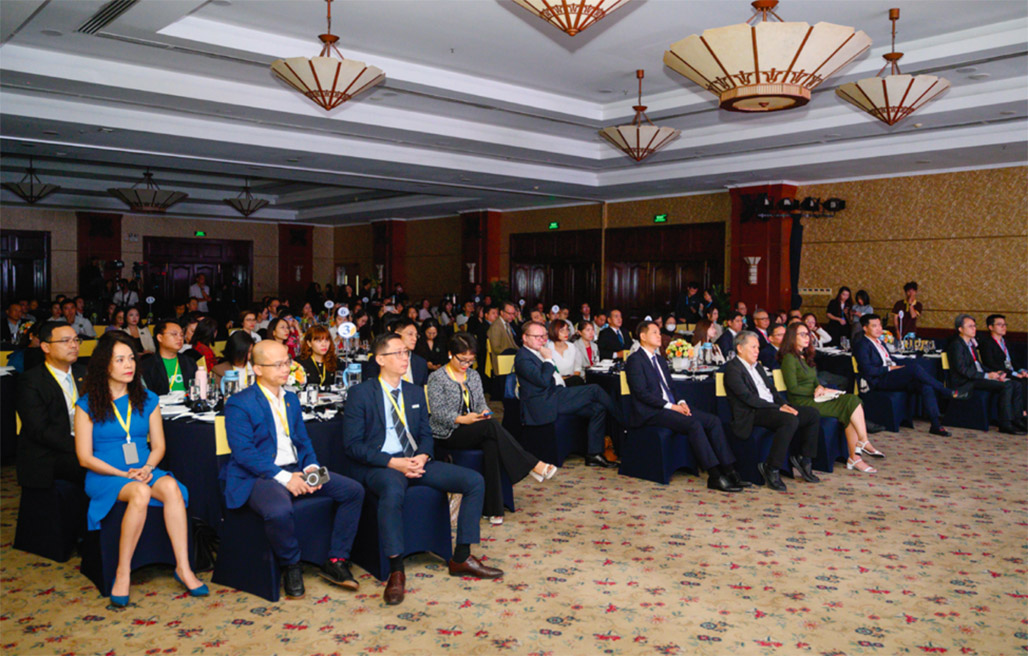
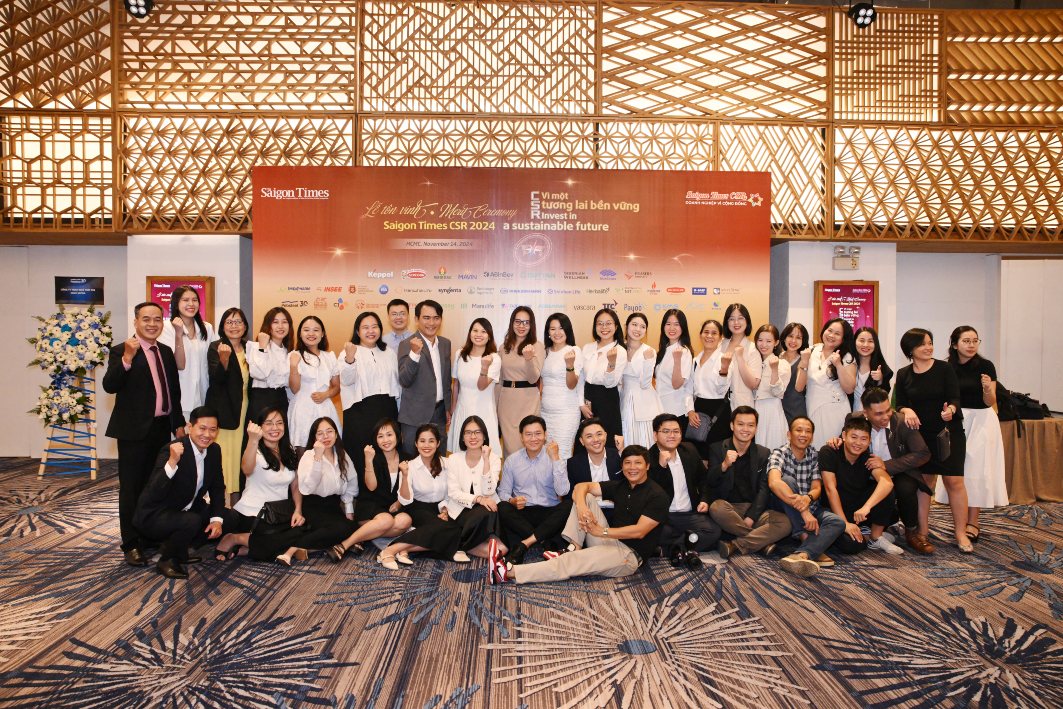
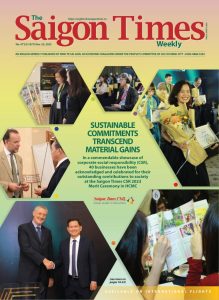
In pursuit of sustainable development, it is vital to recognize that sustainability is not a given but rather a result of concerted efforts from various stakeholders with a shared objective. This view was shared by panelists at the “Sustainability and Beyond” seminar, held on November 15 by the Saigon Times Group as part of the Saigon Times CSR 2023 Merit Ceremony.
A defining moment
Corporate social responsibility (CSR) has risen to unprecedented prominence, capturing the attention of businesses committed to sustainable development. Embracing sustainability is seen as a strategic imperative, offering companies a means to navigate an uncertain landscape marked by imminent threats like climate change, pollution, and the depletion of natural resources.
The “Sustainability and Beyond” seminar, held on November 15 by the Saigon Times Group as part of the Saigon Times CSR 2023 Merit Ceremony, underscored the critical role of sustainability in business operations. Experts and business leaders emphasized how sustainability can enhance resilience against immediate and long-term challenges, ensuring consistent growth and insulating businesses from market fluctuations.
Despite the growing importance of sustainability, challenges persist. Establishing a well-defined framework for the effective implementation and measurement of CSR activities is a pressing need. Transparency and accountability in the communication of community efforts also remain limited.
The prevalence of short-term economic considerations often hampers substantial investments in community programs, with immediate financial gains taking precedence over long-term sustainability. These challenges highlight the intricate hurdles that organizations face in their pursuit of meaningful CSR initiatives.
Recognizing the necessity of multifaceted approaches involving all relevant stakeholders is a growing trend among companies committed to promoting sustainable development. Engaging and monitoring stakeholders enable businesses to identify and prioritize social and environmental concerns requiring attention while devising solutions that meet their demands. The role of stakeholders is paramount in organizational progress, as they can raise awareness of sustainability challenges and inspire others to join the cause.
Sustainability is inherently a collaborative effort, rooted in the concept of sustainable stakeholders.
Customers are the driving force
Customers play a pivotal role in the journey toward sustainability, as highlighted in the recently unveiled KPMG customer experience report. An overwhelming 93% of customers now opt to pay for services based on environmental, social, and governance (ESG) criteria.
For businesses, this presents a significant challenge in navigating the complex dynamics with consumers. Companies are tasked with adapting to evolving demands for products and services. As consumers increasingly seek products that prioritize both health and environmental considerations, businesses are compelled to produce offerings that align with these heightened expectations.
Joseph Low, president (Vietnam) of Keppel Corporation’s Real Estate sector, detailed the company’s commitment to ensuring stakeholder satisfaction, including customers, consumers, buyers, and tenants, across its projects, which include iconic developments like Saigon Center and the Estella in downtown HCMC.
At Keppel, the responsible design value integrates operating principles related to livability, quality, aesthetics, and sustainability into its products and services. Whether it is condominiums or office spaces, the focus is on creating environments that promote wellness and overall community health.
Low emphasized, “We believe that getting the product right starts at the design stage.” Failing to design products correctly can lead to failure down the road.
Keppel conducts regular customer satisfaction surveys to gain insights into customer needs and preferences. This approach enables continuous improvement in the quality and reliability of offerings, ensuring that customer expectations are not just met but exceeded.
In 2023, the company saw a significant 16% year-on-year improvement in its Net Promoter Score (NPS) surveys, which involved customers at various Keppel retail and hospitality developments, providing valuable insights into the brand’s market reputation.
Kaneda Hiroki, general director of Acecook Vietnam, stressed that long-term objectives cannot overlook the importance of establishing consumer trust and support. He emphasized the need to define a company’s purpose in society, especially in light of growing customer expectations regarding product origin, innovation, and quality.
Acecook Vietnam’s business philosophy revolves around bringing happiness to consumers, alongside a commitment to society, partners, employees, and their families. The food manufacturing firm places a strong emphasis on a comprehensive quality control system, ensuring that products meet high standards from factory production to distribution.
Le Anh, sustainability director of DUYTAN Plastic Recycling, noted a significant uptick in the adoption of recycled plastic within the business sector. DUYTAN’s customers, primarily food and beverage companies, are increasingly embracing environmentally friendly practices, even in the face of stricter regulations and higher operational costs. Market leaders are taking the lead in these sustainability efforts.
Workforce serves as the backbone
It is imperative to recognize that businesses wield significant influence on society through their workforce. Presently, commitments to sustainable business practices are a pivotal factor for job seekers when choosing employment opportunities, especially when sustainability is a core driver of growth.
Among the various job prospects, applicants now assess not just financial aspects but also consider growth potential and the chance to make a meaningful societal contribution.
John Ditty, managing partner of KPMG Vietnam, underscores that people constitute the primary pillar of a business’s sustainability agenda, followed by the planet and prosperity. “This is our aspiration in making business commitments.”
KPMG places a strong emphasis on cultivating an environment that not only attracts but also retains talent. The global professional services firm has undertaken efforts to understand the unique human resources landscape in Vietnam and other countries. Their goal is to provide an open and inclusive workplace where employees not only want to work but also wish to stay.
Le Hong Minh, general director of i.Value Corporation, highlights the untapped potential of human resources within the business sector. She asserts that societal development is intricately connected to the effective utilization of human resources.
Minh, also a member of the Management Board of Startup Vietnam Foundation (SVF), emphasizes that individuals have a strong desire for happiness. Any business striving for sustainable development must prioritize the well-being of its employees. Neglecting the element of happiness at work could raise concerns about the long-term viability of such a business strategy. She adds that people take action only when they believe in it.
Community nurtures the CSR spirit
Experts highlight two critical variables that foster sustainability: employee motivation and behavioral changes. These factors play a pivotal role in developing sustainable practices within organizations. For these efforts to succeed, they should be viewed as a collective endeavor involving not only the public and private sectors but also the broader community.
The Saigon Times CSR program, which began in 2019 and has seen five editions, has recognized 200 firms for their various CSR initiatives, with a particular focus on education, healthcare, and climate change. The program aims to instill humane values in the community by disseminating information through the media channels of the Saigon Times Group, including articles, films, infographics, and longform content.
Among the 2023 honorees, P&G emphasizes that social responsibility is not just a commitment but also a crucial business strategy, especially in the current business environment. Responsible CSR implementation not only adds value to society but also fosters positive interactions with the community, builds strong relationships with customers, partners, and employees, and contributes to the long-term sustainable development of the business, a representative of the firm said on the sidelines of the Saigon Times CSR Merit Ceremony on November 15.
While the sustainability journey involves numerous stakeholders, experts concur that individuals are the driving force behind any business’s sustainable development plan. People execute environmental initiatives, and individuals implement solutions to enhance the environment and society.
Given the involvement of various stakeholders, including customers, employees, partners, and local communities, achieving sustainability requires both internal and external support from those with expertise in Vietnam’s sustainable development process. It is a long journey towards a greener future with enhanced values for the business community and society.
Nonetheless, as Minh points out, the length of the sustainability journey may depend on how problems are handled. “We often create our own problems and then have to solve them.” “However, if we start thinking differently from the beginning, the path will be much shorter,” she suggests.
For businesses, success hinges on identifying and harnessing the right sources of motivation. Additionally, they must demonstrate an unwavering determination in executing their plans and embrace a proactive approach to overcoming potential challenges. Considering opportunities and challenges, a brighter future with more sustainable initiatives for both businesses and the community appears well within reach.