Editor’s note: Vietnam and Thailand have strongly developed bilateral ties across the board, from economic to people-to-people relations, and from central to local levels. The following is an article on the issue by the Consul-General of Thailand in HCMC sent to the Weekly amidst the fight against the Covid-19 pandemic.
The month of August marks two important occasions for Vietnam and Thailand. At the regional level, August 8 is the ASEAN Day, celebrated by all ASEAN members, particularly in Vietnam, the current ASEAN Chair for this year. Bilaterally, August 6, 2020 marks the 44th anniversary of the establishment of diplomatic relations between the Kingdom of Thailand and the Socialist Republic of Vietnam. Ties between Thailand and Vietnam dates back at least to the 13th century, especially the people-to-people bonds. President Ho Chi Minh himself went to Siam in the 1920s for his work for Vietnam’s independence. In 1992, the present King of Thailand, King Maha Vajiralongkorn (Rama X), visited Vietnam, as Crown Prince, at the invitation of the then President Le Duc Anh of Vietnam. In the 21st century, our “Strategic Partnership” was formed in 2013, one among the first two ASEAN countries to do so, which was later elevated to “Strengthened Strategic Partnership” in 2019, moving our relations towards the new height with stronger strategic and economic components. In 2019, Prime Minister Nguyen Xuan Phuc and Prime Minister Prayut Chan-o-cha met many times both in Thailand and Vietnam, resulting in their amicable relationship. The past bonds have formed a solid foundation for today’s friendship and are expected to lead to win-win cooperation for tomorrow. PM Phuc himself once referred to the Thai Prime Minister as his “good old friend.” Trusted partners prospering together Amidst the Covid-19 pandemic, we all face the great challenges. However, Thai-Vietnamese economic relations remain robust against global economic turbulence. In the first six months of 2020, Thai investors invested US$1.58 billion in Vietnam and were ranked second among the largest FDI investors in Vietnam. More than 200 Thai companies have been doing business in Vietnam, many with head offices in HCMC. The Thai private sector has made their presence felt in Vietnam for more than two decades, and many Thai companies—such as C.P. Vietnam, SCG Vietnam, the Bangkok Bank (HCMC branch) and Amata Vietnam—have become trusted partners for local economic development, working together with the Vietnamese side in many localities. Thailand is one of the top 10 foreign investors in Vietnam with total investment exceeding US$12.3 billion, which contributes to creating employment for Vietnamese workers and boosting Vietnam’s economic development. Thailand is committed to being a trusted partner with Vietnam to promote two-way trade and investment, connecting the regional supply chain to the world, while remains steadfast in giving back to the society in Vietnam through corporate social responsibility (CSR) and local livelihood development schemes. In terms of trade, Thailand has been Vietnam’s largest trading partner in ASEAN for many years. The volume of bilateral import-export turnover blossomed to US$17.5 billion in 2019. Furthermore, the Thai Ministry of Commerce has regularly invited Vietnamese businesses to their trade fairs, such as THAIFEX. The Thai private sector also plays important role in sourcing and exporting Vietnamese high-quality products via their retail networks and outlets, in Thailand and international markets. Post Covid-19, they are committed to continuing to do so, as can be seen by the annual “Vietnamese Week” and fairs held by MM Mega Market and Central Group.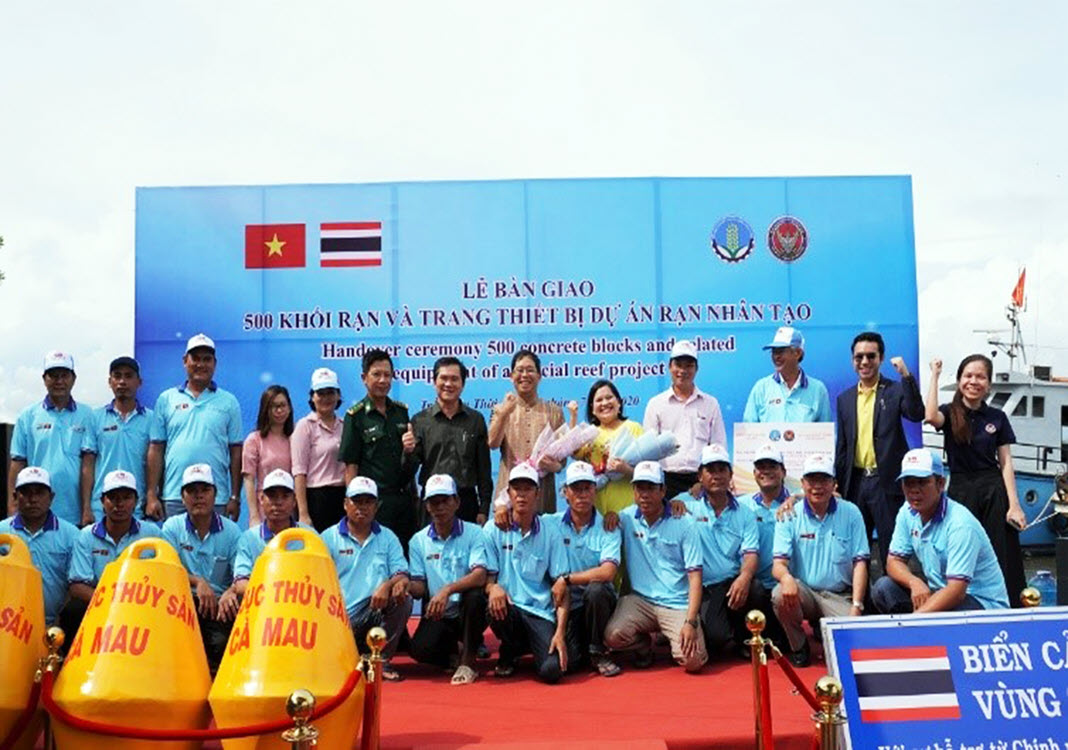
 Strengthened partnership for sustainable development
Thailand adopts his late majesty King Rama IX’s sufficiency economy philosophy (SEP) as guidelines for its national socio-economic development, and is ready to share experiences with our friends. Many SEP projects have been practiced in countries around the world. One of the two projects implemented in Vietnam is the construction of artificial reef in Ca Mau Province, which was completed in July 2020 and were released into the ocean 14km away from Tran Van Thoi District in Ca Mau Province. The artificial reef will help restore the depleted marine resources of the coastal provinces, build sustainable ecosystem and improve the livelihoods of local fishermen. The project applied approach based on SEP by highlighting the participation and ownership of local communities. It took many years through a series of technical workshops and exchanges of expertise both in Thailand and Vietnam to ensure true benefits for local communities as well as the sustainability of the project.
As the fight against Covid-19 is going on, regional integration and connectivity would be even more vital, especially within ASEAN. Thailand and Vietnam have stood side by side in fighting against the Covid-19 pandemic in bilateral and ASEAN forums. I wish to commend Vietnam, as our ASEAN Chair, for its bold and prompt responses to the pandemic by conducting, for the first time via teleconference, the Special ASEAN+3 Summit on Covid-19 on April 14, 2020. This truly reaffirmed the current theme of “Cohesive and Responsive” ASEAN.
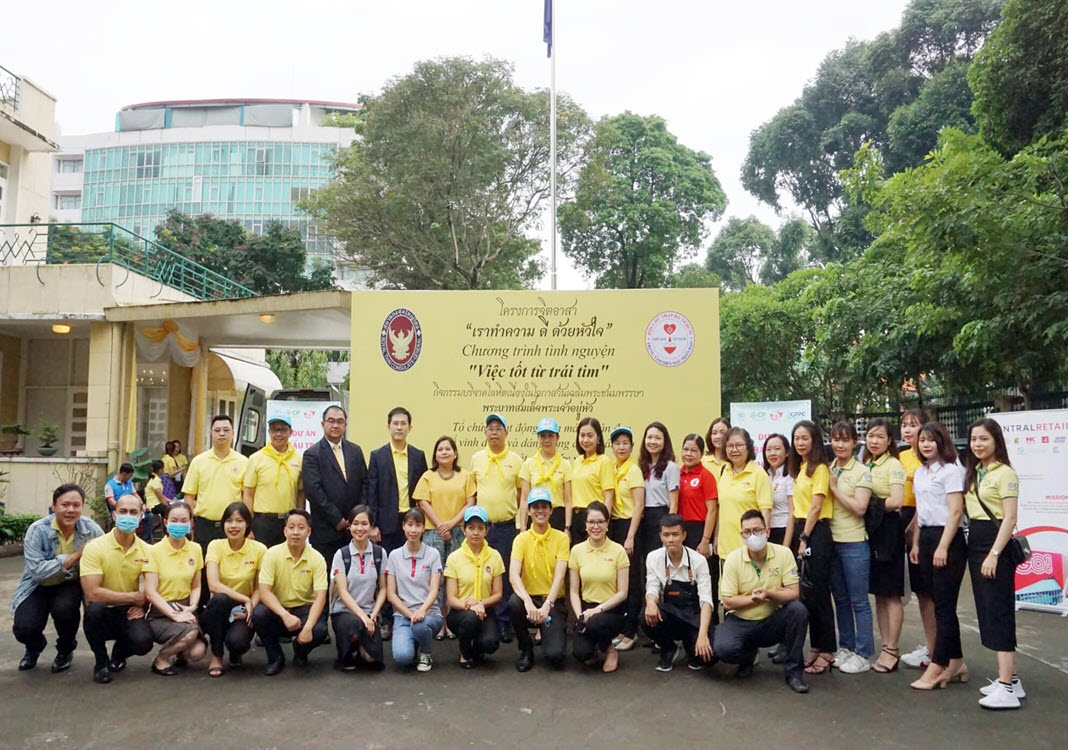
Recently, the Consulate-General in HCMC and the Royal Thai Embassy in Hanoi, in collaboration with the Thai private sector and communities in Vietnam, have conducted charitable activities and donations in kind and cash (with total contribution worth VND1.8 billion) to support our Vietnamese friends during this challenge. In particular, the Consulate-General has organized and joined in many blood donation events in 2019 and 2020—the latest event was jointly held with the Embassy simultaneously in Hanoi and HCMC on July 14, 2020 to honor His Majesty the King on his birthday.
Looking forward, I am certain that with the upcoming fourth Thailand-Vietnam Joint Cabinet Retreat and the renewal of the five-year plan for strategic partnership, our multifaceted friendship shall be further deepened. Thailand and Vietnam will definitely cooperate and prosper together.
By Apirat Sughondhabhirom