



A steel price hike would affect immediately some economic sectors and later the entire economy. The final outcome is that the price level in the economy will go up.
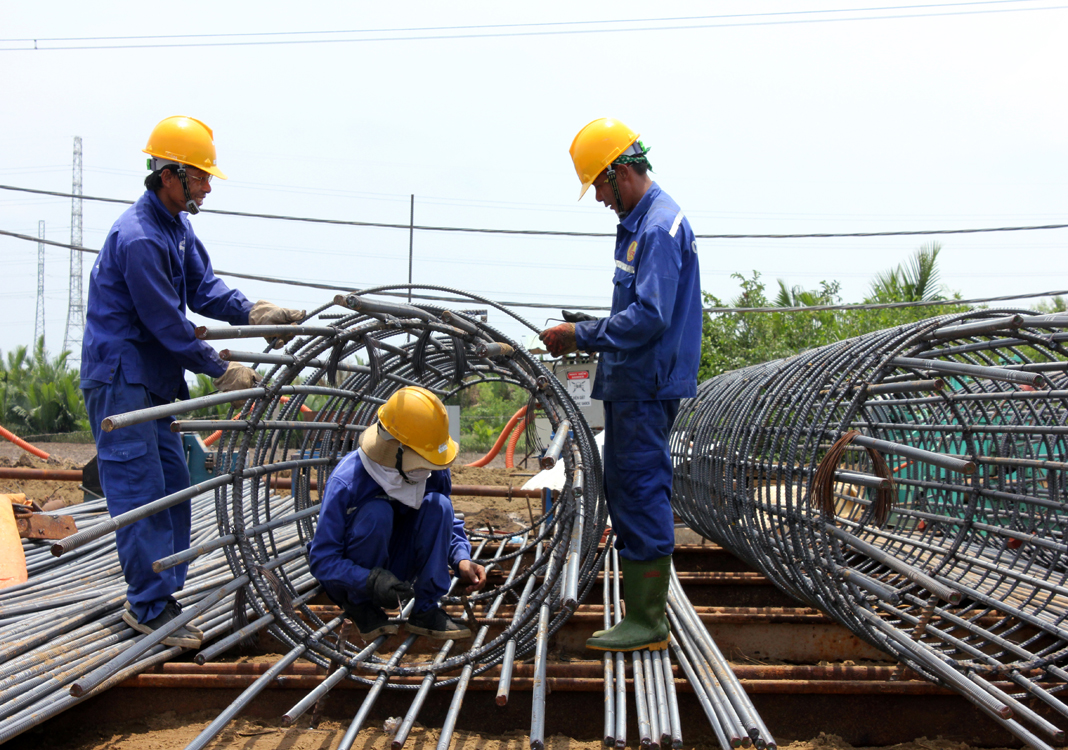
Currently, construction steel sells at between VND18,700 and VND18,800 per kilogram. This rate is about 40% higher than the average price in 2020. According to the Vietnam Steel Association (VSA), immediately after the Lunar New Year, domestic prices of finished steel products have risen sharply, averaging 20% higher than prices at the beginning of December 2020. Those prices have also been the highest over the past five years. The price hike of steel is ascribable to the sudden rise of steel materials on the global marketplace. The price of iron ore at the beginning of March was recorded at US$170 per ton, a 55% leap against the end of 2020 and a two-fold jump year-on-year. The price of hot rolled coil (HRC) was US$660 per ton, a reduction of 6% over the end of last year, but a rise of 44% from the year-ago period. According to the Input-Output analysis released by the General Statistics Office, of the total production value of the construction sector (including roads, bridges, public works and houses of various types), steel accounts for some 4%. When it comes to houses, steel makes up 5% of the total cost. Not only does the construction industry need steel, other economic sectors are also in need of steel as an input factor. Steel accounts for 6.2% of the intermediate cost of the entire economy, and for 1.4% of the total production value of the entire economy. Therefore, an increase in steel cost price will directly (immediately) and indirectly (affecting subsequent production cycles) impact the economy. As far as the immediate affects are concerned, when steel price rises by 40%, the intermediate cost will increase by 0.82%. This effect may lead to the following scenarios. First, it may directly impact the surplus of the entire economy, which will in turn affect added value and gross domestic product (GDP). Calculations making use of Vietnam’s Input-Output analysis point out that in this case, GDP may decline by almost 2%, of which the added value of the entire construction industry will decline by 7.4% and the added value of the housing industry will decrease by 7.7%. Secondly, enterprises often do not want to cut neither their profit nor their added value. The steel price hike will therefore be added to the production cost. Then the Producer Price Index (PPI) of the economy will rise by 0.57%, the production cost of the entire construction industry will increase by 2% and the housing construction cost will jump by 8%. These increases are direct impacts of a steel price hike. If inputs of the entire economy are subject to price hikes directly caused by a steel price hike, the intermediate cost of the economy will rise as a result. This increase will affect the production cost of the next production cycle, which will end up increasing the PPI of the entire economy by 1.2% and the housing construction cost by more than 10%. Consequently, a 40% increase in steel price will significantly affect housing prices. It will take this effect more than two years to establish a new price level in the economy.
Thirdly, some enterprises accept profit reduction while others opt to increase prices. It is necessary therefore to conduct a study to identify how many percent of enterprises accept profit cut and how many percent choose to raise production cost. Relying on this study, State research agencies may develop concrete scenarios which will help policymakers formulate the best solutions for the entire economy.
Considering all the above arguments, is it right to say that to stabilize steel prices in Vietnam, tariffs levied on imported materials for steel production must be cut? However, it is necessary also to find out whether among the reasons is the temporary import of steel for re-export to a third country.
If inputs of the entire economy are subject to price hikes directly caused by a steel price hike, the intermediate cost of the economy will rise as a result. This increase will affect the production cost of the next production cycle, which will end up increasing the PPI of the entire economy by 1.2% and the housing construction cost by more than 10%. Consequently, a 40% increase in steel price will significantly affect housing prices. It will take this effect more than two years to establish a new price level in the economy.
Thirdly, some enterprises accept profit reduction while others opt to increase prices. It is necessary therefore to conduct a study to identify how many percent of enterprises accept profit cut and how many percent choose to raise production cost. Relying on this study, State research agencies may develop concrete scenarios which will help policymakers formulate the best solutions for the entire economy.
Considering all the above arguments, is it right to say that to stabilize steel prices in Vietnam, tariffs levied on imported materials for steel production must be cut? However, it is necessary also to find out whether among the reasons is the temporary import of steel for re-export to a third country.
By Bui Trinh